
Silicone Tray Flatness Under Load
Diagnose silicone tray bow, crown, twist and sag under load by support, span, wall design, Shore and real process conditions.
On this page
# Silicone Tray Flatness Under Load
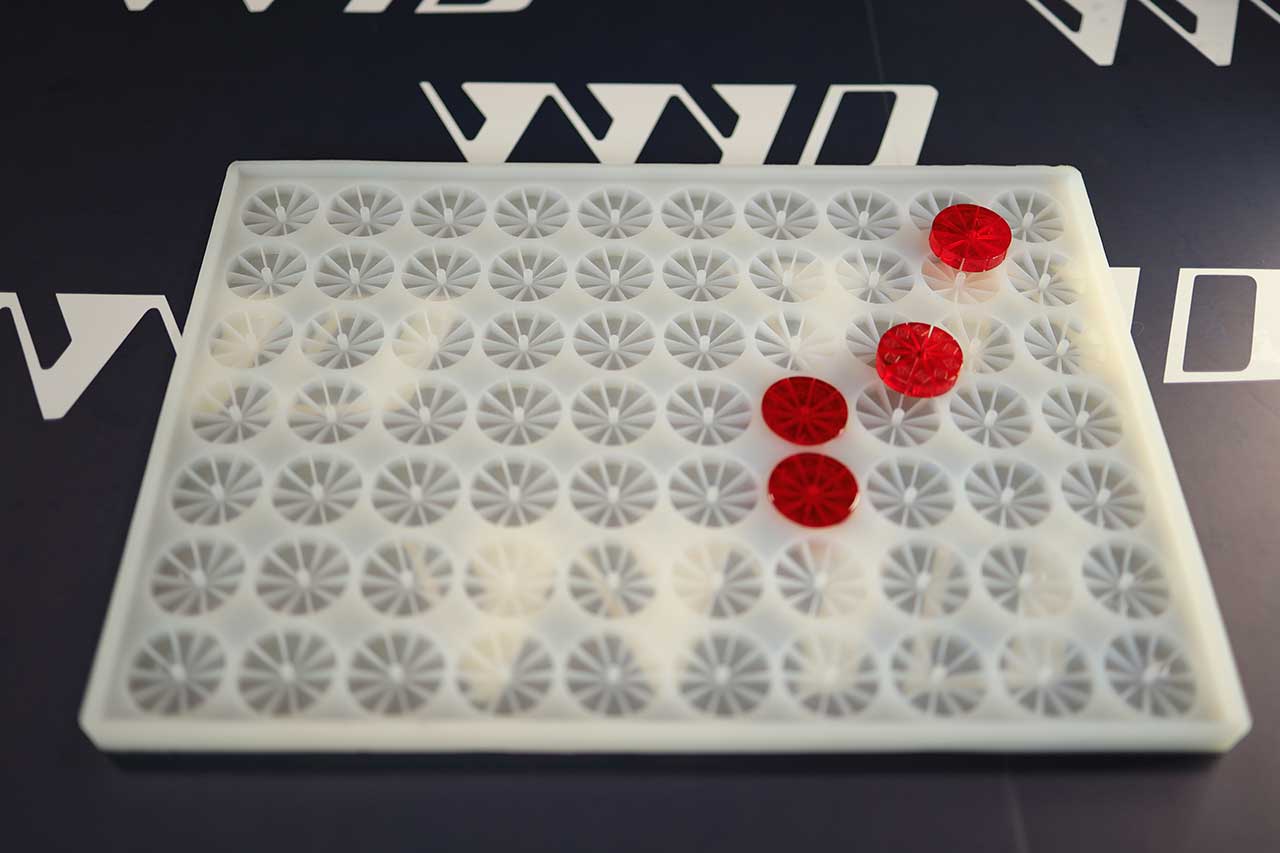
A tray can lie flat while empty and still fail during production.
The real question is whether the cavity plane remains stable when the tray is:
- filled
- supported
- carried
- heated/cooled
- used under a depositor or scraper
Common Flatness Problems
- center sag
- center crown
- corner lift
- edge drop
- twist
- oil-can behavior
- inconsistent Z-height
The pattern helps identify the cause.
Shore A Is Not Flatness
A harder silicone can still bow if:
- span is too large
- perimeter is weak
- base is thin
- support is missing
A softer tray can stay flatter when supported correctly.
Define the Load

Send:
- grams per cavity
- cavity count
- total filled mass
- tray dimensions
- process temperature
- handling method
The filled tray is the structural condition.
Define the Support
Possible support systems:
- sheet pan
- rigid board
- custom nest
- metal frame
- conveyor plate
- rack
If production always uses a support, measure and approve the tray in that support.
Prototype Flatness Test
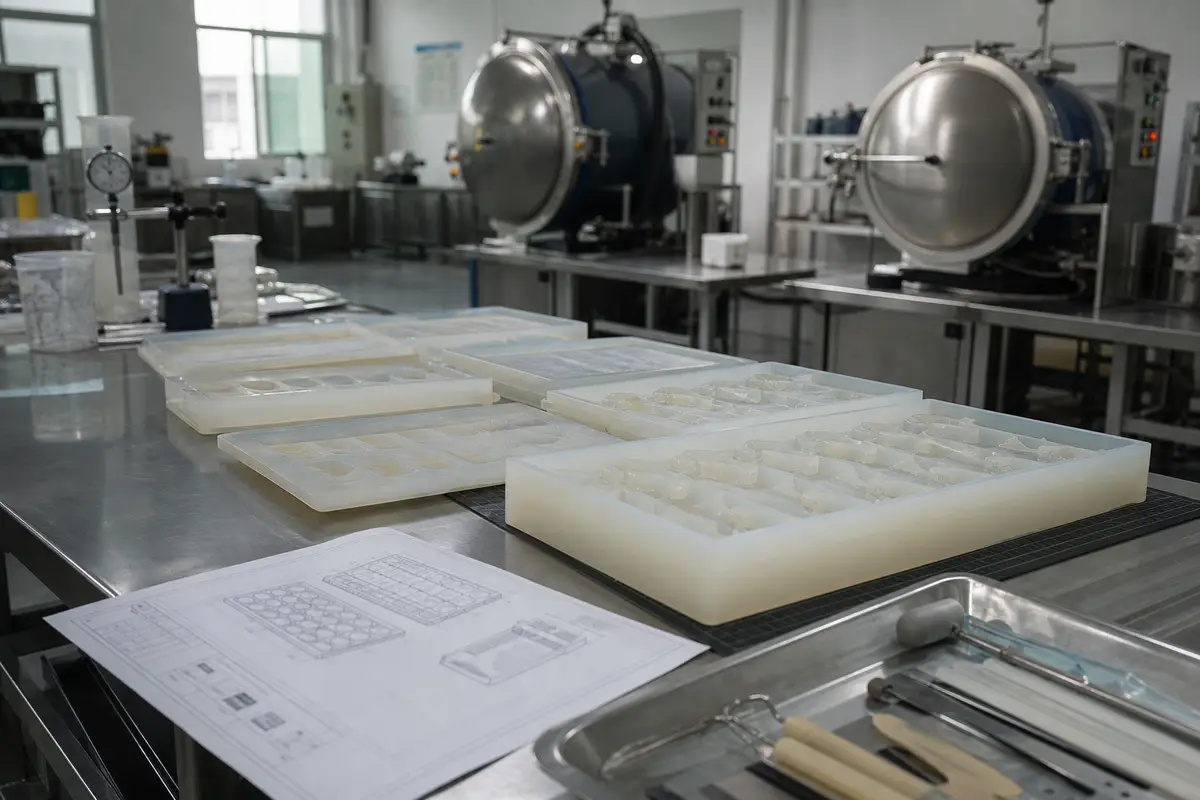
- measure empty reference points
- seat the tray in its real support
- fill representative mass
- measure center/edge/corners
- run the real process
- compare piece weight by position
- carry the tray normally
- cool/dry/freeze
- demold
- check recovery
Position Weight Map
If edge and center gummies have different weights, do not immediately change cavity CAD.
Also check:
- tray Z-height
- depositor balance
- scrape plane
- temperature gradient
- support
Identical cavities can produce different finished weights if the tray is not stable.
One Large Tray vs Two Smaller Trays
Smaller trays may improve:
- handling
- support
- shipping
- replacement risk
- demolding
A large tray may be better when the machine/nest is designed around it.
Compare production system cost, not silicone price per cavity.
Support Frame Strategy
A rigid support can provide:
- stable filling
- machine alignment
- lower silicone mass
while the mold stays flexible for demolding.
This separates two conflicting functions.
Heat Can Change Temporary Deflection
For baking or hot-deposit trays, the filled hot condition may be more demanding than room temperature. For frozen applications, low-temperature handling can change flexibility.
Prototype under the actual process temperature where flatness affects output.
Packaging Can Create Flatness Problems Before Production Starts
A tray may leave the factory flat and arrive bowed if:
- cartons are too small
- trays are folded
- heavy items sit on one edge
- stacks remain compressed
Large flexible trays should have a packing standard consistent with the approved measurement condition.
Specify Flatness Where It Matters
Rather than demanding one global flatness number, identify:
- cavity plane
- locating edge
- sealing surface
- support interface
The functional region should drive the inspection plan.
Related WYD Pages
Final Recommendation
Measure the tray in the condition that creates the product. Empty-table flatness is only one data point.
Ready to order custom silicone molds?
Send your drawing, sample or project requirements for DFM and quotation.