
Custom Silicone Mold Cost & Tooling Price Drivers
See what changes custom silicone mold cost: CAD/master work, mold structure, silicone volume, cavities, tooling route, QC, documentation, quantity and freight.
On this page
Custom silicone mold pricing can range from a small prototype project to a substantial multi-cavity production-tool investment. The reason is simple: “silicone mold” can describe very different products and manufacturing routes.
An RTV mold poured from a master, a compression-molded gummy tray, and a steel LSR injection tool do not share the same cost structure.
A useful quotation therefore separates design, master/prototype, tooling, silicone material, production quantity, inspection and freight instead of hiding everything inside one number.
1. First identify what type of mold you are buying
RTV casting mold
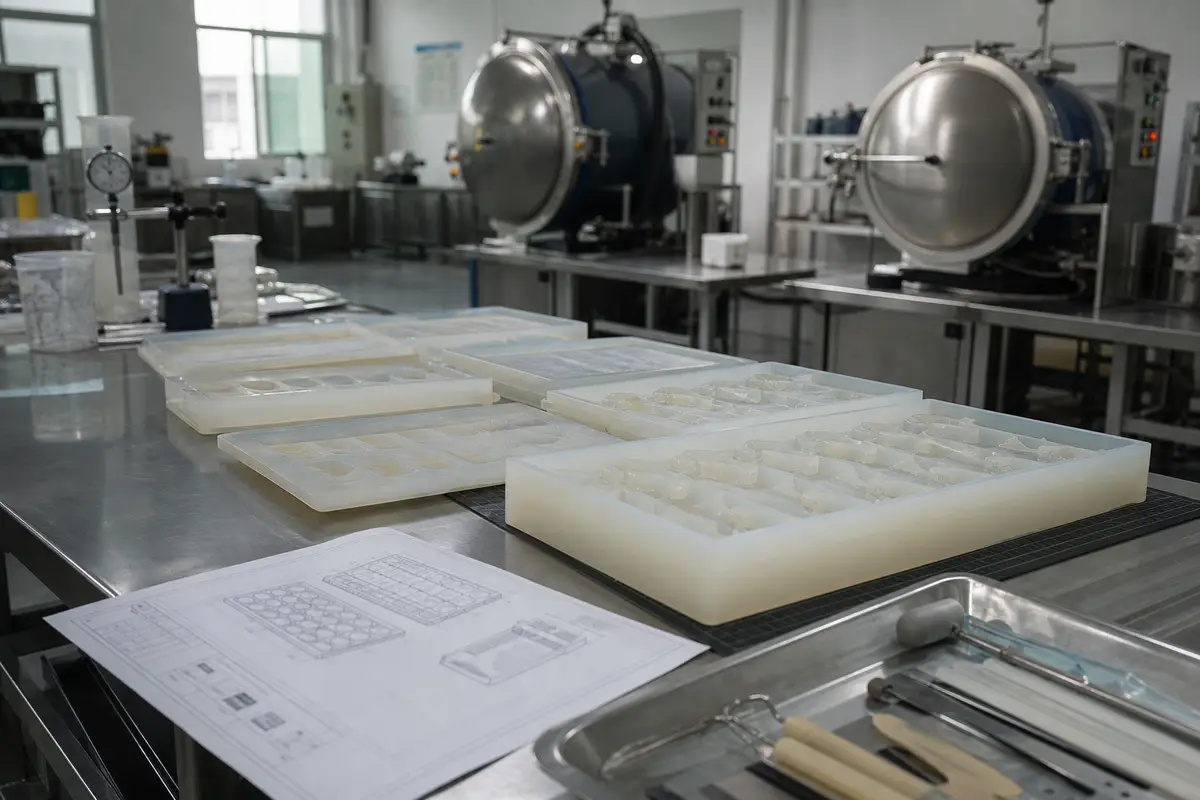
The silicone itself is the reusable mold. Cost is driven by master preparation, mold structure, silicone volume, split complexity and support shell requirements.
Typical applications include plaster, resin, wax, soap and decorative casting.
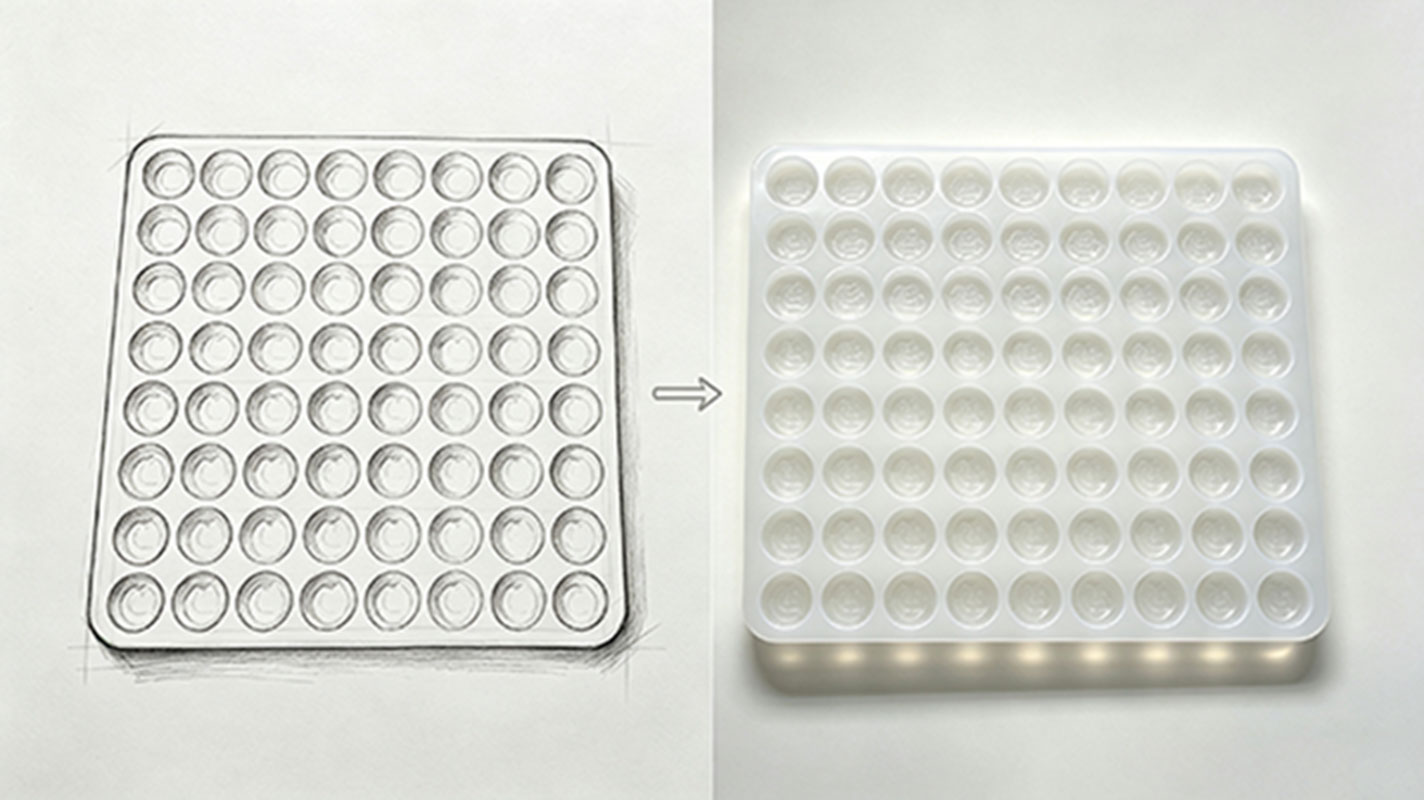
Finished silicone tray or consumer mold
The customer buys finished silicone molds/trays. A steel production tool is first created to manufacture those silicone pieces. Cost therefore has two layers: tooling + unit production.
Typical applications include gummy, chocolate, ice, baking and food molds.
LSR/HCR silicone component tooling
The finished product is a silicone part such as a gasket, keypad, seal or overmold. Tooling price depends on cavity count, steel complexity, runner/gating system, inserts, tolerance and automation.
Comparing prices without identifying these categories creates false expectations.
2. 3D design and CAD preparation
If the customer already has a clean production-ready STEP file, engineering cost is lower than a project starting from sketches or photographs.
For relatively simple custom work, WYD’s 3D modeling fee typically starts around USD 50. Complex sculpting, reverse engineering or multi-part assemblies require more work and are quoted separately.
CAD cost can include:
- 2D-to-3D conversion;
- logo development;
- sculpting;
- split-line design;
- DFM revision;
- cavity layout;
- support-shell design.
3. Master or prototype cost
RTV projects often need a physical master. It may be CNC machined, 3D printed or created from an existing sample.
Prototype cost increases when the master needs:
- high cosmetic finishing;
- manual polishing;
- complex assembly;
- tight dimensional verification;
- multiple revision rounds.
A cheap rough master can create permanent defects in the final silicone cavity, so this is not always the right place to save money.
4. Silicone volume
For RTV molds and large silicone trays, material volume directly affects price.
A thick mold around a large sculpture can use several times more silicone than a compact flat-back mold. The same is true for oversized food trays with thick bases and reinforced rims.
Good engineering removes unnecessary bulk without making the mold structurally weak.
5. One-piece vs two-part vs multi-part structure

A one-piece open-back mold is generally simpler than a full 3D two-part mold. A complex sculpt may also need a mother mold/support shell.
More parts mean:
- more master preparation;
- more parting work;
- more alignment features;
- more finishing;
- more test casting.
The lowest-cost mold structure is the simplest one that still releases the product reliably.
6. Cavity count
For production trays, more cavities usually increase tool size and machining time. However, unit economics may improve because one tray makes more pieces per cycle.
The correct cavity count should be based on production throughput, not only tooling price. See gummy mold cavity count for an example of that calculation.
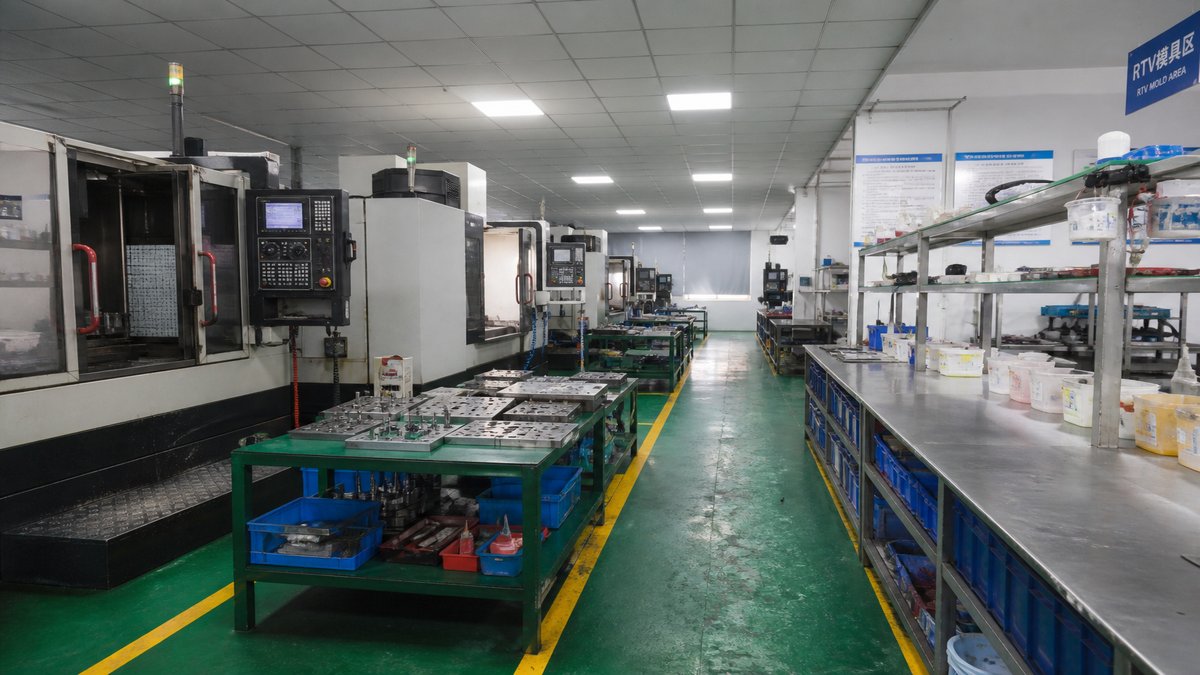
7. Steel tooling complexity
For compression molding or LSR injection, tooling cost is influenced by:
- cavity count;
- tool size;
- steel grade;
- inserts;
- slides or complex shutoffs;
- cold-runner system for LSR;
- venting;
- surface finish;
- engraving;
- tolerance requirements;
- automation interfaces.
A one-cavity prototype tool and a multi-cavity production tool should not be expected to cost the same even when the finished silicone part is identical.
8. Tolerance and inspection
Tighter functional tolerances can require better tooling, fewer cavities, more process control and more metrology.
Do not write unnecessarily tight numbers across the entire drawing. Identify CTQs and use an elastomer-appropriate tolerance framework where applicable.
Inspection cost may include:
- first-article report;
- cavity-by-cavity checks;
- hardness testing;
- weight/volume verification;
- gauge development;
- material-document review.
9. Material and documentation
Food-contact, healthcare and specialty silicone grades can cost more than general industrial material. Documentation can also add testing or administrative scope.
Clarify whether the project needs:
- supplier datasheet/COA;
- FDA-related food-contact documentation;
- LFGB testing;
- healthcare-grade supplier file;
- custom third-party testing;
- batch traceability.
Do not pay for a certificate that does not apply to the product or market.
10. Quantity and production method
For WYD’s current custom silicone mold program, MOQ can start from 20 pieces for suitable projects. Finished OEM silicone parts can have different MOQs because process and tooling economics differ.
Small runs are useful for validation. Once geometry is stable, larger quantities can reduce the production cost per piece by spreading setup, inspection and packaging overhead.
11. Packaging and freight
Large silicone molds are light relative to metal tooling but can occupy significant carton volume. Oversized trays, rigid mother molds and heavy masters can make freight a meaningful part of landed cost.
Ask whether the quotation is EXW, FOB, CIF, DDP or another Incoterm. A cheap unit price can become expensive after express shipping.
How to compare two quotes
Put every quote into the same structure:
| Cost item | Quote A | Quote B |
|---|---|---|
| CAD / 3D modeling | ||
| Master / prototype | ||
| Production tooling | ||
| Sample quantity | ||
| Unit price | ||
| Material/document scope | ||
| Inspection | ||
| Packaging | ||
| Freight | ||
| Tool ownership |
This usually reveals why two “mold prices” are different.
How to reduce cost without weakening the project
Good cost reduction comes from simplification:
- remove unnecessary undercuts;
- standardize tray envelope;
- use shared mold bases/inserts where practical;
- identify only true CTQs;
- prototype uncertain geometry before high-cavity tooling;
- combine compatible cavities where handling allows;
- freeze artwork before production steel.
The worst cost reduction is to skip validation and discover the problem after tooling is complete.
FAQ
How much does a custom silicone mold cost?
There is no reliable universal price. Cost depends on mold type, size, cavities, design work, tooling route, material and quantity. Send the project scope for a meaningful quote.
Why is a steel tool more expensive than an RTV mold?
A steel production tool requires CNC machining, fit, venting, surface finish and often multiple components. It is designed to manufacture repeatable silicone products over production runs.
Is 3D design included?
It depends on the quote. For simple projects WYD typically charges around USD 50 for 3D modeling; complex design work is quoted based on scope.
What is the MOQ?
For suitable custom silicone mold projects, WYD currently supports MOQ from 20 pieces. OEM molded parts may use a different MOQ.
Get an itemized mold quotation
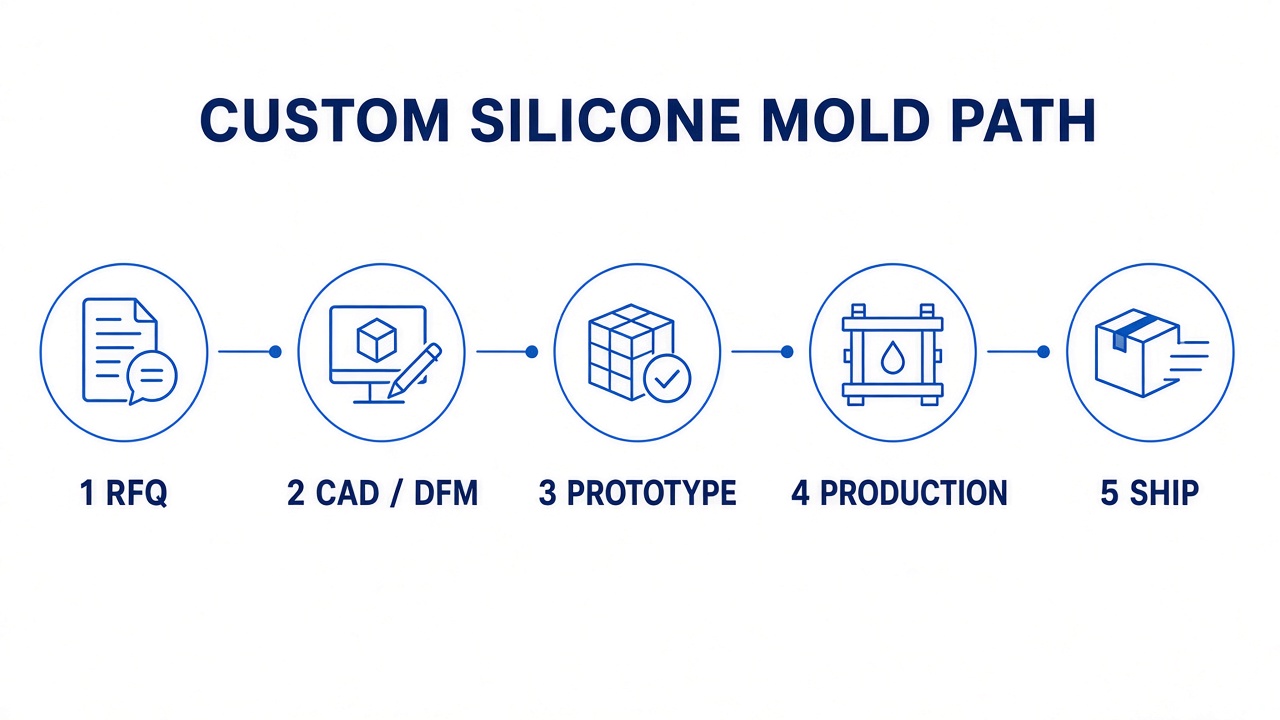
Send the 3D file or reference, finished dimensions, application, material requirement and target quantity through WYD Contact. Ask for design, tooling, sample, production and freight to be separated so the quote can be compared correctly.
Ready to order custom silicone molds?
Send your drawing, sample or project requirements for DFM and quotation.