
Oil Spray or a Mold Fix When the Tray Sticks?
If a clean cavity still holds the piece, more oil is hiding draft, Shore, or a logo that is too deep. Fix the wash film first when the next tray is chalked. WYD does not sell a release-agent chemical.
On this page
Should you add oil spray, or change the silicone tray? If the piece sticks in a cavity that was washed clean, the spray is covering draft, a logo that is too deep, or a Shore that cannot peel that shape. If the next tray looks chalked and the stick starts after a few cycles, stop adding oil and look at the wash film first. This page is that line decision. It is not a release-agent product, and it does not replace custom silicone gummy molds.
Spray, wash, or a mold change

| What you see | Do this | Do not do this |
|---|---|---|
| First demold sticks on a clean, dry cavity | Photo the tear start. Check undercut and logo depth before the next tool. | Soak the tray in oil and call the sample approved |
| Gloss dies and pieces chalk after the wash | Change detergent, temperature, or dry method. Then retest one tray with no spray. | Raise spray until the cavity looks wet |
| Outer pieces stick, center pieces release | Check loaded-tray sag and pitch before you blame the compound. See depositor-compatible trays. | A heavier spray pattern on the outer row only |
| One logo cavity tears, neighbors release | Shallow that logo or add a peel path. Weigh method stays on piece weight and cavity fill. | A plant-wide "more release agent" SOP |
Starch mogul versus a silicone tray is a different buy. That split is on silicone or starch for edible gummies.
What spray hides
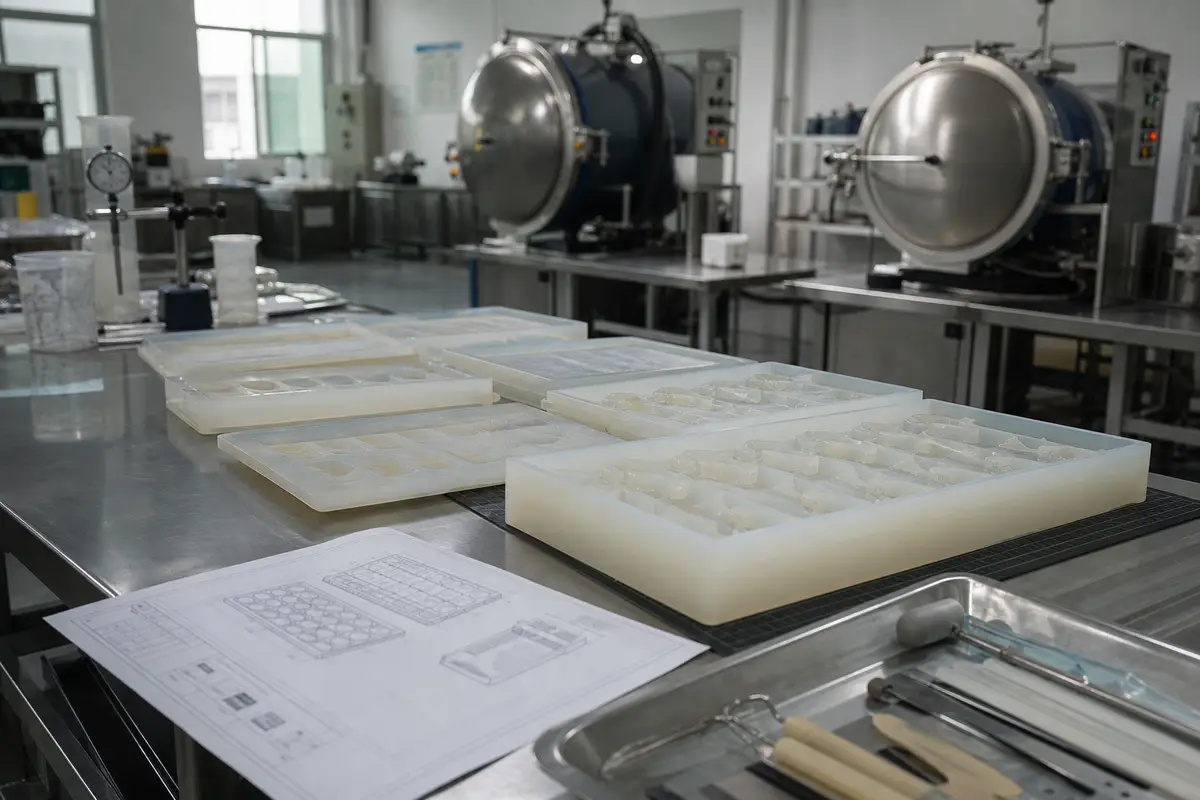
Oil lets a locked piece slide out once. It also fills a fine logo, changes surface sheen, and trains the crew to skip the geometry. We would not recommend a production tray whose acceptance test only passes with spray. A sample should demold on the formula you will run, after the wash you will run.
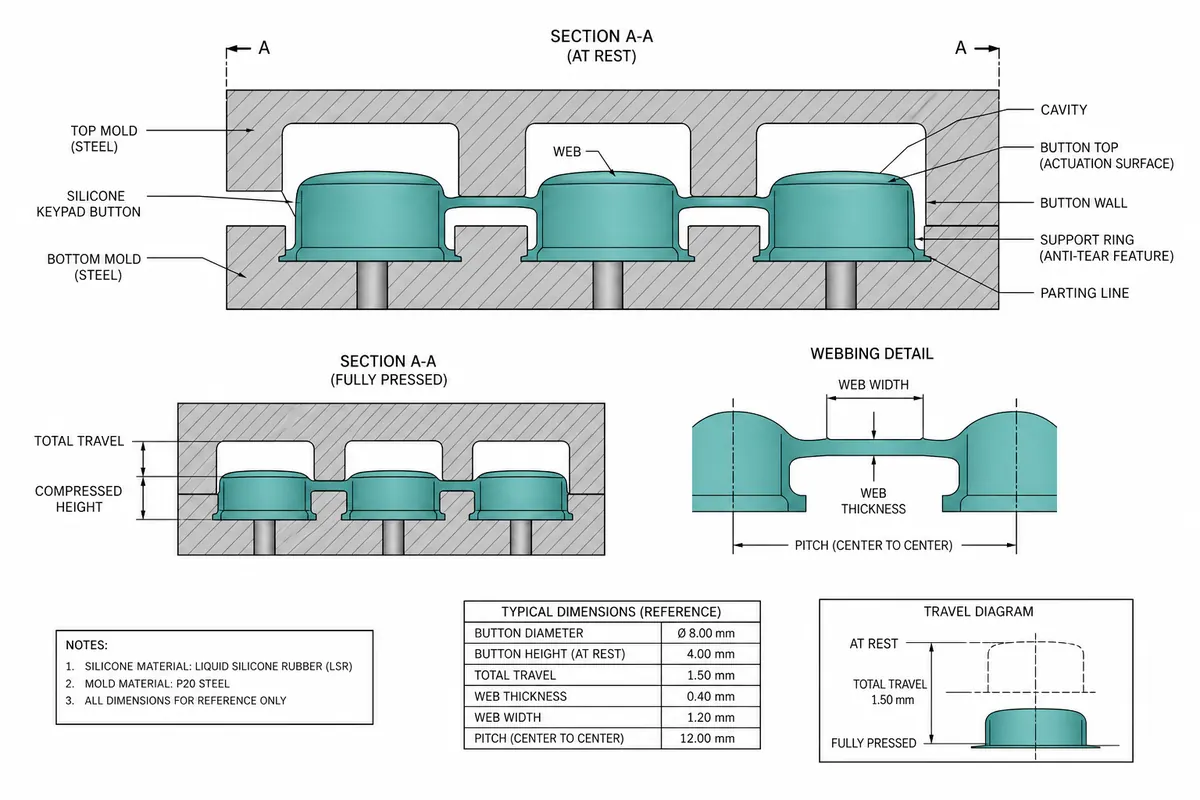
Typical shop check, not a lab certificate: mark the cavity that tears, note whether the tear starts at a logo return, a sharp corner, or the whole wall. If the tear starts at the logo, depth and draft are the fix. If the whole wall grabs, Shore and wall thickness are the fix. Spray does not tell you which one.
When the wash is the defect
Sugar, fat, or a harsh pad leaves a film. The next deposit sticks, someone adds oil, and the cavity chalks. That loop is a wash problem. Send the detergent name, water temperature, and whether trays go back on the line wet. We can then say if the tray compound is in the wrong band, or if the SOP is scrubbing the gloss off a tray that was fine.
Broader stick causes, including undercut and demold timing, stay on silicone mold troubleshooting. This post only splits spray from a mold change.
What we will not quote
We do not sell a release chemical, and we will not put "use our spray" on a drawing. We also will not promise zero stick on every pectin, gelatin, and hard-candy cook from one Shore. Hard candy and gummy on one frame is a separate decision: hard candy and gummy on one frame.
Timing on a current quote

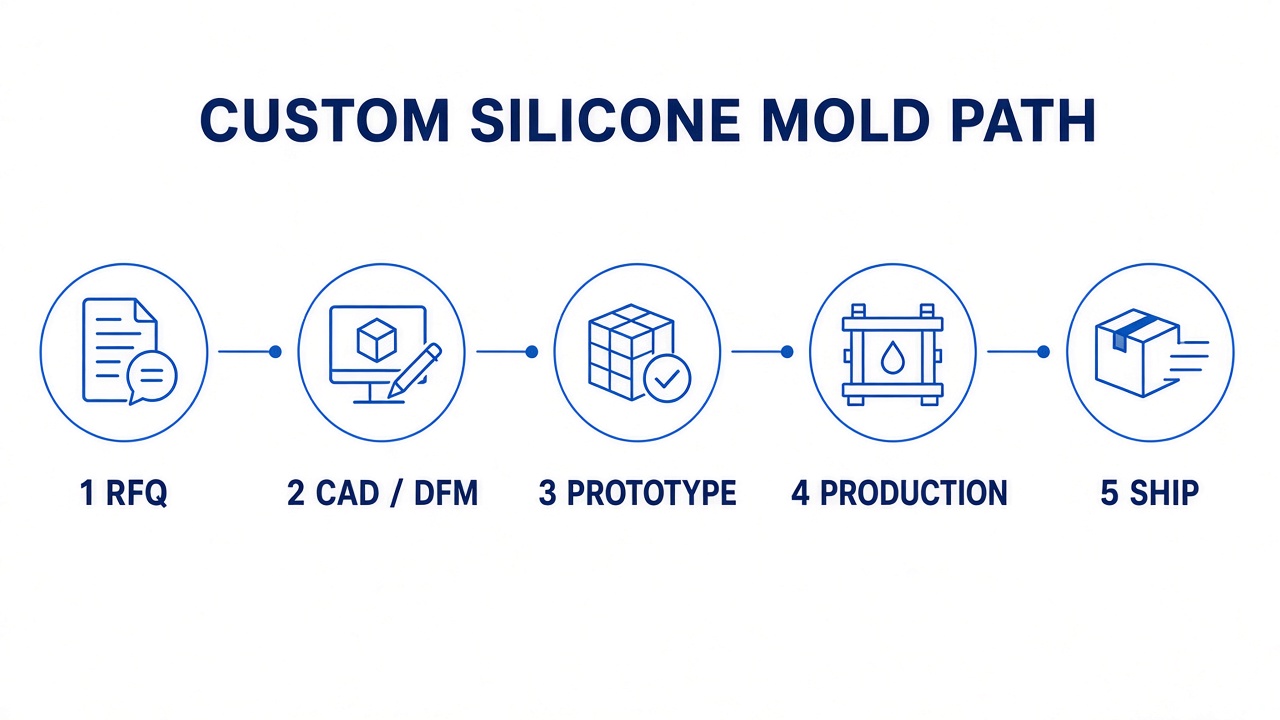
WYD quotes from Bao'an (since 2006). Soft-mold programs often start around 20 molds per approved design. That floor is not a universal MOQ for HTV, LSR, or an industrial tool. Simple 3D modeling can start around USD 50 when the file is not ready. It is not a tooling deposit. DFM on a complete file is quoted as review, not as a second product.
- Reply: typically within 12 hours
- CAD / DFM: 1-3 business days
- Prototype: typically 3-5 business days after CAD approval
- Small batch: typically 2-3 business days after sample approval
- Standard production: typically 7-10 business days after approval
- Large or multi-insert tools: by project. Shipping is separate.
What to send
Send a photo of the stuck cavity, the formula family, deposit or pour temperature, wash steps, and whether spray is already in the SOP. Add tray size and whether a depositor pitch is fixed. We reply with a mold change, a wash note, or a refusal if spray is the only thing keeping the piece alive.
Email the stuck-tray notes for a DFM review.
FAQ
Do you sell silicone mold release spray?
No. If the tray only releases with oil, we treat that as a geometry or wash problem, not as a chemical SKU.
Can a light spray stay in the SOP?
Only after a no-spray trial on your formula still releases. If it fails, the tray is not accepted.
Why did gloss disappear after we added spray?
Oil plus a hot wash or an abrasive pad chalks the cavity. The next batch then needs more oil. Break that loop before you recut the tool.
Is sticking always the silicone grade?
No. A deep logo on a correct Shore still locks. Check the tear start before you change compound.
What should purchasing put on the PO?
Demold method, wash limits, and "accepted without spray" or "spray allowed at this step." A PO that is silent on spray gets argued on the first sticky shift.
Ready to order custom silicone molds?
Send your drawing, sample or project requirements for DFM and quotation.