
A custom popsicle mold is not simply an ice cavity with a stick added later.
The design has to control stick position, fill volume, cavity shape, tray support and release after freezing or setting.
A custom popsicle-mold project can start from CAD, drawings, artwork, samples or an approved product concept. Branded shapes, character products and conventional bars all need the stick interface, fill condition and real freezing workflow defined before tooling.
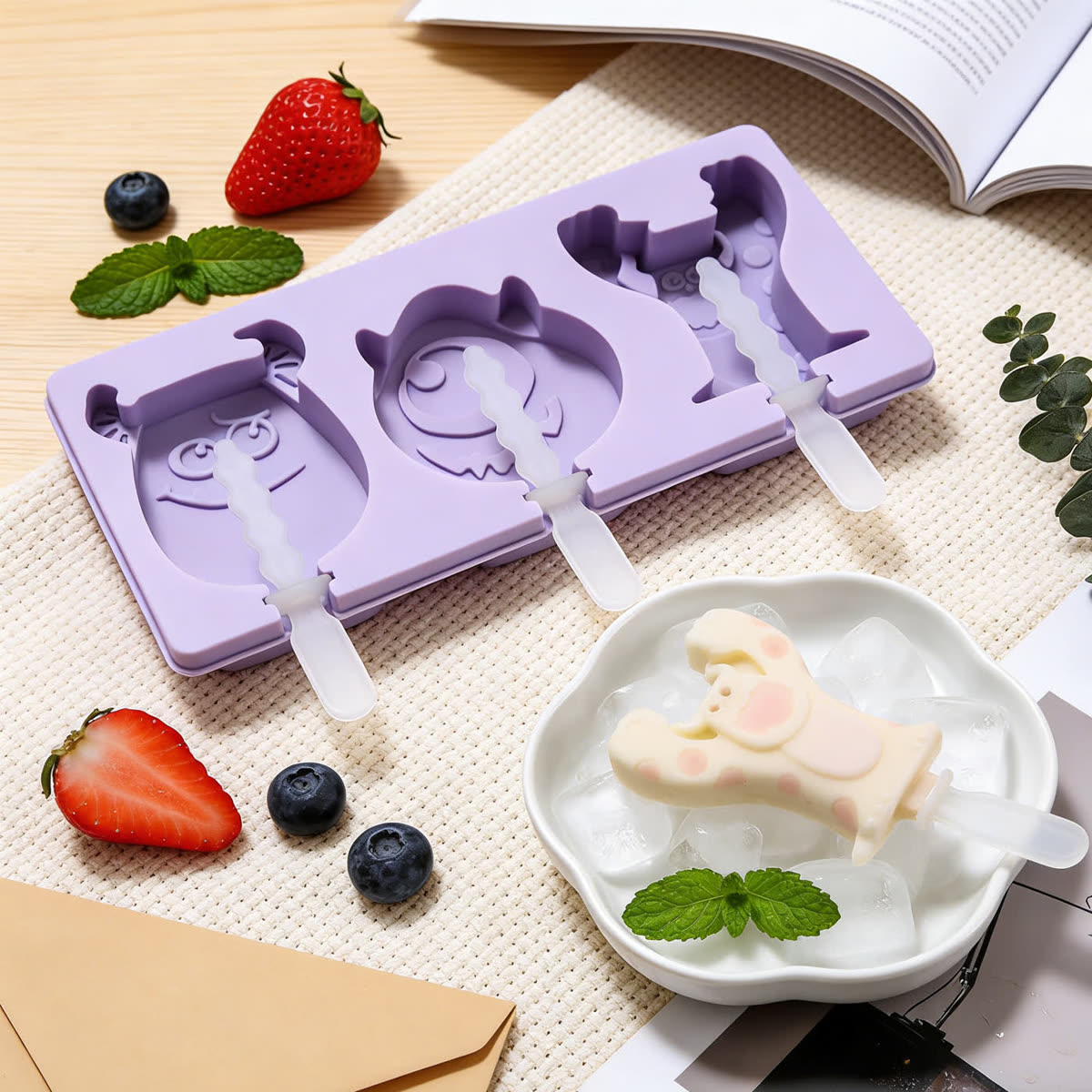
Start With the Finished Product and the Stick
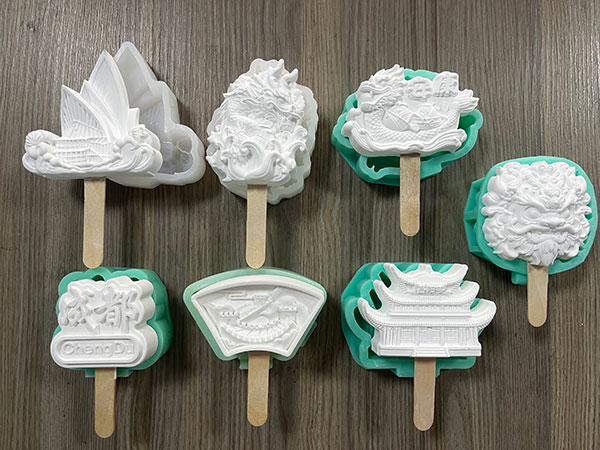
Before designing the tray, define the finished pop.
Send:
- finished product dimensions
- target fill volume or weight
- stick material
- stick width and thickness
- stick cross-section
- embed depth
- stick position
- whether the stick enters before, during or after filling
- freeze or set condition
- cavity count
- overall tray envelope.
A design can look correct in a rendering and still fail because the stick slot is too tight, too loose, too thin around the edges or poorly supported during freezing.
The Stick Slot Is a Functional Feature
The stick interface must do several jobs.
It may need to:
- locate the stick during filling
- resist sideways movement
- allow the frozen product to release
- avoid tearing the silicone
- remain repeatable after repeated insert/remove cycles.
If the slot is too tight
Possible problems include:
- difficult stick insertion
- excessive force during demolding
- local tearing
- stick bending or misalignment.
If the slot is too loose
Possible problems include:
- stick drift
- off-center product
- leakage around the opening where relevant
- inconsistent presentation.
The solution is not automatically “use harder silicone.” Slot geometry, local wall thickness, stick cross-section and the release path all matter.
Fill Volume and Finished Weight Need the Actual Product Process
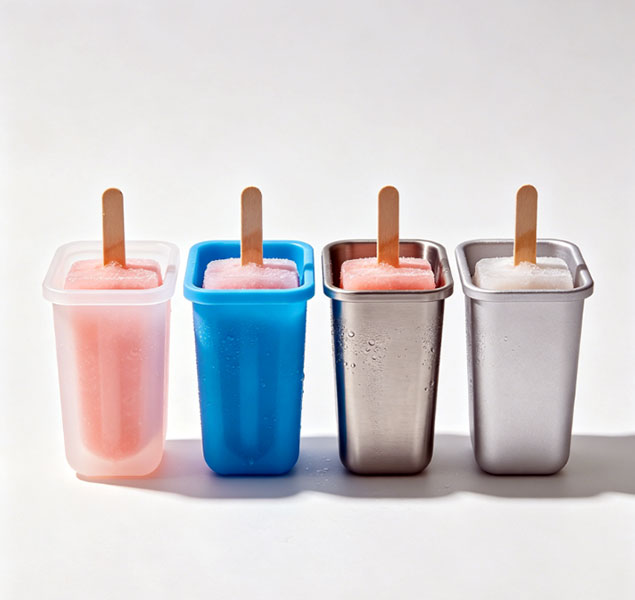
A cavity can be designed from a target volume, but the finished product weight depends on the customer's formulation and process.
If target weight is important, provide:
- formulation family
- target grams or mL
- fill level
- whether overfill/scrape is used
- inclusions or coatings if relevant
- freeze/set condition.
A prototype can then be checked with the actual or representative mix.
Do not approve a cavity only because the CAD volume appears close to the target weight.
Character Shapes and Logos Need a Release Path
Decorative popsicle shapes often create:
- ears
- faces
- letters
- logos
- deep texture
- local undercuts.
These features may look attractive in CAD but can create stress concentration during frozen demolding.
DFM should review:
- local draft/release direction
- sharp returns
- thin silicone webs
- fragile frozen-product details
- logo depth
- where the tray can flex during peel.
For some designs, simplifying a small feature can improve both mold life and the finished product yield.
The goal is not to maximize detail at any cost. It is to reproduce the important detail while keeping a repeatable demolding path.
Tray Support Matters More When the Mold Is Full
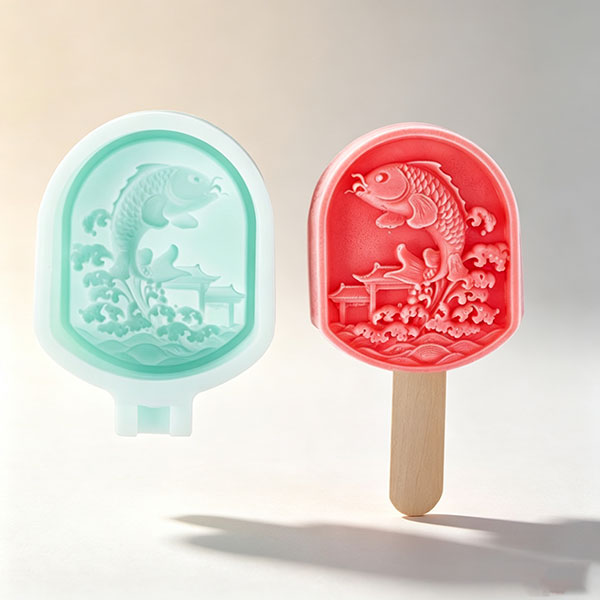
A popsicle tray is usually evaluated while empty, but production handling happens when the cavities are full.
Review:
- total filled mass
- tray span
- number of cavities
- perimeter reinforcement
- support pan, frame or rack
- how the operator moves the tray into the freezer
- stacking/nesting if applicable.
A very soft tray can deform during handling even if each individual cavity is well designed.
Local structure, perimeter geometry or external support may be a better solution than simply increasing overall hardness.
Popsicle Mold vs Ice Mold
Both operate at low temperature, but their interfaces are different.
Popsicle mold
Usually includes:
- a stick or holder interface
- a defined fill
- stick alignment
- demolding around the stick
- possible character geometry.
Ice mold
Usually focuses on:
- water fill
- frozen release
- logo or shape
- tray/lid support
- freezer or hospitality workflow.
If there is no stick or equivalent holder feature, an ice mold may be the more appropriate commercial category.
Related page: Custom Silicone Ice Molds
Food-Contact and Temperature Requirements Should Be Specified Separately
Do not use “food-grade silicone” as the only material requirement.
Provide:
- target market
- food/contact type
- fill temperature if relevant
- freezer condition
- contact duration
- repeated-use condition
- cleaning method
- requested standard or customer specification.
Temperature capability and food-contact documentation are different decisions.
A material may tolerate the cold or fill condition but still require a separate documentation review for the target market.
Related: Silicone Mold Temperature Limits
Related: Silicone Materials & Compliance
Prototype With the Real Stick and a Real Freeze Cycle
A room-temperature sample does not prove frozen performance.
The prototype should use the actual or production-intent:
- stick
- fill level
- formulation or representative mix
- freezing condition
- support pan/rack
- demolding method.
Check:
- stick stays aligned
- slot does not tear
- frozen product releases
- decorative details survive
- tray remains manageable while full
- cavity positions remain compatible with the intended workflow
- logo and surface finish meet the customer's visual requirement.
If the product will be inserted into retail packaging after release, also verify that the frozen product geometry fits that package.
Cavity Count Should Match Filling and Freezing Workflow
More cavities can increase batch output, but they also increase:
- filled tray weight
- tray span
- freezing space
- handling effort
- consequences of tray sag
- time required to fill before the first cavities begin changing condition.
Provide the actual freezer/rack envelope and intended batch size.
For a production line, also explain whether filling is manual or uses equipment. Cavity spacing can become a process interface if the tray needs to align with fixtures or filling heads.
The best layout is the one that fits the real process—not necessarily the maximum number of cavities that can be drawn on the sheet.
What Changes the Quote
Quotation can be affected by:
- CAD or cavity development
- character/logo complexity
- stick-slot design
- cavity count
- tray dimensions
- tooling route
- material/documentation requirement
- prototype freeze test
- quantity
- packaging
- freight.
Minimum order requirements and lead time should be confirmed in the project quotation because they depend on the manufacturing route, design status and quantity.
What to Send for a Popsicle Mold Quote
Product
- finished pop dimensions
- target fill volume/weight
- artwork or 3D geometry
- logo/detail.
Stick
- material
- width/thickness
- cross-section
- embed depth
- insertion method.
Tray
- cavity count
- desired rows/columns
- maximum tray size
- support pan/rack details.
Process
- fill condition
- freeze/set condition
- demolding method
- cleaning method.
Commercial
- prototype quantity
- first order
- repeat forecast
- target market/documentation
- destination
- target date.
Minimum Order
MOQ: 20 pcs for WYD custom silicone mold orders.
Tooling, material, validation and freight remain project-specific.
Send a project for review
Send the file or sample, the function, and the quantity.