
Gaskets & seals
Custom Silicone Gaskets & Seals
WYD manufactures custom molded silicone gaskets and seals for industrial equipment, electronics, consumer products and other OEM assemblies.
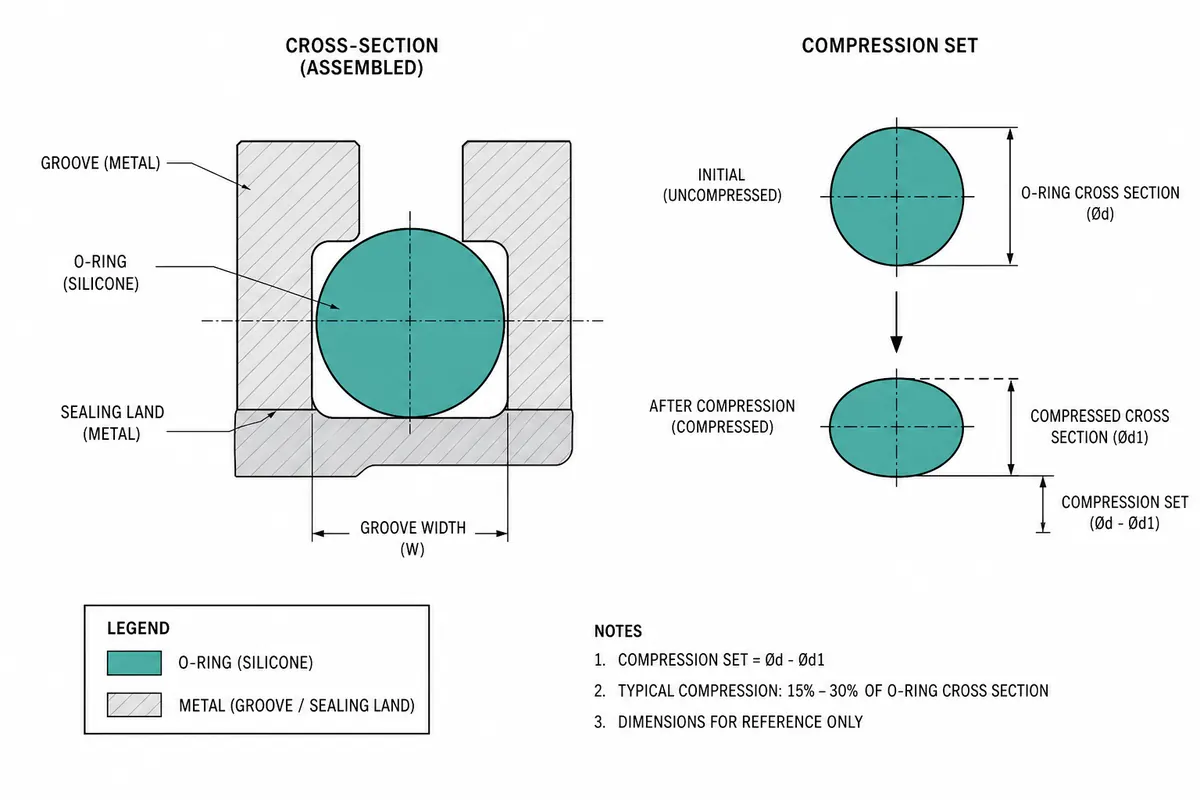
A seal should be designed as a system. The silicone part, groove, mating surfaces, compression, media, temperature and tolerance stack all affect whether it actually seals.
Start With the Sealing Requirement
Tell us:
- static or dynamic seal
- groove geometry
- mating-part dimensions
- target compression/squeeze
- fluid or gas
- temperature
- pressure if relevant
- cleaning chemicals
- required hardness
- expected service life/cycles
- leak or fit acceptance test
Do not select a gasket only by Shore hardness.
Gasket DFM
Groove and Squeeze
Too little compression may not create reliable sealing force. Too much can increase assembly force, stress and long-term deformation. The correct range depends on the actual seal design and material.
Compression Set
Compression set matters when the seal must maintain force over time. It should be considered together with temperature and material.
Parting Line and Flash
Flash on the active sealing bead can be more important than a cosmetic dimension elsewhere. The tool should place and control the parting line away from critical sealing contact where possible.
Tolerance Stack
The groove, mating parts and gasket tolerances work together. A gasket dimension cannot be judged in isolation if the housing and groove also vary.
Corners and Transitions
Sharp geometry can affect molding, stress and seal behavior.
Material Selection
Define the actual environment:
Not every silicone compound is suitable for every fluid. If oil resistance is the main requirement, alternative elastomers such as NBR or another material may need to be considered depending on the service environment.
WYD can review molded silicone requirements and confirm whether the requested material is within scope.
- air/water
- oils or fuels
- food contact
- cleaning agents
- outdoor/weather exposure
- heat
- low temperature
- other chemicals
HCR/HTV vs LSR for Gaskets
HCR/HTV Compression Molding
Common for many molded silicone gaskets and seals.
LSR Injection Molding
Can be selected for geometry, material or production requirements that justify liquid injection molding.
The correct route depends on the drawing, quantity and material.
Prototype / First-Article Validation
Depending on the project:
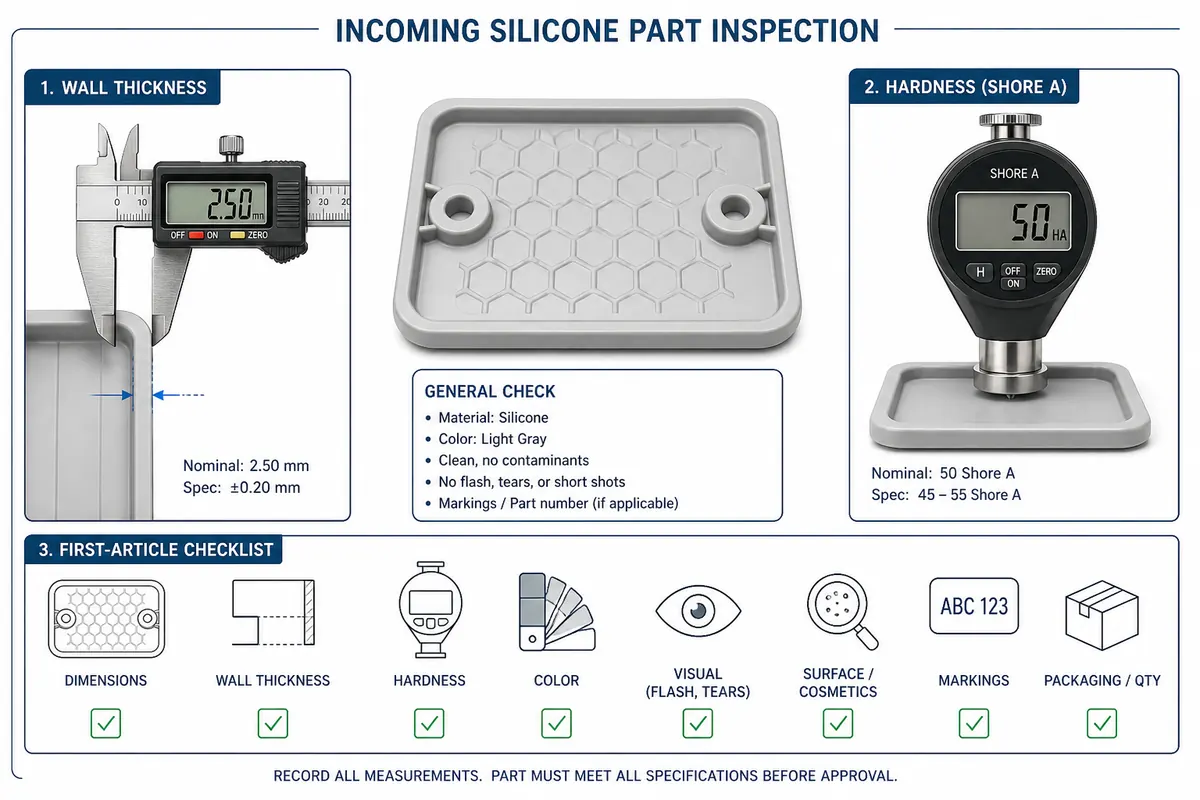
- dimensional inspection
- hardness
- mating fit
- assembly force
- leak test
- pressure test
- compression/recovery
- fluid exposure
- heat aging
- customer-specific functional test
For sealing projects, a real functional test is more valuable than a generic “quality passed” statement.
What to Send for a Quote
- gasket 2D/3D drawing
- groove and mating-part drawing
- material requirement
- media
- temperature
- pressure if applicable
- Shore hardness
- critical tolerances
- quantity
- annual volume
- functional acceptance test
Request a Gasket & Seal Engineering Review
Send the gasket and mating-part drawings with media, temperature and the leak/fit test.