
Custom Silicone Grips and Handles
Custom silicone grips and handles for tools, cookware, equipment and consumer products. DFM for texture, oil/sweat exposure, retention, torque and ergonomics.
On this page
A silicone grip has to stay attached, feel appropriate in the hand and remain functional after sweat, oil, cleaning, vibration or repeated use.
WYD develops custom silicone grips as:
- separate sleeves
- compression-molded covers
- LSR/HCR overmolds
- insert-molded handles
- two-color or dual-hardness concepts
The right route depends on the rigid core, annual volume and retention requirement.
Separate Sleeve vs Overmold
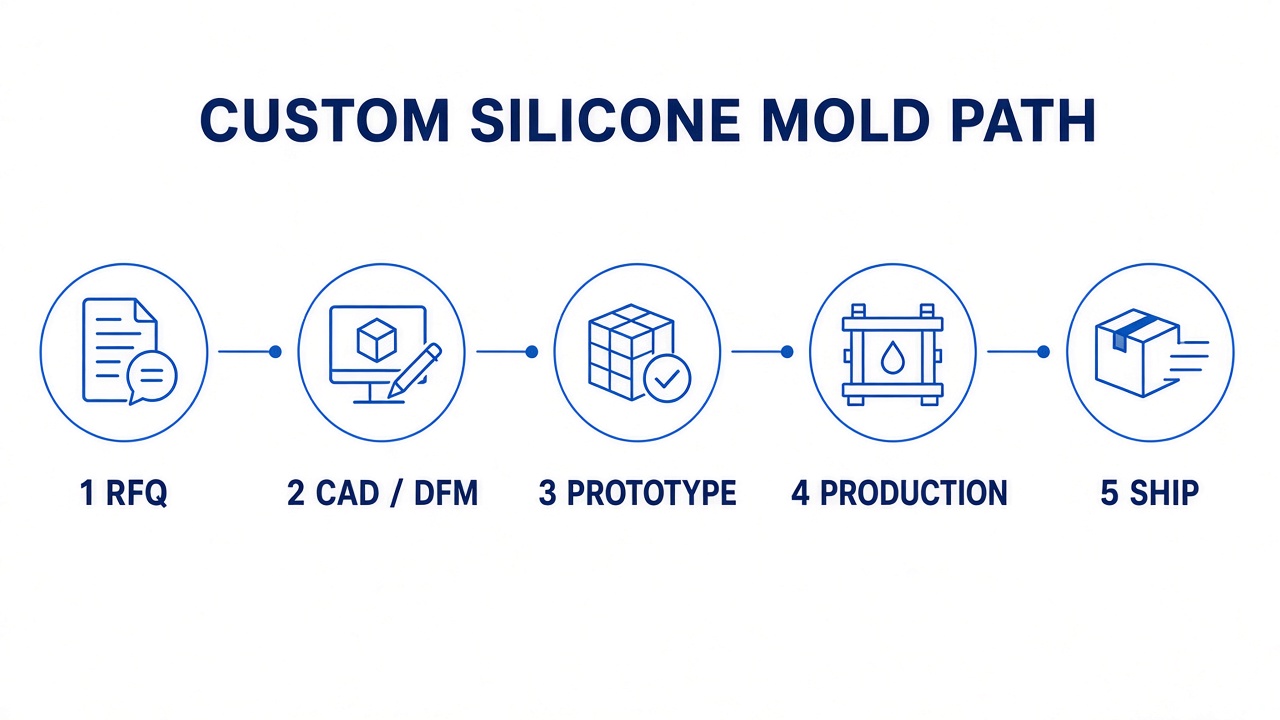
A removable or replaceable sleeve can be attractive when:
- the rigid core is already finished
- field replacement matters
- the buyer wants to avoid bonding
- assembly is simple
An overmold is usually better when:
- rotation must be controlled
- no visible seam is desired
- the silicone should stay permanently attached
- automated/high-volume production supports insert tooling
Grip Is More Than Shore A
User feel also depends on:
- wall thickness
- texture
- cross-section
- rigid-core stiffness
- palm contour
- load direction
A 30A sleeve over a thin flexible core can feel less stable than a 40A layer over a rigid handle.
Texture

Texture can affect:
- wet grip
- oil drainage
- dust visibility
- cleaning
- perceived softness
A smooth premium consumer grip and a shop-tool grip need different surface strategies.
Sweat, Oil and Cleaner Exposure
Tell the supplier what the grip will see.
Examples:
- skin oils
- sunscreen
- kitchen grease
- shop oil
- detergent
- sanitizer
Material and texture should be validated under the actual environment where slipping or swelling matters.
Retention
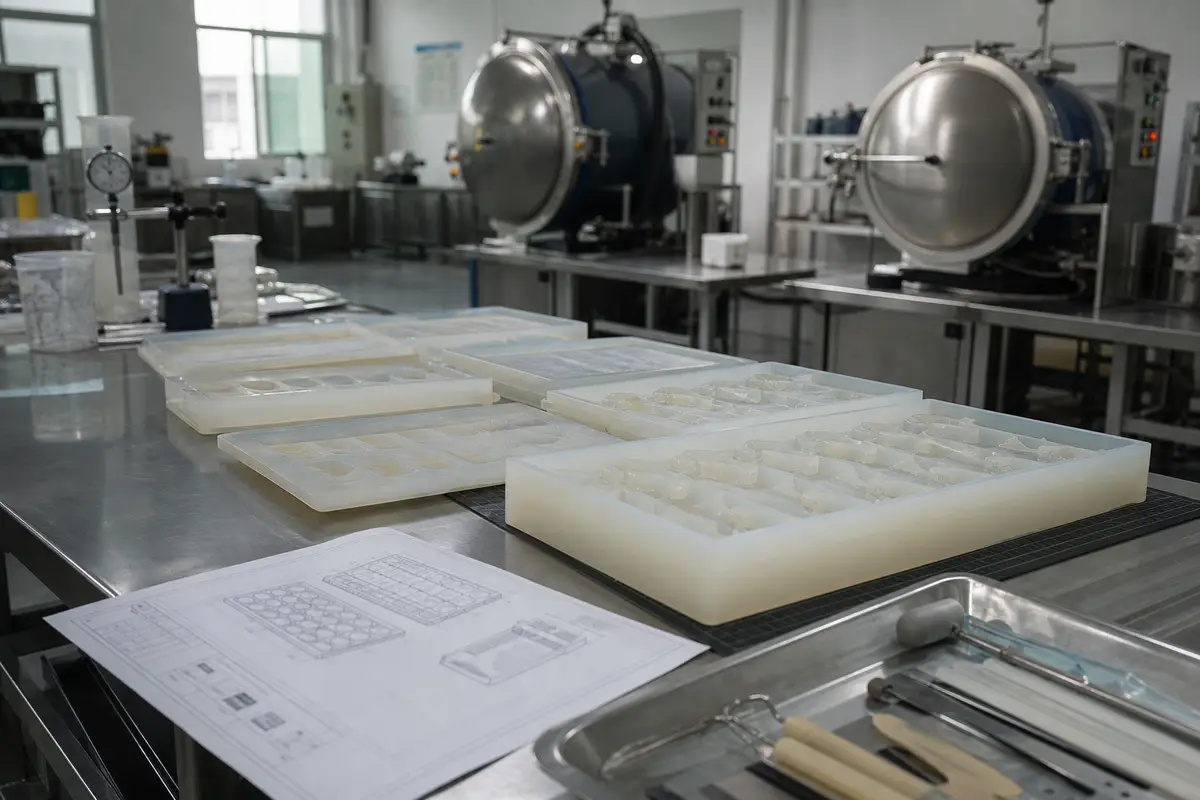
For sleeves, retention may use:
- interference
- internal ribs
- end lips
- mechanical stops
For overmolds, retention may use:
- through-holes
- grooves
- wraparound geometry
- chemical bonding
Define whether the relevant test is:
- pull-off
- torque
- peel
- repeated flex
Torque Is Often the Real Test
A tool or cookware handle can pass a straight pull and still rotate under use.
If twist resistance matters, test the installed handle under representative torque.
Ergonomics
Prototype the real hand interaction:
- grip diameter
- pressure points
- glove use
- trigger/button clearance
- left/right hand
- fatigue
A CAD section alone does not prove comfort.
Dual-Hardness Grips
A firmer structural wrap with softer local pads can improve feel, but the interface and tooling become more complex.
Use dual hardness only when it solves a defined functional problem.
Prototype Validation
Check:
- installation/assembly
- torque or pull retention
- tactile feel
- texture
- chemical/wet grip
- interface flash
- logo
- repeated use
Grip Cross-Section and Local Structure
Grip geometry can be tuned with:
- internal ribs
- local thick pads
- hollow zones
- textured panels
This can adjust feel without changing the entire material hardness.
Wet/Oily Grip Test
If anti-slip performance matters, test the prototype:
- dry
- wet
- with the actual oil/cleaner where relevant
- with glove if the product is used gloved
A smooth laboratory feel does not represent field conditions.
Sleeve Installation
For a separate sleeve, define:
- installation direction
- assembly fixture/lubricant policy
- maximum force
- final rotation/retention
A sleeve that stays attached but takes excessive labor to install can be uneconomical.
Check installation on cores at both ends of the dimensional tolerance. Record insertion force and final pull or twist resistance using the same assembly method. If a lubricant is used, identify it during testing because the grip must still remain secure after assembly and exposure to the intended cleaning process.
Cosmetic Approval
Approve:
- texture
- logo
- seam/parting line
- color
- interface edge
on the production-intent process, because RTV or printed appearance can differ from molded HCR/LSR.
Related WYD Pages
Final Recommendation
Tell us how the user holds the product, what contaminants it sees and how the grip could fail. That produces a better design than choosing hardness from a catalog.
Ready to order custom silicone molds?
Send your drawing, sample or project requirements for DFM and quotation.