WYD Shenzhen factory: custom silicone molds and molded parts from prototype to production

WYD

Shenzhen · since 2006

Custom Silicone Manufacturing From Prototype to Production

WYD manufactures custom silicone molds and finished silicone components from drawings, samples and design concepts. Tell us what you need to make, how it will be used and the quantity required. We will review the design and suitable manufacturing route before quoting tooling and production.

Since 2006

Bao'an plant, Shenzhen

MOQ 20

Soft trays after sample approval

USD 50

Basic 3D modeling. Complex work quoted separately.

DFM Review

Before tooling is cut

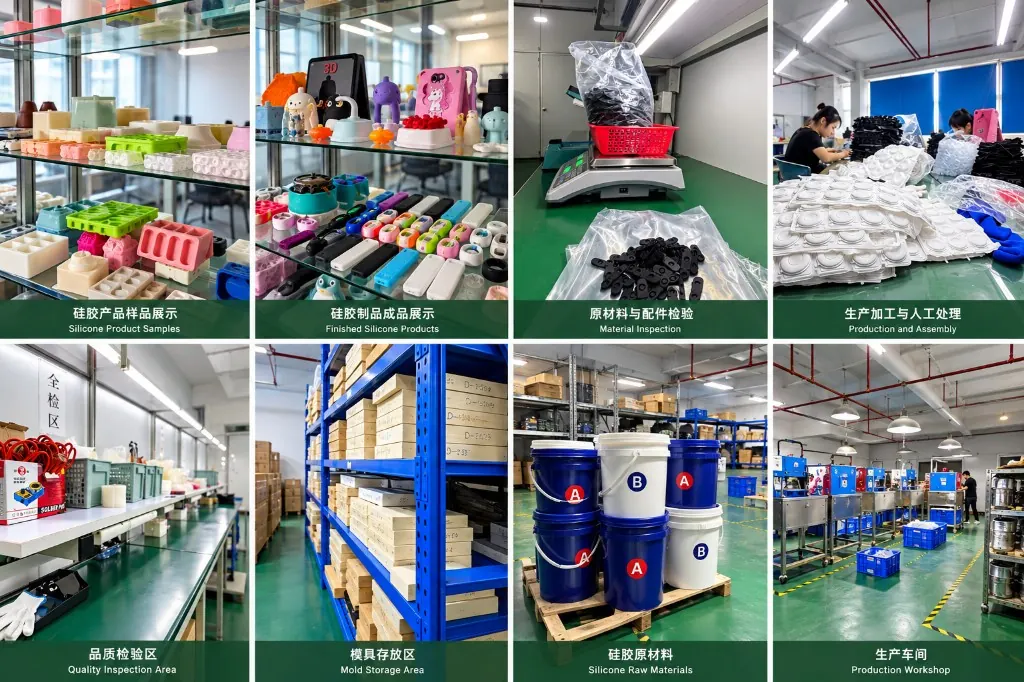
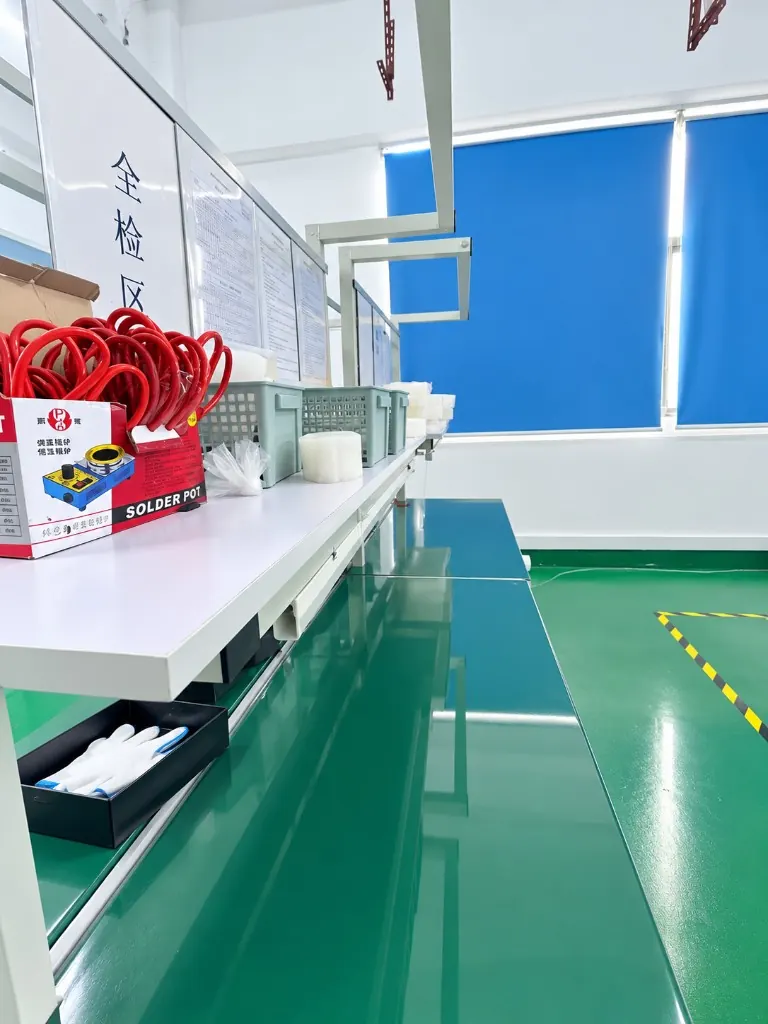
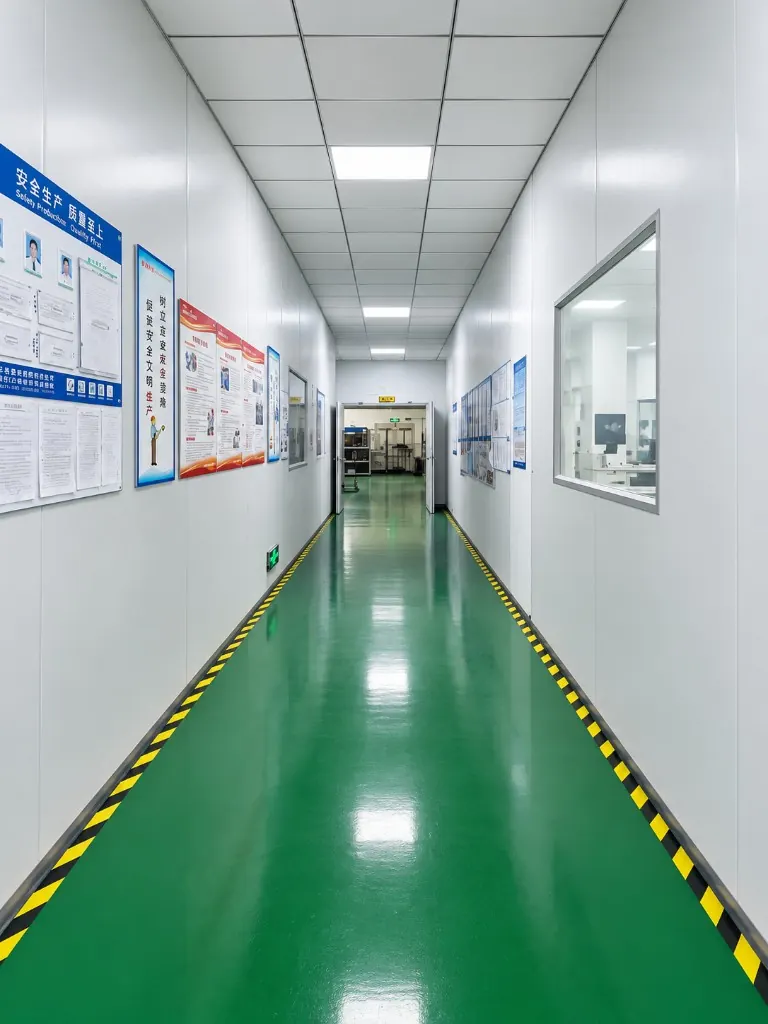
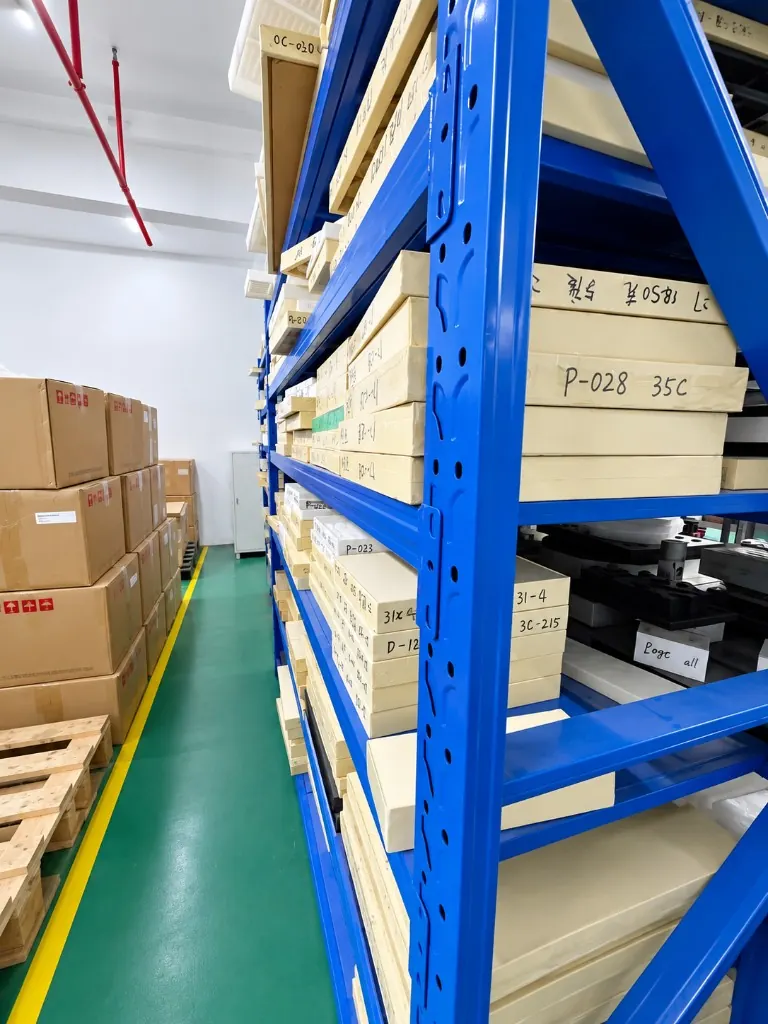
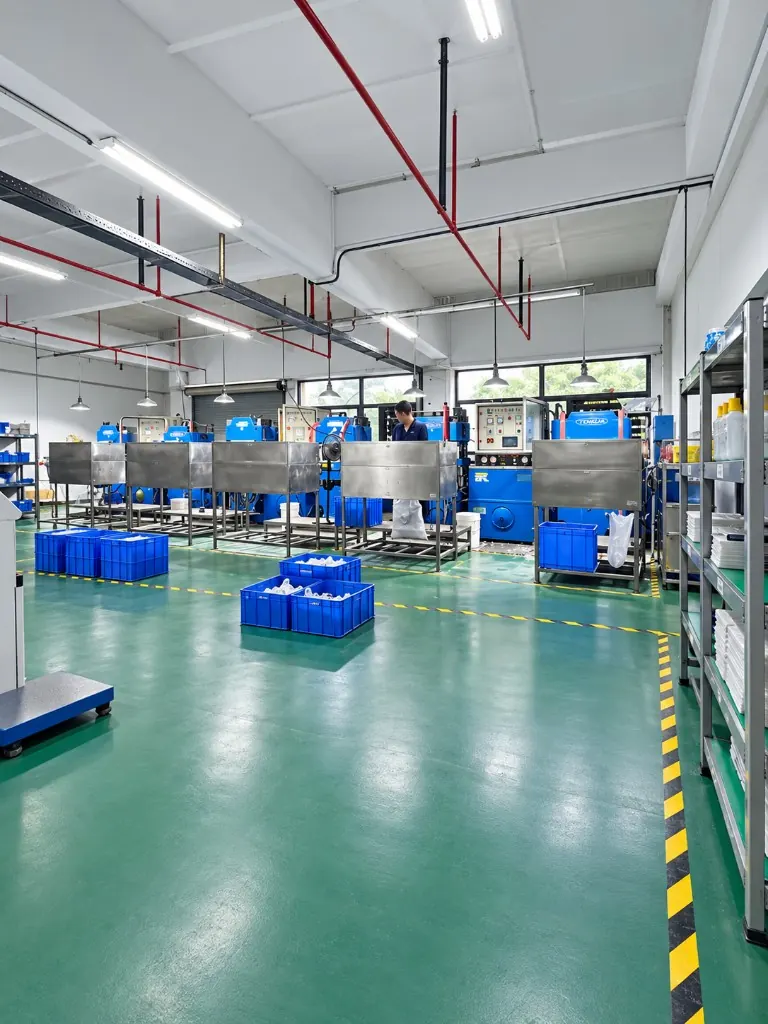
Bao'an plant floor

Mill, press, inspection and the product cabinet share one floor

Labeled walkthrough of the WYD Bao'an plant. Quote from the drawing, the process and the CTQ — not from a collage.

WYD Bao'an plant process board: samples, QC, mold storage, compounding and press bay
Plant map from the Bao'an floor. A labeled board is a walkthrough, not a spec sheet.

Size sheet, then the 3D confirm

You confirm the dimensioned 3D before we go further

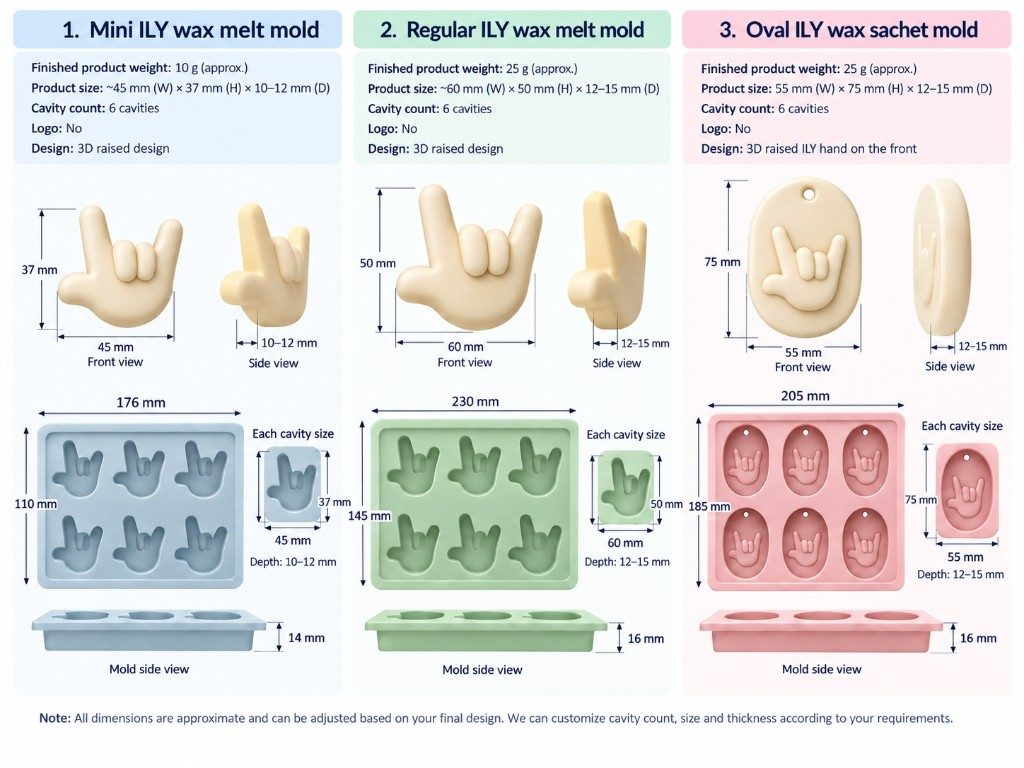
Most jobs start from one sheet, not a tool. You send the idea and the sizes you care about. We draw the options on one page: piece size, cavity count, and the mold envelope, marked approximate so you can change them. On this wax-melt job the sheet holds three 6-cavity trays: mini about 45 × 37 mm, regular about 60 × 50 mm, and an oval 55 × 75 mm. That page is what we negotiate before anyone opens a 3D file.

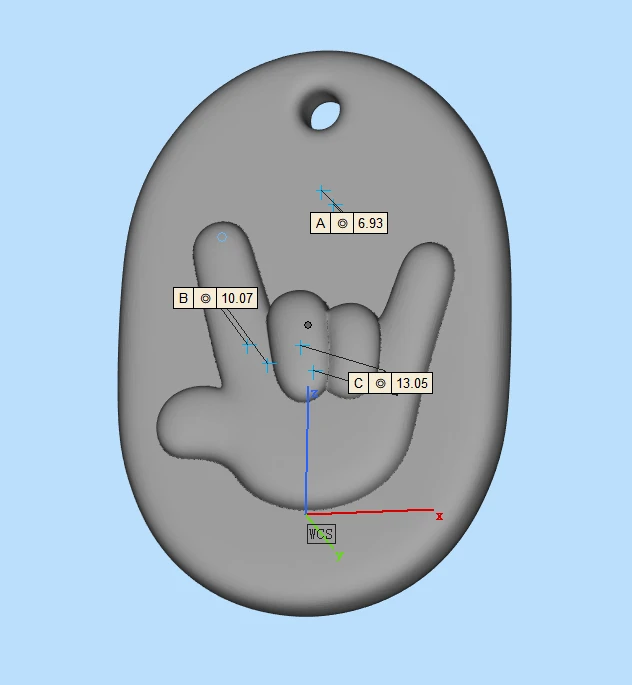
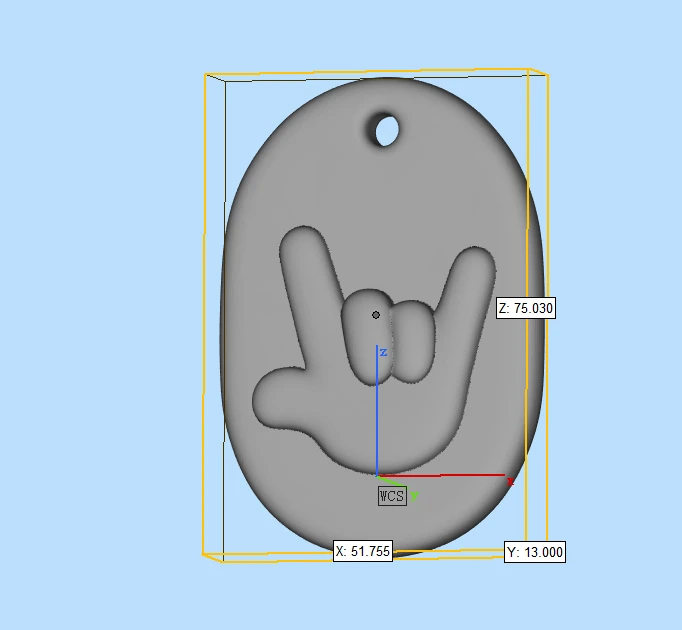
The worry we hear is the same: the factory will pour silicone off a concept, and the fingers come back the wrong thickness. After the sheet, we send a dimensioned 3D. On this oval the check file labels A 6.93, B 10.07, and C 13.05, and the piece envelope is 51.755 × 75.030 × 13 mm, hanging hole included. Layout and silicone start after that confirm, not before it.

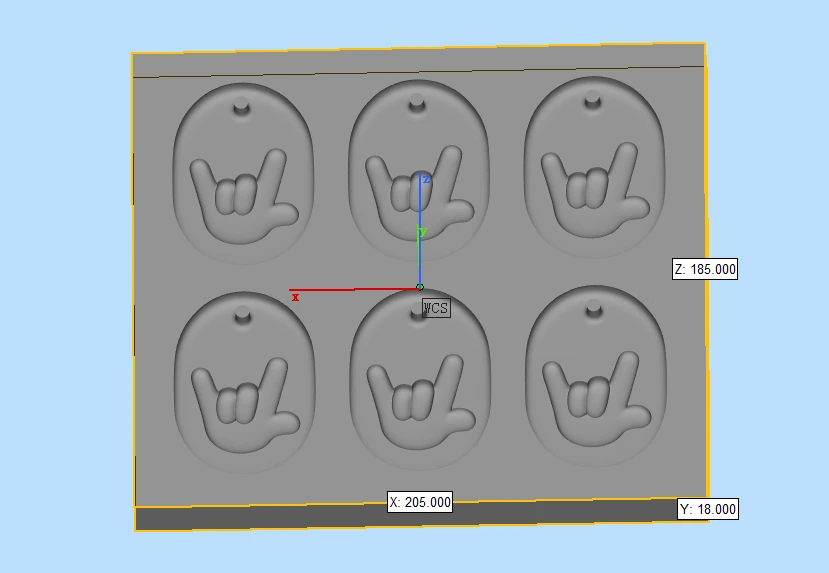
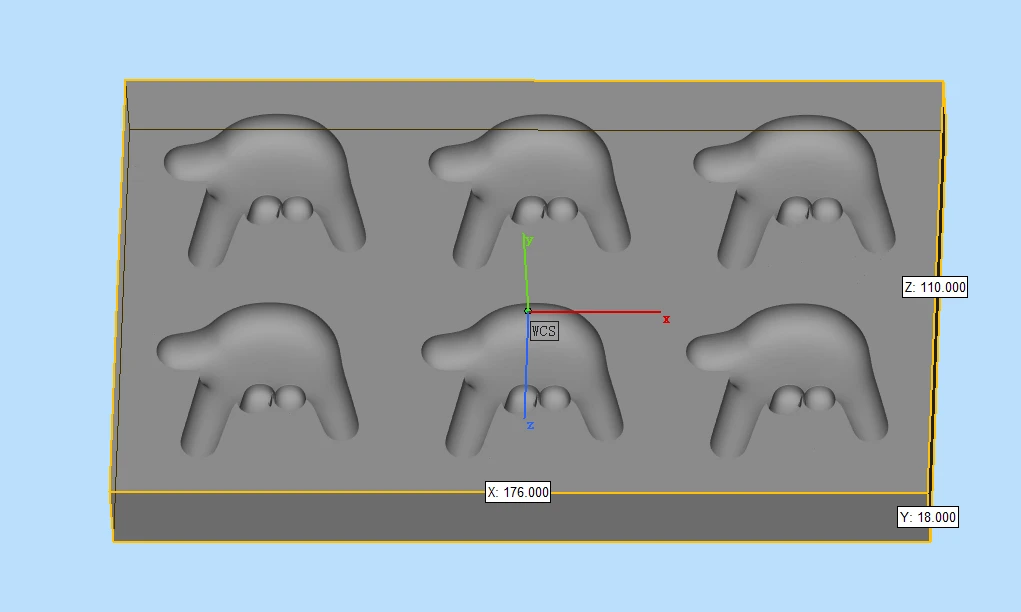
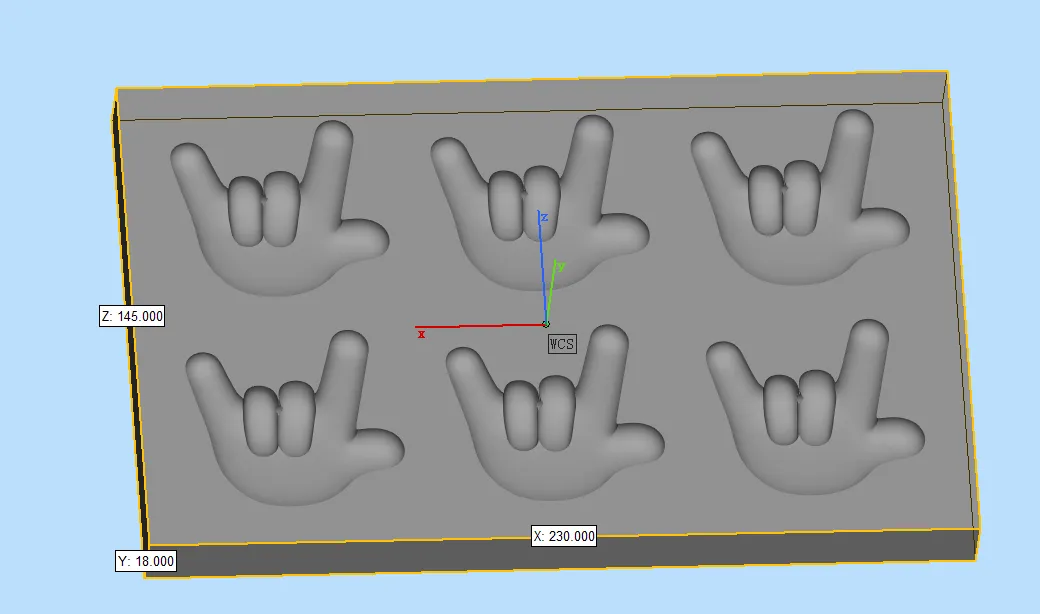
Three final sheets sit behind that check. They are not one block scaled three ways: oval 205 × 185 × 18 mm, a second sheet 176 × 110 × 18 mm, and the plain hand 230 × 145 × 18 mm. Buyer name and the quotation stay off the site. The write-up is the ILY hand wax-melt case.

First sheet: idea and sizes

Size sheet for three ILY wax-melt molds: mini 45 by 37 mm, regular 60 by 50 mm, and oval 55 by 75 mm, each with six cavities
Step 1. You send the idea and the sizes. We put the options on one sheet. Dimensions on the sheet are approximate until you lock them.
3D check of an oval ILY hand with labels A 6.93, B 10.07, and C 13.05
Detail check. Labeled A 6.93, B 10.07, C 13.05. Hanging hole stays in the oval.
3D envelope of the oval ILY piece labeled 51.755 by 75.030 by 13 mm
Same piece, envelope labeled 51.755 × 75.030 × 13 mm. This is the file you confirm.

Three sheets after the confirm

Six oval ILY cavities with hanging holes on a 205 by 185 by 18 mm block
Oval sheet, hanging holes. Labeled 205 × 185 × 18 mm.
Six ILY cavities seen from the back on a 176 by 110 by 18 mm block
Second sheet, cavity back. Labeled 176 × 110 × 18 mm.
Six plain ILY hand cavities on a 230 by 145 by 18 mm block
Plain-hand sheet. Labeled 230 × 145 × 18 mm.

Concept, confirm, layout, silicone

  1. Beige concept render of an ILY handshape with the wrist omitted
    1 · Concept. Concept only. Not a release to cut.
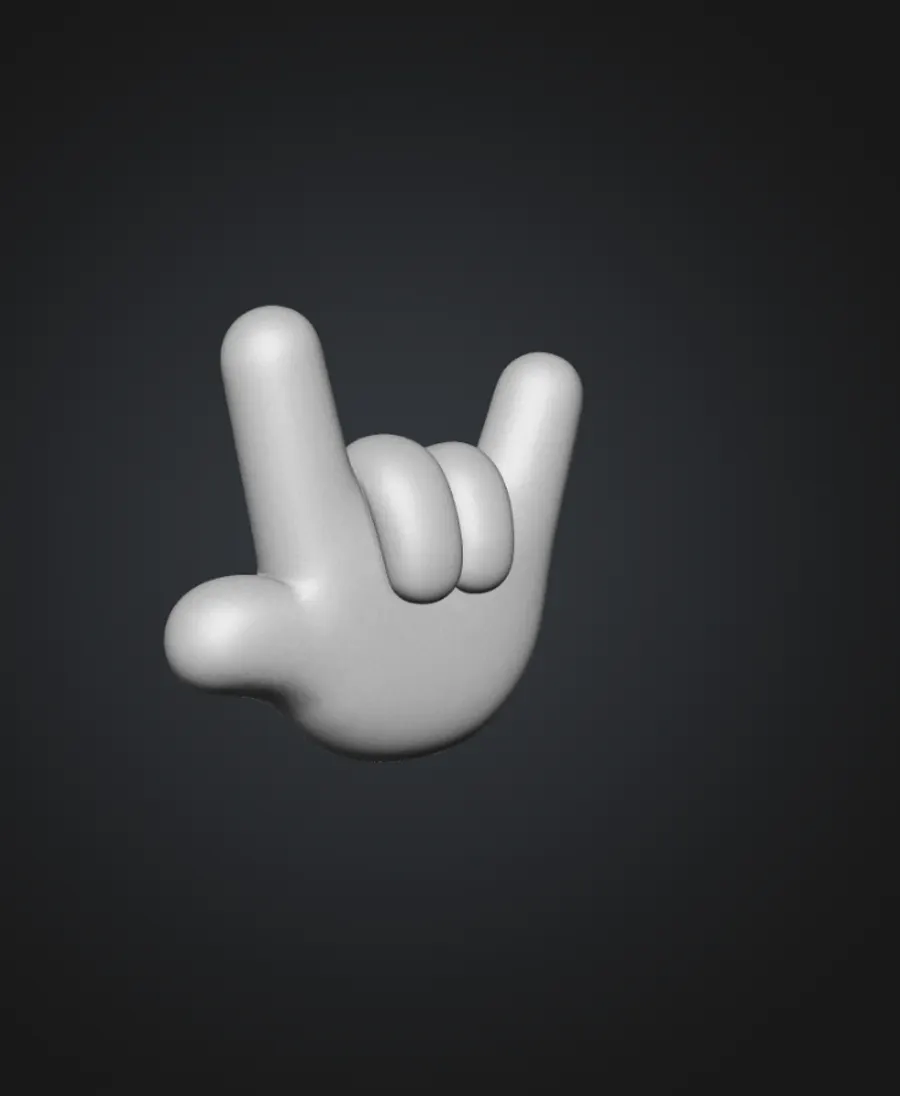
  2. Gray 3D model of the same ILY handshape
    2 · 3D confirm. 3D goes back for size and detail. The next step waits.
  3. CAD layout of six ILY hand cavities on a 230 by 145 by 18 mm block
    3 · Mold layout. Layout after the confirm. One sheet is not the other two.
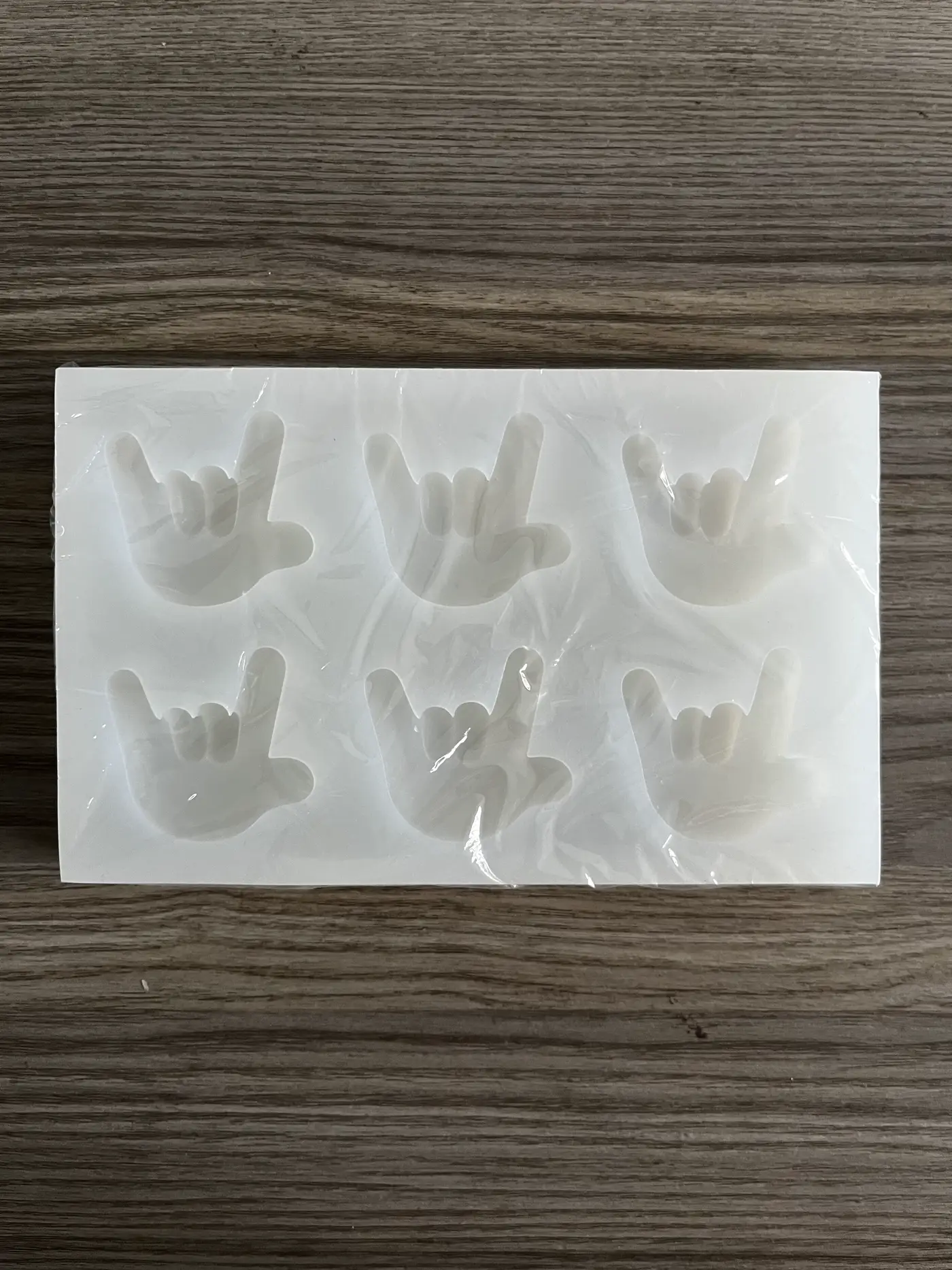
  4. White silicone mold with six ILY hand cavities, still in pack film
    4 · Silicone mold. Poured silicone for the plain-hand sheet. Still in pack film.

High-detail cavities

Scales, whiskers, and feather lines have to leave the mold intact

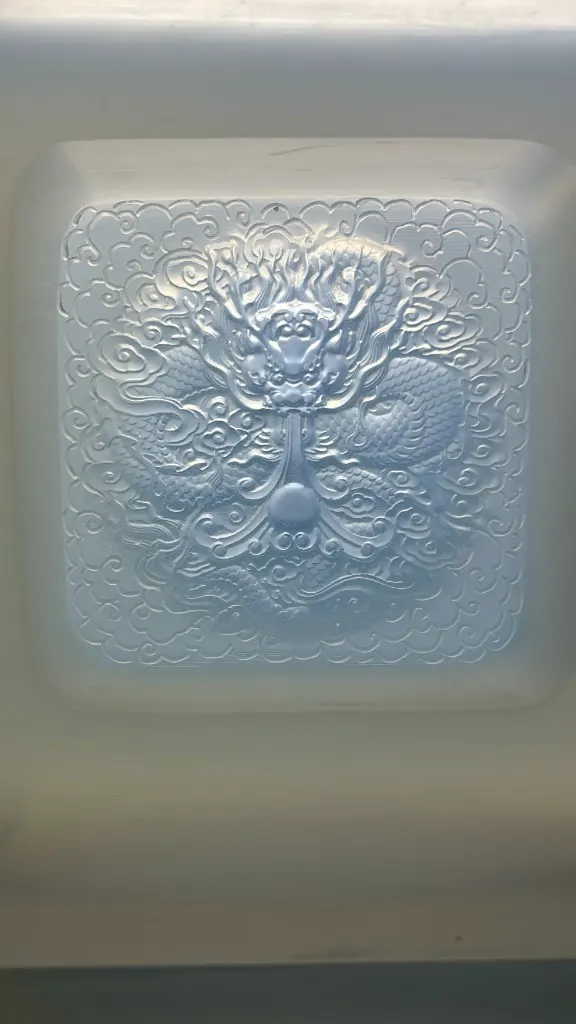
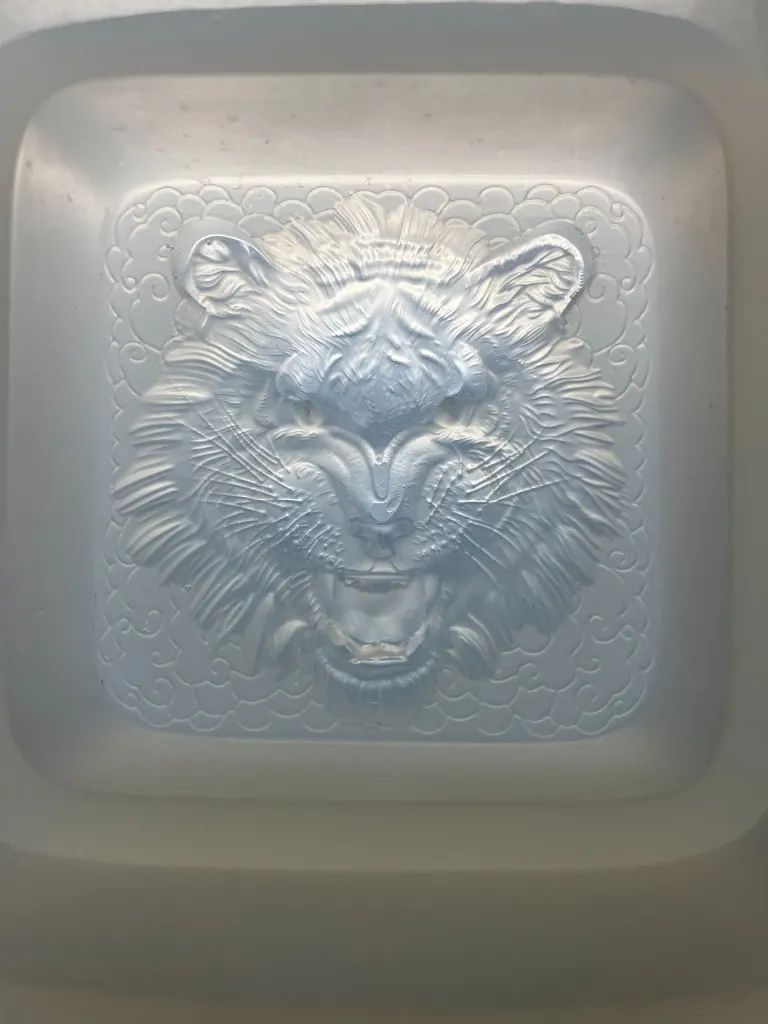
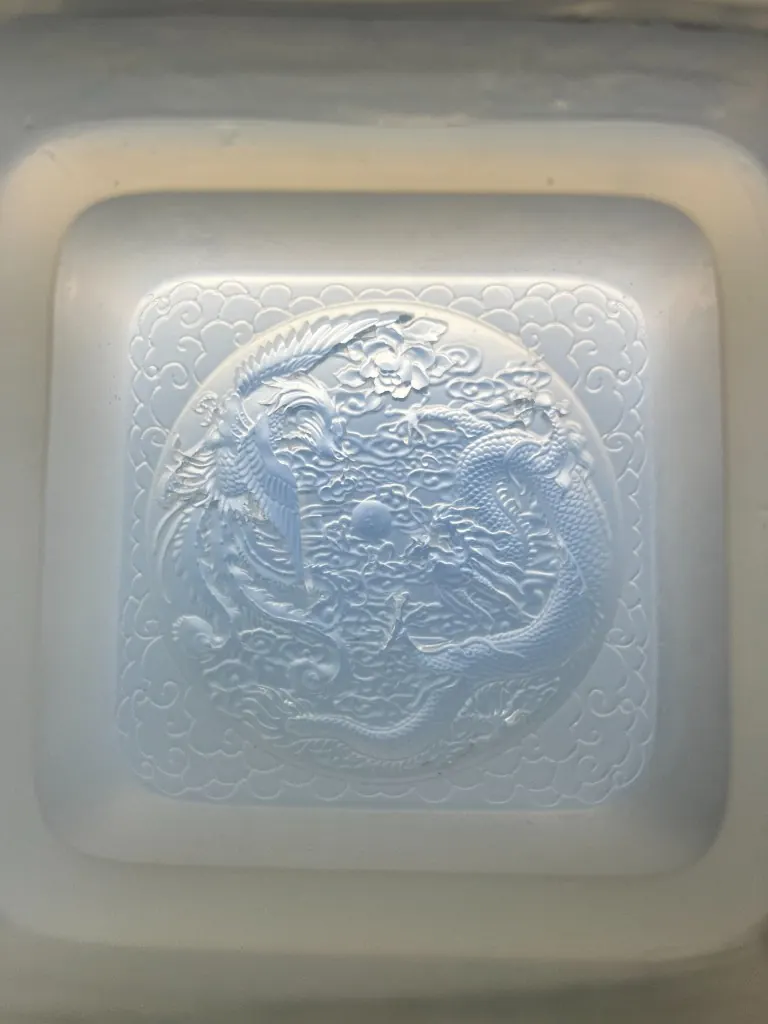
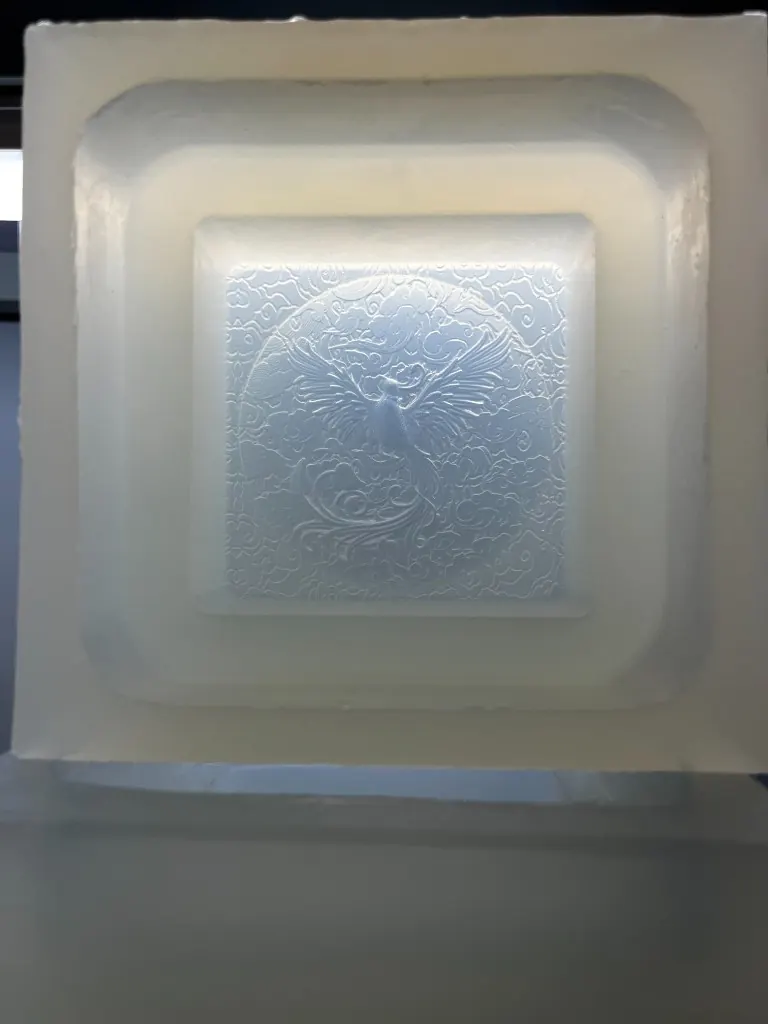
These square wells are WYD silicone molds: a coiled dragon, a tiger face, and phoenix relief. Hair, scale edges, and tail barbs are the check. A shallow cavity looks fine in a render and comes out smooth. An undercut that is too tight tears the line off on demold.

The short is the dragon well in the hand. Lines burned onto the clip are not a specification. The same family — dragon, tiger, crane, and phoenix — is written up with stills on the relief-set case. Primary pour on that job is plaster and ointment craft. Name chocolate, ice, or resin on the RFQ before we treat the well as a food or resin tool.

Dragon cavity short. Handheld look at the well, not a cycle-life test.
Translucent silicone mold with a coiled dragon relief and pearl
Dragon well. Scales and the pearl have to demold.
Silicone mold cavity of a tiger face with whisker and brow lines
Tiger well. Whiskers fail first if the relief is too shallow.
Silicone mold with dragon and phoenix relief in one square well
Dragon and phoenix in one well. Depth is not copied from a single face.
Silicone mold cavity of a phoenix in a circular cloud field
Phoenix well. Wing and tail lines are a release path.

Current packing lot

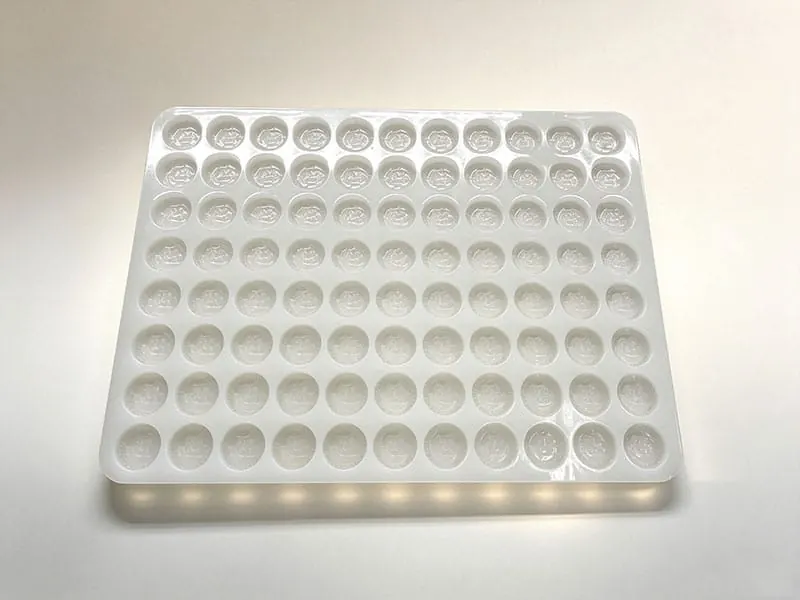
Rose cavities and character borders from this floor

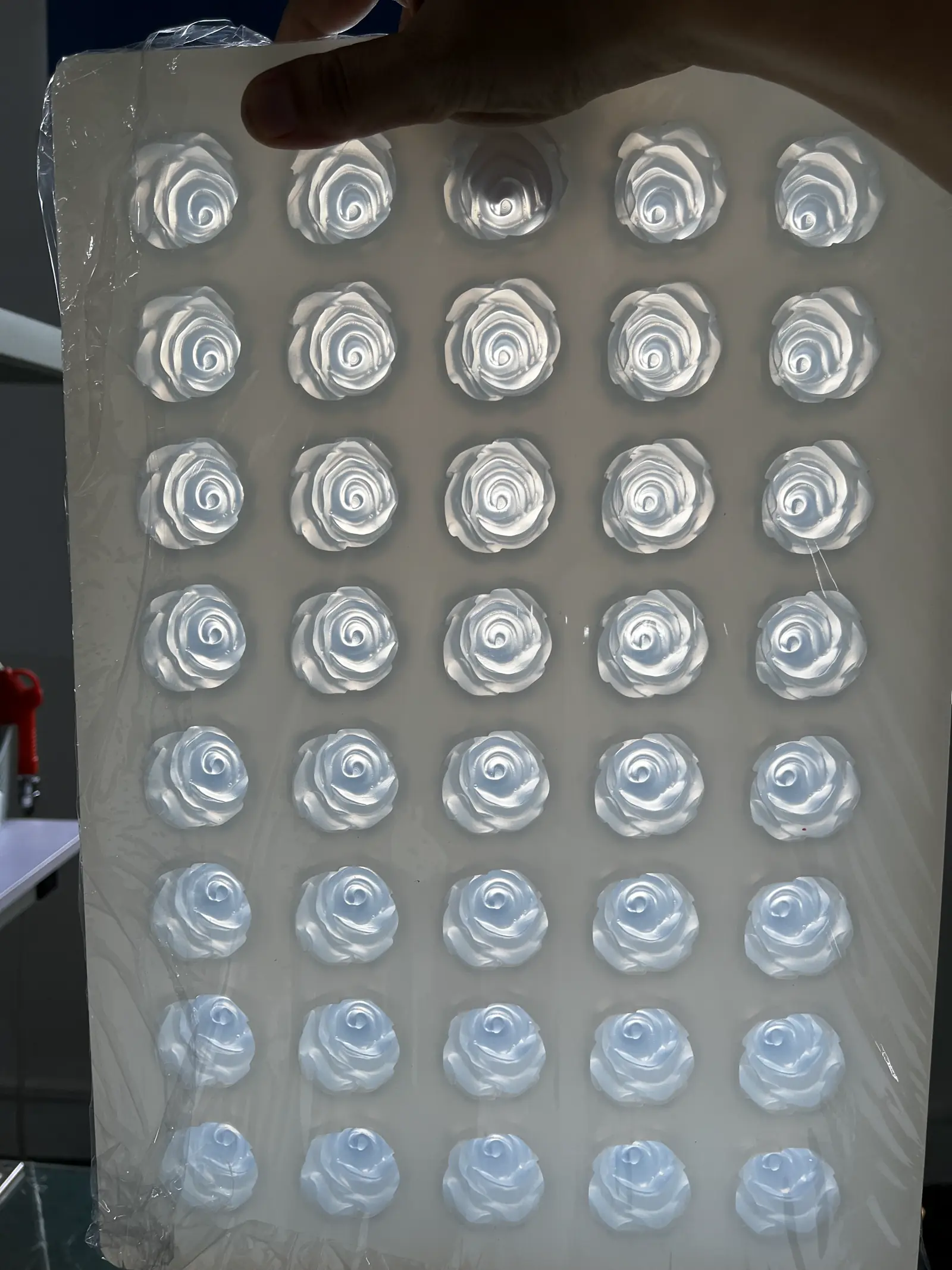
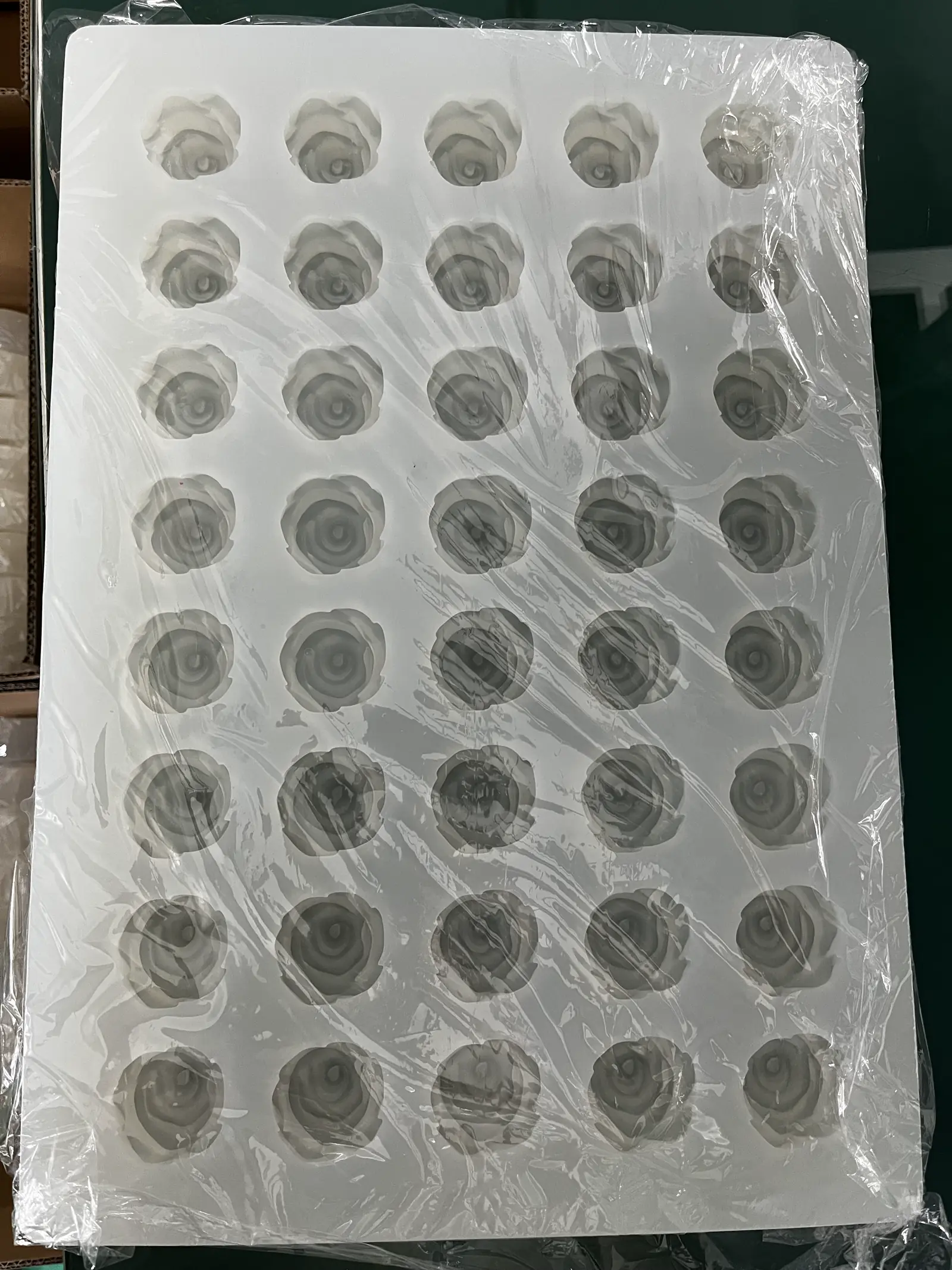
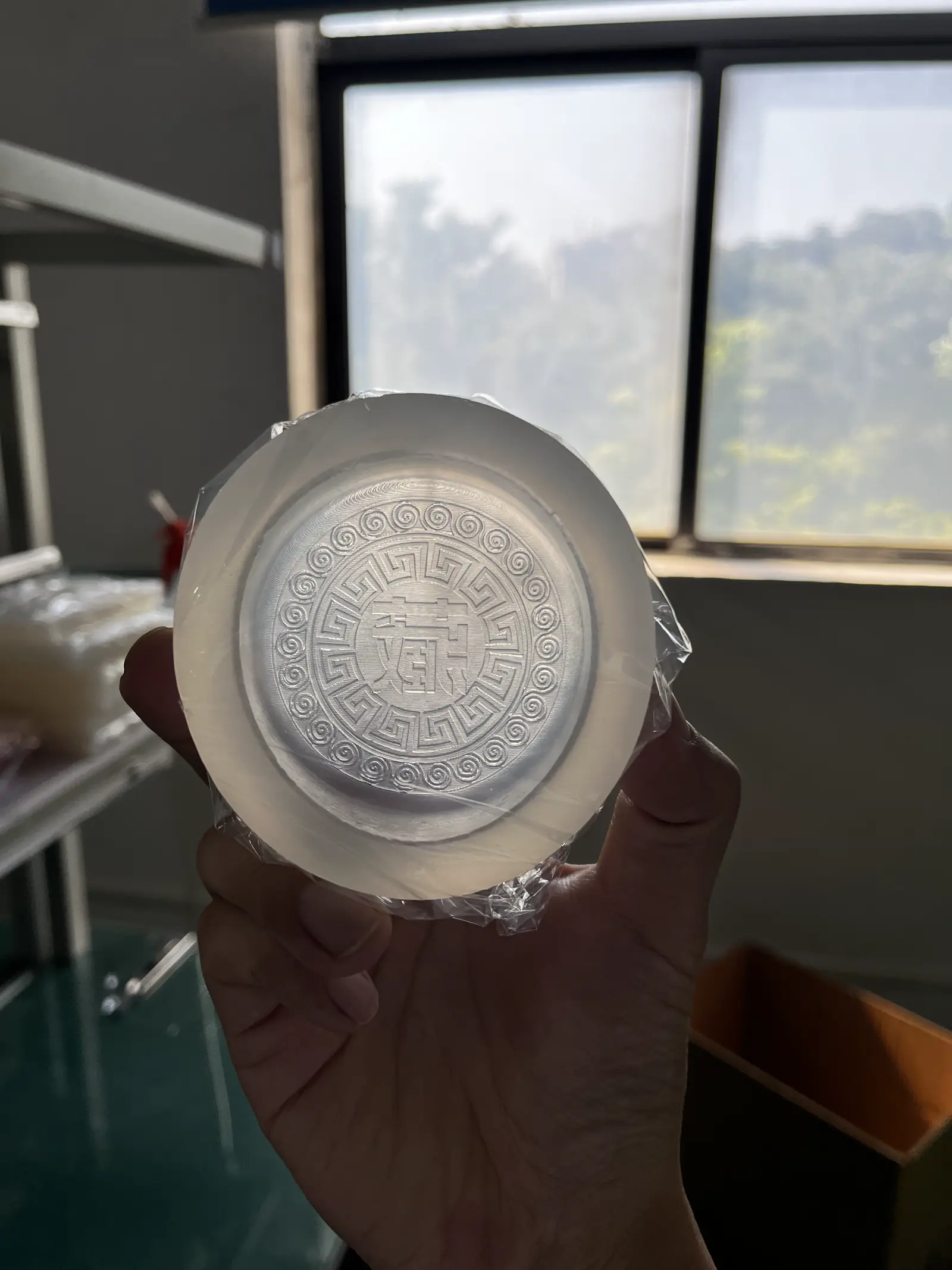
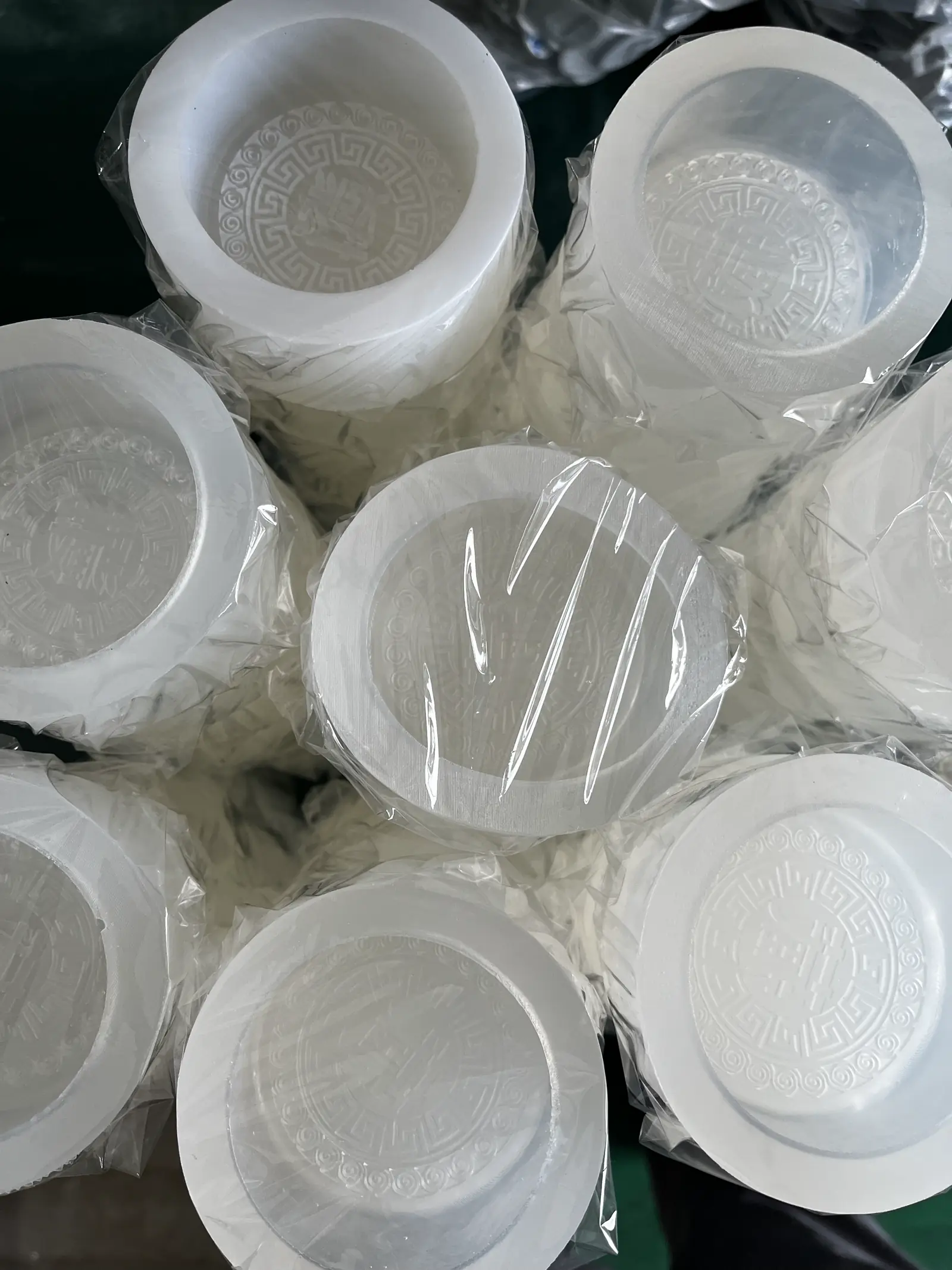
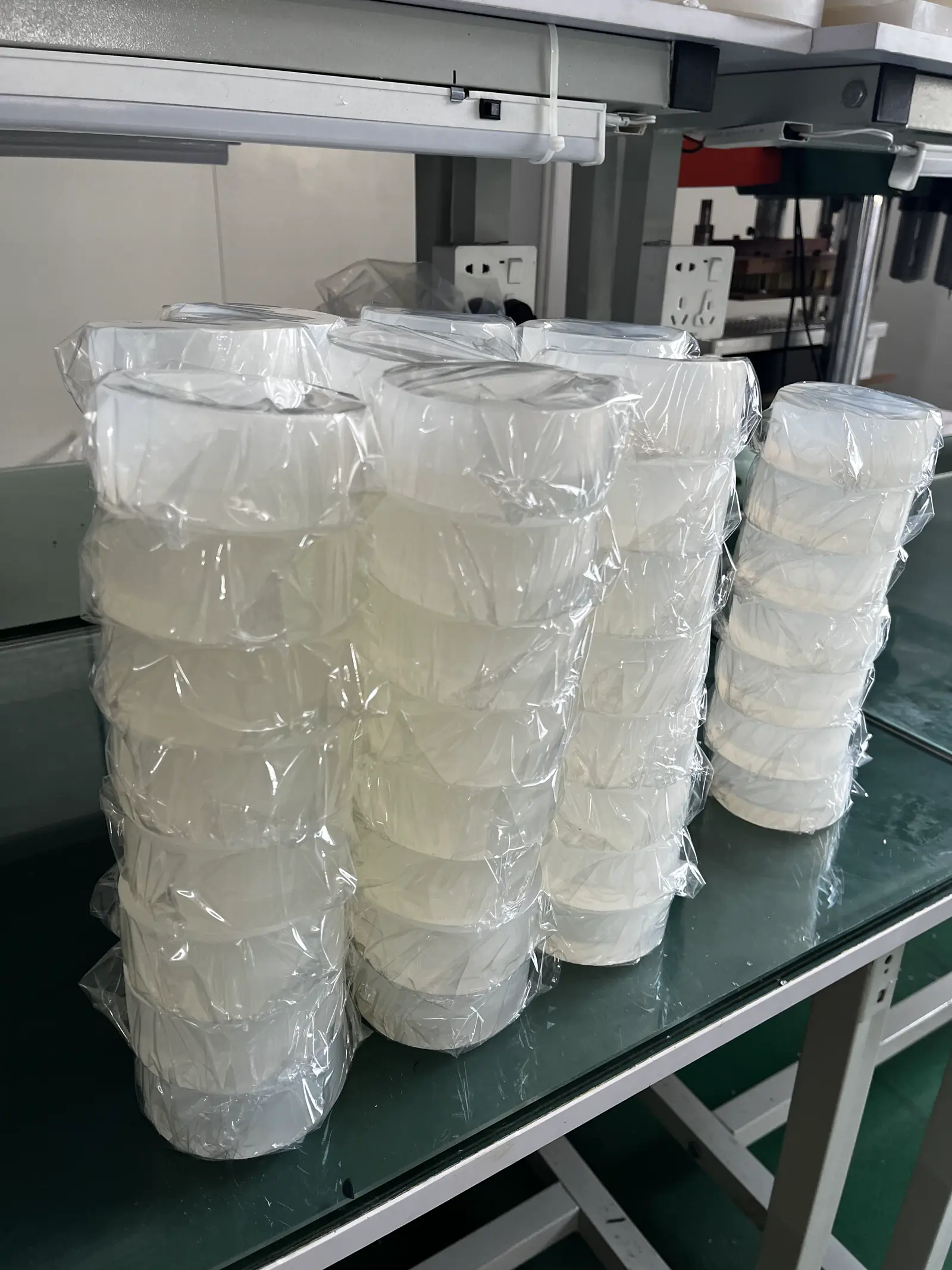
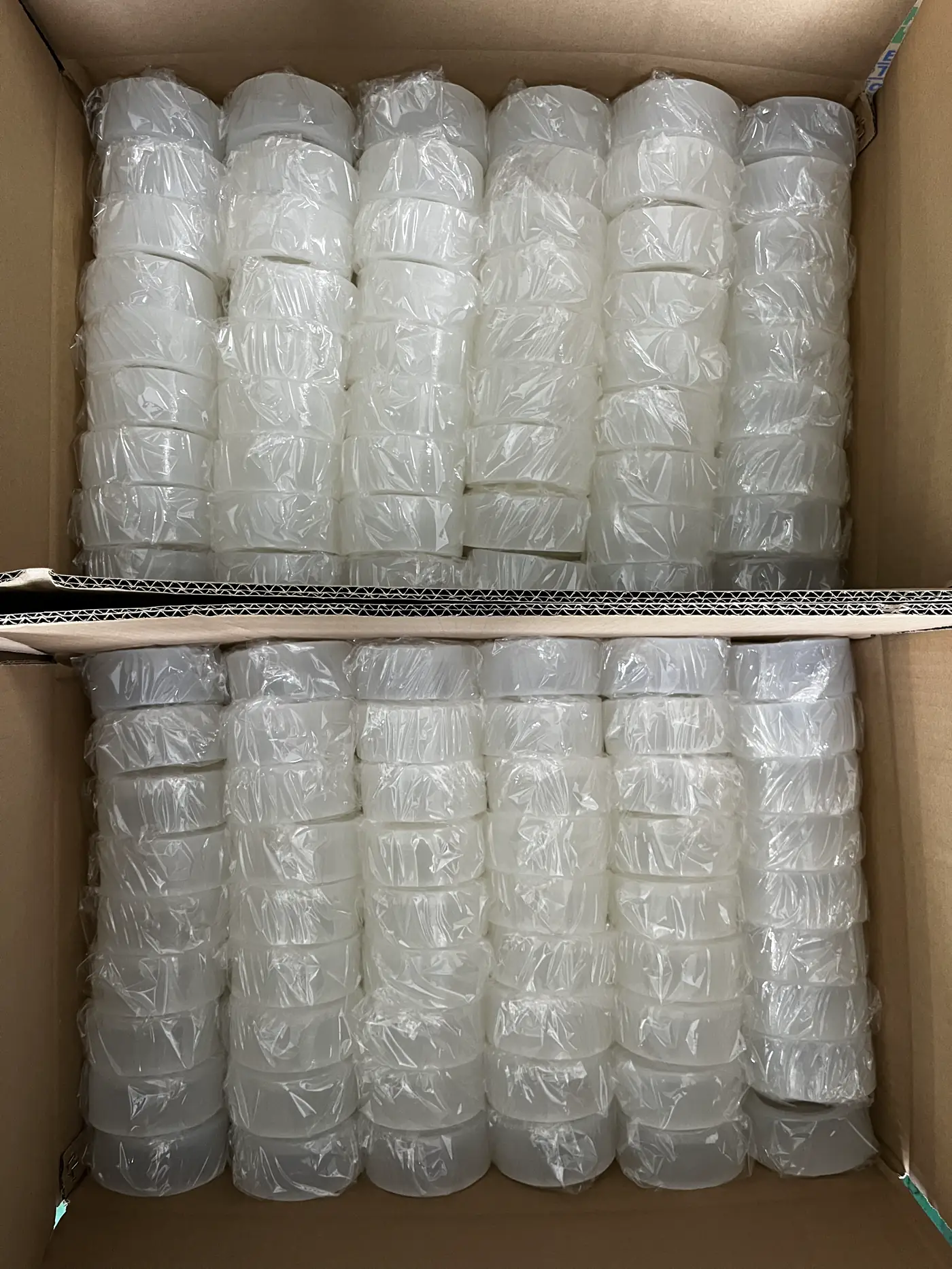
These are WYD molds from a current lot. The rose sheet has to keep petal lines. The round wells carry a center character inside a key-fret ring. Bagged stacks are the round family leaving the table.

Piece count, Shore, and the pour stay on the job sheet. Send the artwork if you want a matching cavity. Craft and relief work starts at custom craft molds.

Translucent silicone tray of rose cavities held up to the light
Rose tray. Petal edges are the check, not a smooth disc.
Rose cavity tray still covered in pack film
Same rose tray, cavity side, still in the pack film.
Round silicone mold with a center character and key-fret border
Round well. Center character, key-fret ring, spiral outer band.
Several bagged round silicone molds with different center characters
Same round family, different center characters.
Stacks of bagged round silicone molds on a green packing table
Bagged round molds on the packing table.
Carton packed with bagged round silicone molds
Same round family, bagged in a carton.

Choose the deliverable

Start With What You Need to Receive

Choose a flexible mold for casting or food production, or a finished silicone part for your product. Each route has different design, tooling and sample requirements.

I need a custom silicone mold

Choose this path when the item you need to receive is the flexible mold or tray you will use to make something else.

  • gummies and confectionery
  • chocolate
  • ice
  • baking
  • soap
  • candles and wax
  • resin
  • plaster and decorative casting
  • other custom cavity or casting applications

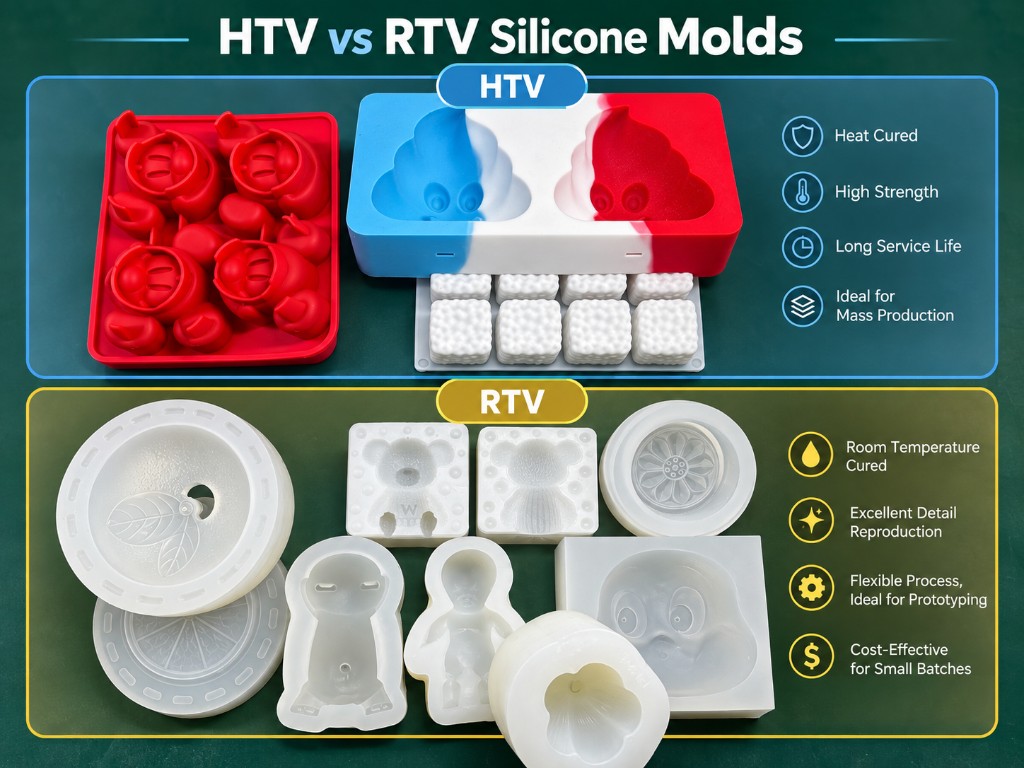
Depending on geometry, quantity and use, a project may use an RTV master-based mold-making route or an HCR/HTV compression-molded production tray.

HTV heat-cured trays compared with RTV room-temperature casting molds

HTV vs RTV silicone molds →

Explore Custom Silicone Molds

I need a finished silicone product

Choose this path when the item you need to receive is the final silicone component or assembled product.

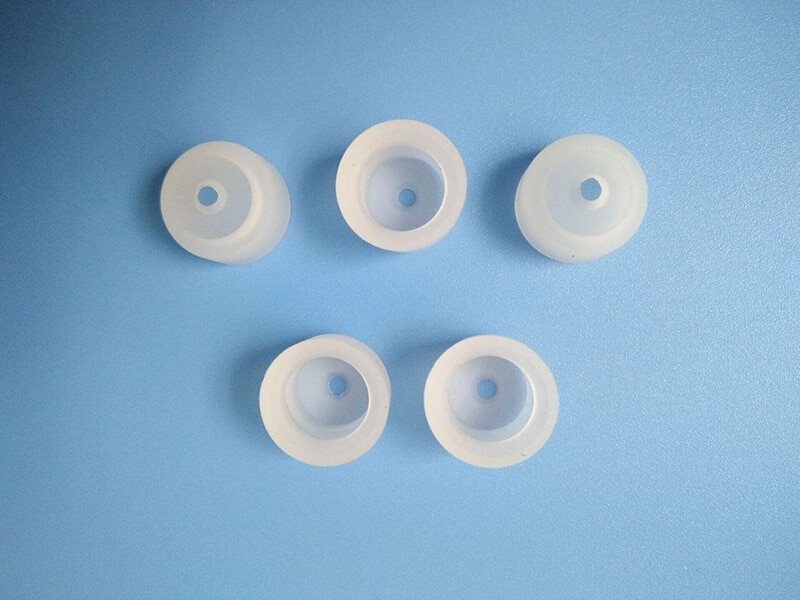
  • gaskets and seals
  • keypads
  • protective covers and boots
  • grips and handles
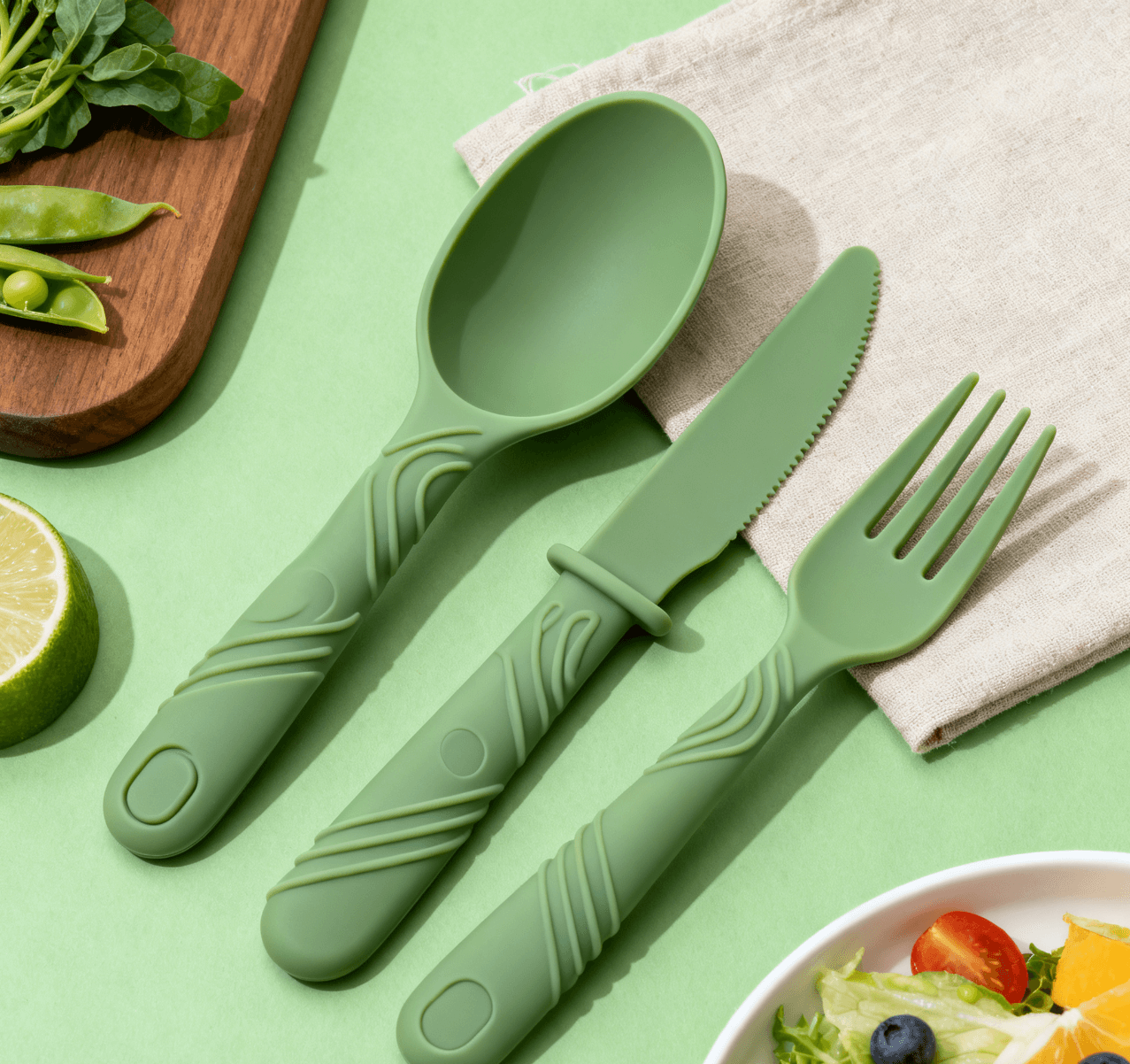
  • kitchenware components
  • electronics and wearable parts
  • baby and consumer components
  • tubing and extruded profiles
  • overmolded silicone parts

The manufacturing route may be HCR/HTV compression molding, LSR injection molding, overmolding, extrusion or another project-specific process. A 3D-print or CNC sample is prototype. The steel or aluminum production mold is tooling - quote them as separate lines.

Explore OEM Silicone Products

Custom Mold Programs for Food and Casting Applications

A useful custom mold starts with the process that will happen inside the cavity.

For a gummy tray, the important questions may be target piece weight, cavity pitch, depositor layout and demolding. For an ice mold, loaded-tray support and frozen release matter. A detailed resin or plaster figure may need a split RTV mold and a rigid support shell rather than a simple open tray.

That is why WYD does not treat every “silicone mold” as the same product.

For food applications, start with the material being deposited, frozen, or baked; cavity count; target portion; tray envelope; and any production equipment constraints. The same list covers chocolate, baking, soap, and candle.

Custom Food Silicone Molds

Line decisions

Read the decision before you send the RFQ

All articles

What we manufacture

Custom Silicone Products & Production Molds

From custom silicone trays and molds to molded OEM components, we support product development, tooling and repeat production for food, consumer and industrial applications.

Plant visits

See the floor before you release a PO

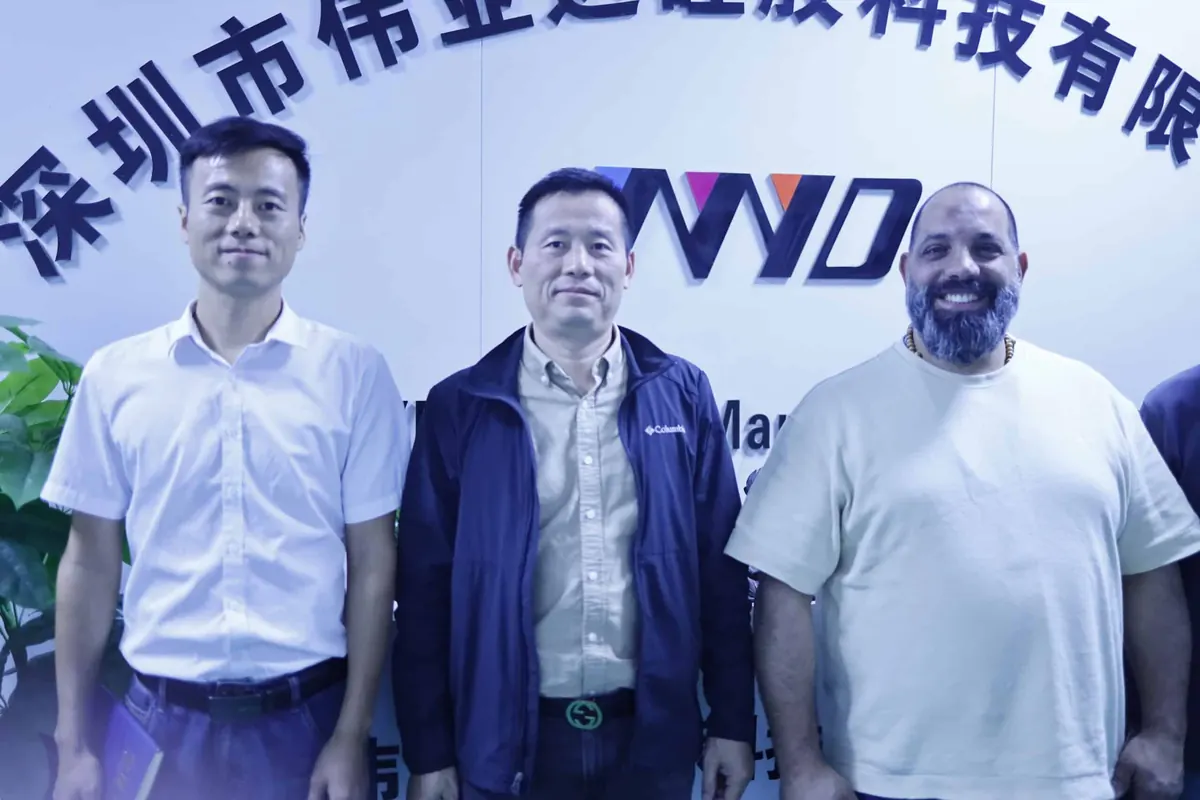
Arrange a plant visit to review representative molds, silicone parts and inspection methods with the WYD team. Share your project requirements in advance so the discussion can focus on the process and samples relevant to your order.

Customer visits

Sample review and a walk of press and inspection before production release.

Buyer visit at the WYD Bao'an plant reviewing silicone molds
Sample and tray review on the Bao'an floor.
Customer and WYD staff at the Shenzhen plant
Walk the press and inspection area before a production release.

Factory display

The team and the soft-vs-steel bench on the same floor.

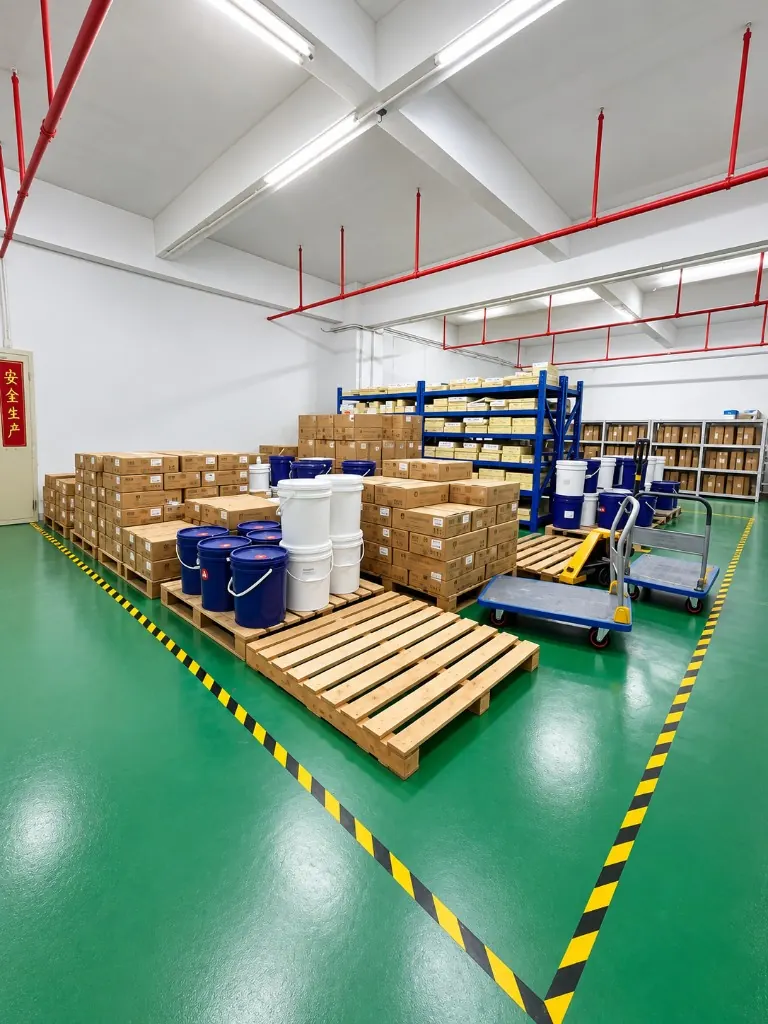
Cartons and silicone drums on pallets in the WYD Bao'an warehouse
Inbound compound and packed goods on the same plant.
Full inspection bench at the WYD Bao'an plant
Full-inspection bench. CTQ is written before the PO, not after packing.

Our Shenzhen factory

Engineering, Tooling and Silicone Production Under One Roof

Engineering, tooling, molding and inspection sit in one manufacturing workflow. Process capability for a specific job is confirmed against the drawing or sample before tooling.

Green-floor corridor into the WYD Bao'an production rooms

Engineering & DFM

CAD modeling or modification, parting-line planning, cavity layout and tooling preparation before production.

Labeled steel mold storage racks at the WYD Bao'an plant

Production Tooling

Steel tools stored by job number for compression-molded silicone products and production trays.

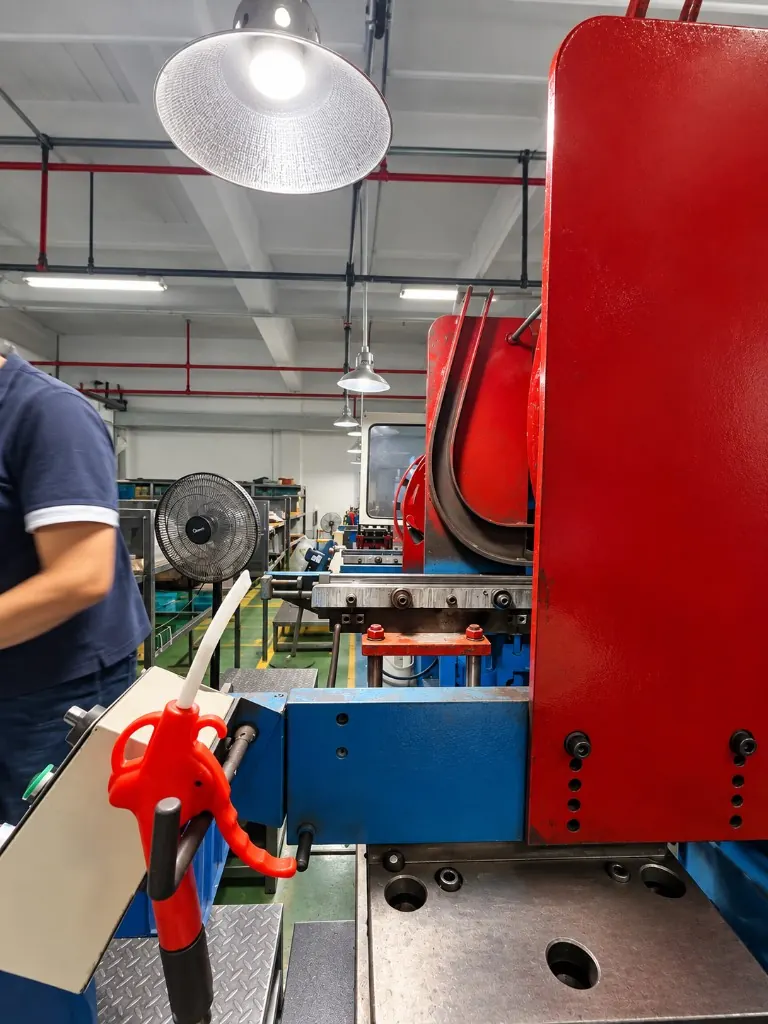
HCR compression press bay on the WYD Bao'an floor

Compression Molding

HCR/HTV silicone molding for custom trays, parts and repeat production.

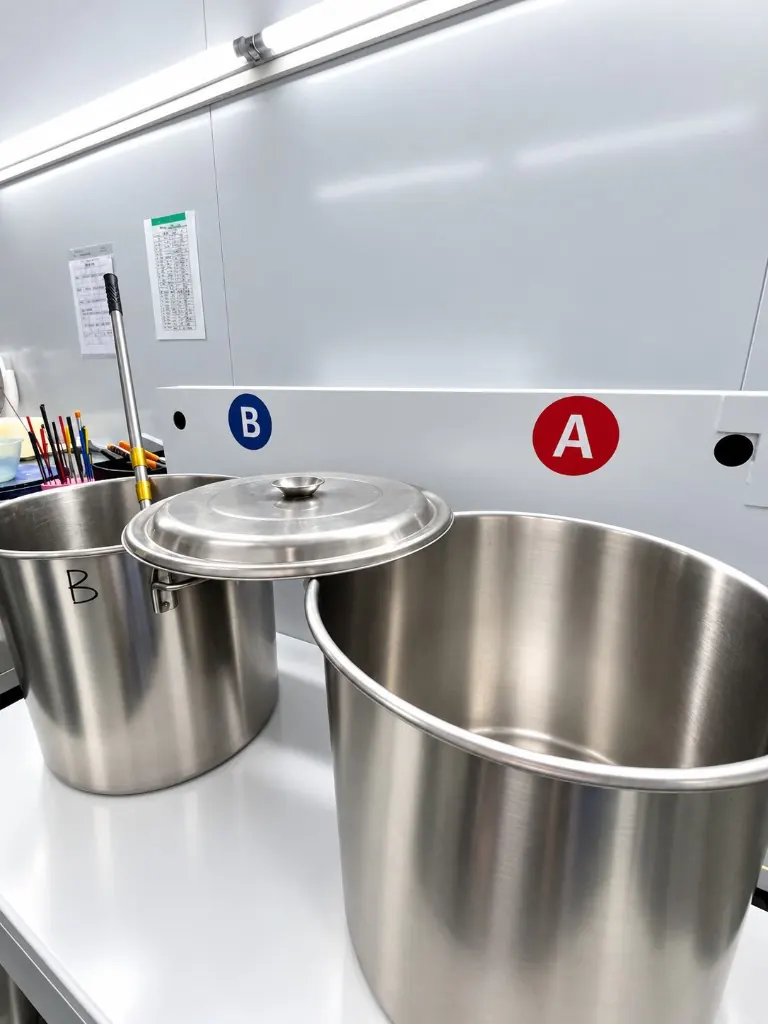
LSR A and B mix pots on the WYD Bao'an floor

LSR Injection Molding

Liquid silicone molding for parts requiring controlled geometry and repeatability.

Press and trim cell at the WYD Bao'an plant

Press cell

Trim and press stations on the same floor as compounding and inspection.

Weigh-check of molded silicone parts at WYD QC

Quality Inspection

Dimensional, visual and application-specific checks based on the approved sample and project requirements.

Process selection

Manufacturing Routes for Finished Silicone Products

The process should follow the product requirement—not the other way around.

HCR/HTV Compression Molding

A common route for many solid silicone parts, trays, seals, covers, grips and other molded components. Tooling, parting lines, flash-sensitive areas and demolding are reviewed before production.

Learn more →

LSR Injection Molding

LSR can be appropriate when the selected liquid silicone system, geometry, thin sections, insert requirements or production program justify an injection-molding route.

Learn more →

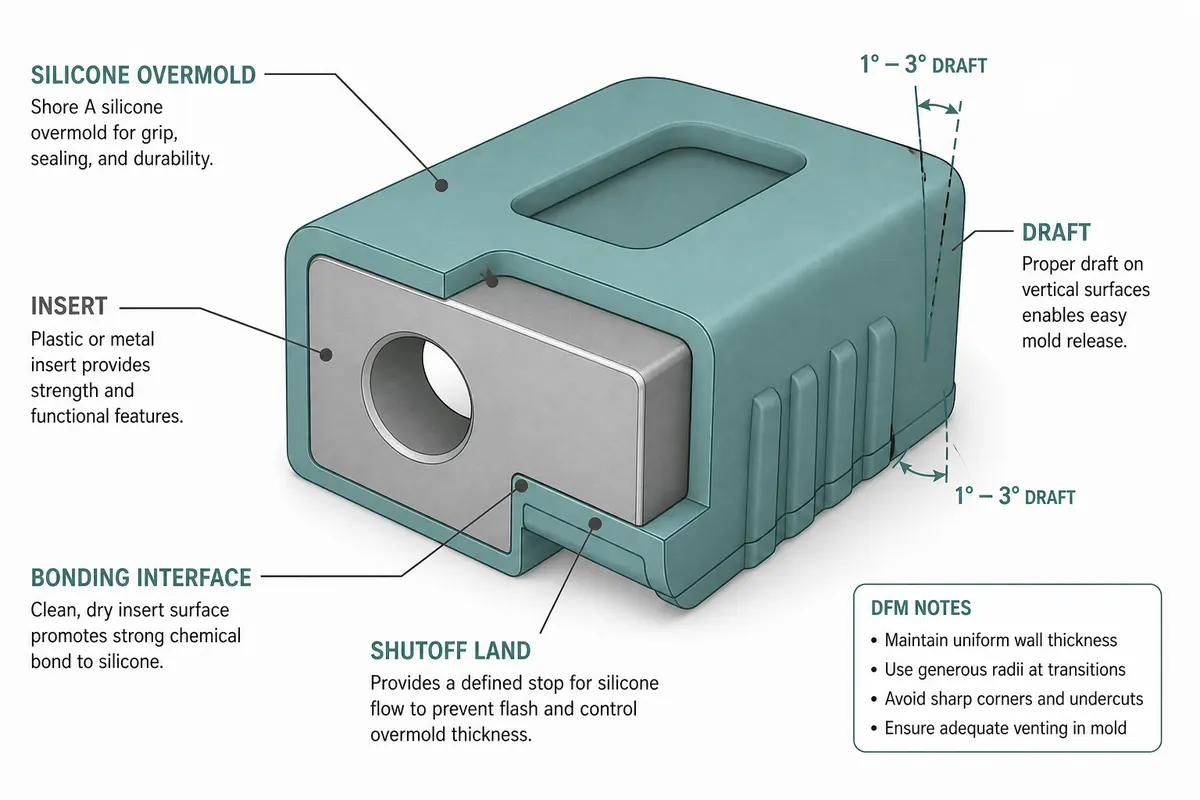
Silicone Overmolding

Used where silicone must be integrated with a plastic or metal substrate for grip, sealing, protection or another defined function. Insert location and retention must be engineered as part of the product.

Learn more →

Silicone Extrusion

Used for continuous tubing, cord and profile geometries where the cross-section, material and dimensional requirements suit an extrusion process.

Learn more →

Evidence

What You Can Verify Before Choosing a Supplier

A custom manufacturing website should give you more than claims such as “high quality” or “professional factory.”

Before placing a tooling or production order, buyers should ask to review evidence relevant to their project, such as:

  • real production tooling and mold examples
  • HCR/HTV molding equipment and production parts
  • LSR equipment and representative parts where relevant
  • RTV masters, mold structures and finished molds
  • inspection methods for critical dimensions, hardness, appearance or fit
  • examples of the type of product or geometry being discussed

For material or regulatory documentation, the evidence should match the selected silicone compound, intended application and target market. A generic certificate should not be treated as proof that every silicone product is suitable for every use.

Materials & Documentation

Engineering example

From a Scanned Master to a 30-Cavity Production Tray

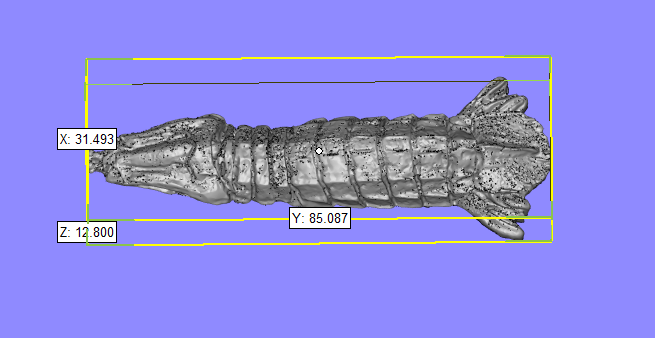
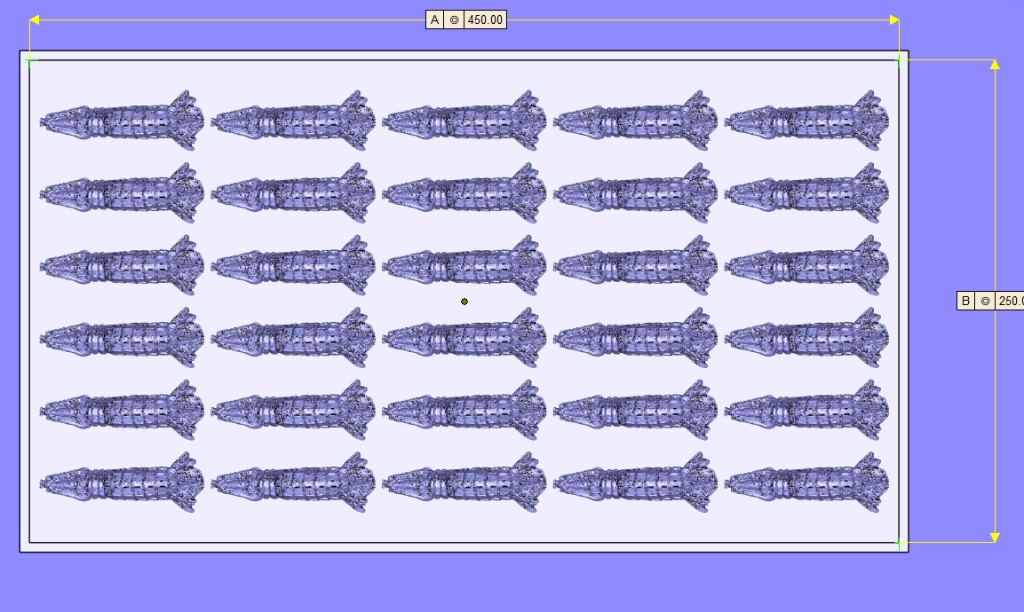
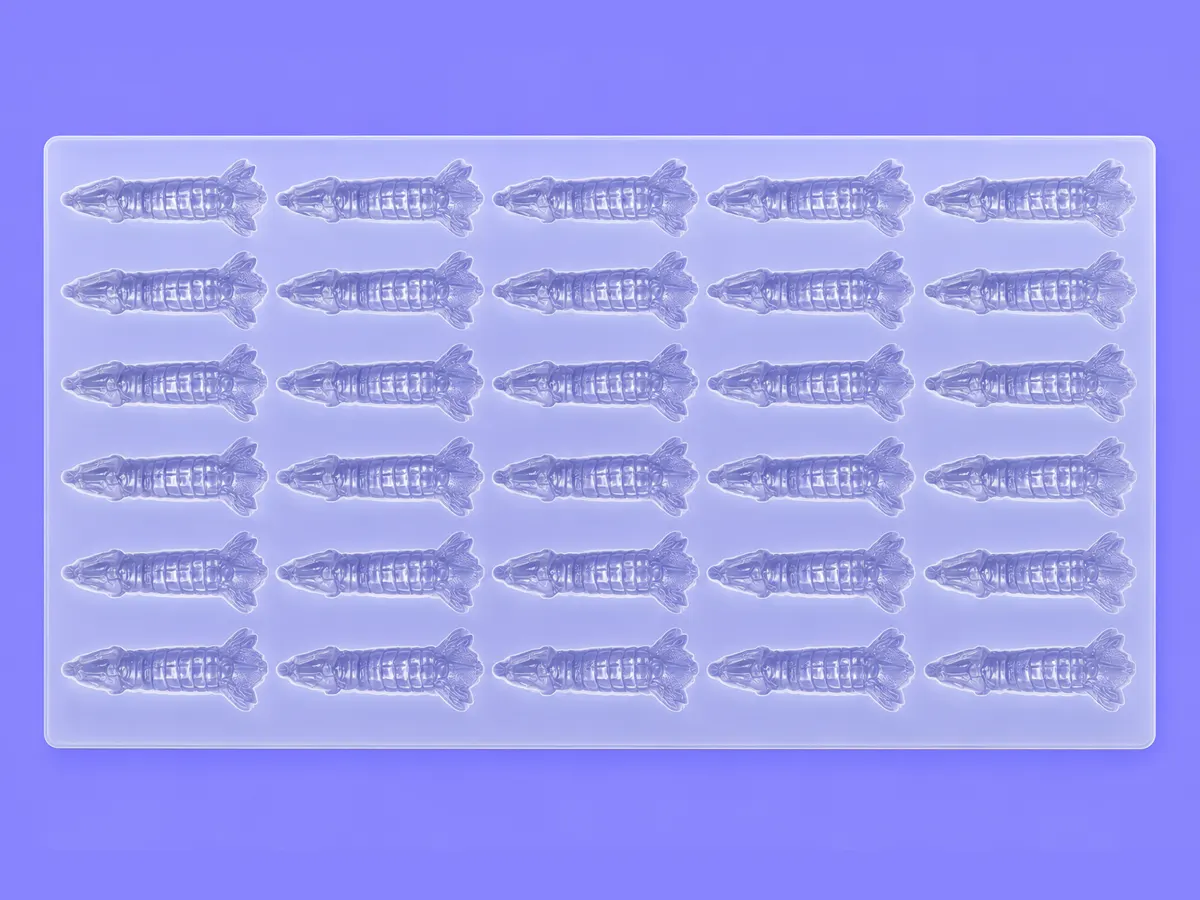
A custom project often starts with a physical master rather than a finished production drawing. In this public plant case, one detailed mantis-shrimp shape was scanned (bbox 85.087 × 31.493 × 12.800 mm), converted into usable geometry, then arranged into a 6 × 5 cavity layout on a 450 × 250 mm tray.

The important engineering work was not simply duplicating the shape 30 times. We had to check cavity spacing, wall strength, demolding access and the overall tray envelope before releasing the layout for production.

3D scan of one mantis shrimp master with measured bounding box
Master / scan
CAD nest of 30 shrimp cavities on 450 by 250 mm plate
Cavity layout — 6 × 5 on 450 × 250 mm
Finished translucent multi-cavity mantis shrimp silicone mold
Finished silicone tray

Buyer note

“I did. I like some of them a lot. The really small ones and the cubes I like. The hearts are too shallow, but that's my fault. I didn't look at the specifications. I'll probably be ordering some more. Thank you.”

Ari · LinkedIn message to Kyler Yang · gummy silicone molds

Cavity depth is a written spec. If a heart, cube or mini piece must hit a fill height, lock that millimetre on the RFQ before the next tray - do not guess from a photo of an empty cavity.

Gummy mold RFQ notes

From idea to production

From an Idea or Sample to a Production Reference

You do not need to have a perfect production drawing before starting a supplier review.

  1. 1

    Send what you already have

    A STEP/STP file is useful, but a project can also begin with a 2D drawing, physical sample, measured photos, artwork or reference images.

  2. 2

    Define the use and the failure to avoid

    Tell us what the mold or silicone part must do. Fit, sealing, demolding, target piece weight, tray stiffness, insert retention or another function may be more important than a non-critical dimension.

  3. 3

    Review DFM and missing geometry

    DFM identifies manufacturing risk. CAD/3D work creates or changes geometry. They are related but not the same service.

    Learn more →
  4. 4

    Prototype the important uncertainty

    A prototype is a sample to verify the design - size, feel, fit - usually 1 to a few pieces (3D print, CNC, or a soft sample). It is not the production mold.

    Learn more →
  5. 5

    Open tooling only after the design is locked

    Tooling is the production mold (steel or aluminum): parting line, runner, vent, gate, cavity count. Quote it as a separate line from the sample. Then freeze the approved production reference.

    Learn more →
  6. 6

    Freeze the approved production reference

    Before repeat production, confirm the approved drawing or CAD revision, silicone material, color, critical dimensions, functional checks and other project-specific acceptance criteria.

    Learn more →

Materials & documentation

Select the Silicone for the Actual Application

Material selection depends on what the finished mold or part will contact, the service temperature, flexibility required, mechanical load, color, expected use cycle and target market.

For food-contact projects, documentation should be confirmed for the selected silicone compound and intended use. A raw material report is not a blanket statement that every finished silicone product is suitable for every food-contact application.

Ask us about the documentation required for your specific material, market and use condition.

Quality control

Define What Must Pass Before Production

For custom projects, quality control should follow the function of the product rather than rely on one generic inspection checklist.

Typical checks may include:

  • critical dimensions
  • Shore hardness
  • color against approved reference
  • flash and parting-line condition
  • surface finish
  • logo and texture reproduction
  • fit or assembly
  • cavity consistency
  • demolding
  • application-specific functional tests

The approved sample can be used as the production reference where appropriate.

Weigh-check of molded silicone parts at WYD QC
Weigh or count against the approved pack. A scale photo is not a certificate.
Full inspection bench at the WYD Bao'an plant
Full-inspection bench. Write the reject items before packing starts.

FAQ

Questions buyers ask before a quote

Can you make custom silicone molds or parts from my design?
Yes. You can start with a STEP/STP/STL file, drawing, physical sample, artwork, or clear reference images. For a mold, include what you will cast, deposit, freeze, or bake, the cavity or finished shape, overall dimensions, and mold quantity. For a finished silicone part, include the drawing or sample, the function, mating components, and the expected quantity.
Do I need to provide a 3D CAD file, or can you design it for me?
A production-ready STEP file is the cleanest start. If the geometry is not production-ready, we separate free DFM observations from any paid CAD or 3D-development work required before tooling. DFM review and CAD creation are different services.
How much does 3D / CAD design cost?
DFM review is free. Simple CAD/model adjustments may be around US$50 when the model still needs lock. That is not a fee on every order. Complex sculpting, reverse engineering, or product development is quoted by scope after we see the references.
Can I get a sample or prototype before ordering production?
Yes. After CAD approval, a prototype typically takes 3-5 business days for suitable projects, so you can check dimensions, surface, demolding, and function. Exact sample cost and timing are confirmed from the project. Shipping is separate.
What is your minimum order quantity (MOQ)?
Custom silicone mold production MOQ is 20 molds per design. On this site that figure is the soft-tray quantity after sample approval. It is not a fixed MOQ for every HTV, LSR, or industrial program.
How do you quote unit prices for different quantities?
We quote after we see size, cavity count, material, and process. The first reply names which commercial items can be quoted now. Prices are not firm until the files and specs are confirmed. Exact tooling, sample, and production figures come from the project.
How much is mold / tooling, and who owns the mold?
Tooling is quoted from the route and the complexity: an RTV pour-tool, or a steel / production mold. Paying NRE is not automatic title to plates or inserts. If customer-paid production tooling is to be customer-owned, write that on the quotation or PI before the tooling order.
What is the typical lead time?
Typical planning estimates: reply within 12 hours; CAD/DFM 1-3 business days once the brief is clear enough to start; prototype typically 3-5 business days after CAD approval; small batch typically 2-3 business days after sample approval; standard production typically 7-10 business days after approval. Large or complex projects are confirmed by project. Shipping time is separate. Timelines may vary with design complexity, revisions, material, tooling method, quantity, and testing.
What silicone materials and Shore hardness do you offer?
Material selection depends on what the mold or part will contact, the service temperature, flexibility, mechanical load, color, expected use cycle, and target market. Shore hardness is confirmed against that use. Send a named grade if you already have one.
RTV or HTV - which should I choose?
WYD quotes RTV pour-tools (glove / box / split) and HTV trays or molded articles on this site. Send CAD, master, or pattern. Overview: RTV vs HTV silicone molds.
Can you ship internationally? What about EXW / FOB / DDP?
Default ship start is FOB Shenzhen unless you name DDP or another term on the RFQ. Courier time to your door is extra after the goods exist. Shipping time is separate from production.
Do you provide food-contact or other compliance documents?
Food-contact documentation is confirmed for the selected compound and the intended use. A raw material report is not a blanket statement that every finished article fits every food use. When a market needs them, article or lot files (for example 21 CFR 177.2600) are the path. We do not claim an FDA-approved factory. Details: materials and compliance.
Will you sign an NDA?
We can review NDA/NNN requirements before detailed design disclosure. Tell us in the project description if you want confidentiality in place before you send full files. If an NDA is agreed, files are used for that project. The signed agreement holds the legal terms.
Do you offer OEM / private-label packaging?
Yes. Private label can be branding an existing or lightly modified product, or a fully custom part that needs CAD and tooling. Packaging (polybag, carton, label, or a custom box) is quoted with that path. Feasibility and MOQ depend on the product and the customization. See private label and OEM.
What payment terms do you use?
The usual path on a custom mold job is CAD (only if the model still needs lock), prototype, tooling balance, then FOB Shenzhen. A simple CAD adjustment around US$50 is not a fee on every order. Exact terms are written on the PI.
Can you work with my contract manufacturer's tray or machine specs?
Yes, when you or your manufacturer send the tray size, cavity pitch, depositor or other machine limits, and the demolding method. Name those limits with the file so the layout is not quoted as a free cavity count.

Start with the right information

What to Send for a Useful First Review

You do not need every answer before contacting us. Send what is already known:
  • CAD, drawing, sample or reference images
  • what you need the supplier to deliver
  • overall dimensions
  • application or casting material
  • first order quantity
  • expected repeat or annual volume
  • target material or Shore hardness, if already specified
  • critical fit, sealing, demolding or other functional requirement
  • target market and required documentation
  • destination and target date

If some items are still open, identify them as open. The first review should separate what is already fixed from what must be resolved before tooling.

Ready to Discuss the Project?

For a mold project, include the casting or food process and cavity requirements. For a finished silicone product, include the part function, quantity and any mating components.