
Plant case · anonymized U.S. line
Custom gummy silicone trays: lock 9.2 g, 6.2 g and 8.8 g before you scale cavity count
Commercial depositing trays, not a stock candy pan. 70 / 80 / 100-cavity maps, Shore A 30 on approved notes, 2023–2026 revision trail. Buyer name stays off this page.
Project snapshot
Numbers from the drawing pack and approved mold notes. No invoice totals, no invented yield.
- Target cavity weights
- 9.2 g / 6.2 g / 8.8 g
- Production maps
- 70 / 80 / 100 cavities
- One 80-cavity tray
- 354.4 × 284.9 × 17 mm
- That cavity
- Ø30.48 × 9.8 mm deep
- Spacing on that rev
- 3 mm
- Approved notes
- Shore A 30
The line problem
A tray is part of the deposit, not a pretty sheet of wells
For a commercial gummy producer, cavity volume, spacing, wall height and tray stiffness show up as piece weight. A rendering can look finished and still miss the depositor.
This U.S. program ran several years and several SKUs: round wells, segmented / wagon-wheel geometry, target weights of 9.2 g, 6.2 g and 8.8 g, and production maps at 70, 80 and 100 cavities depending on the shape. An earlier 9.2 g generation also used an 84-cavity map. Those are separate production references, not one “gummy tray” SKU.
The gate we kept repeating: lock the single cavity, then multiply it. If the first well is already off-weight, 100 cavities only multiply the miss. Same logic as outer-row drift on cavity ml vs grams.
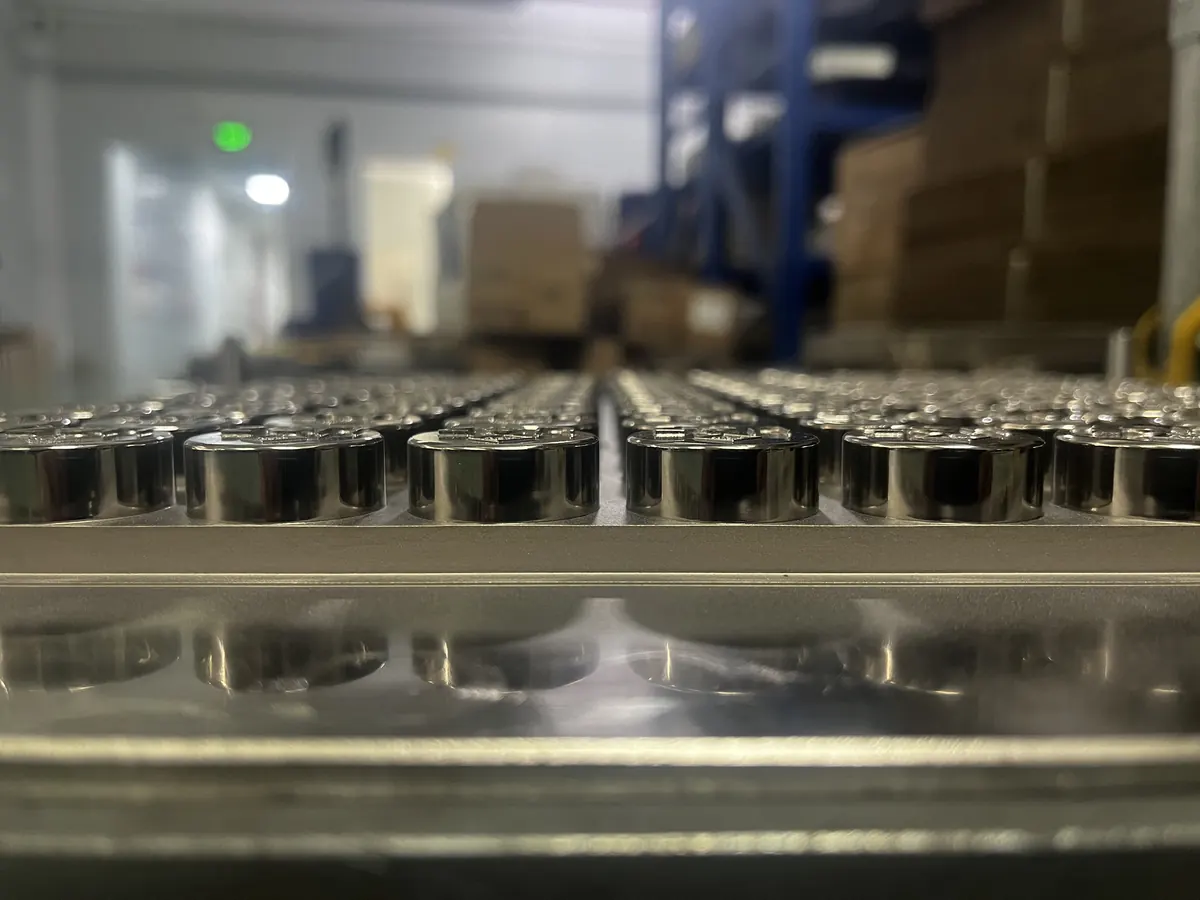
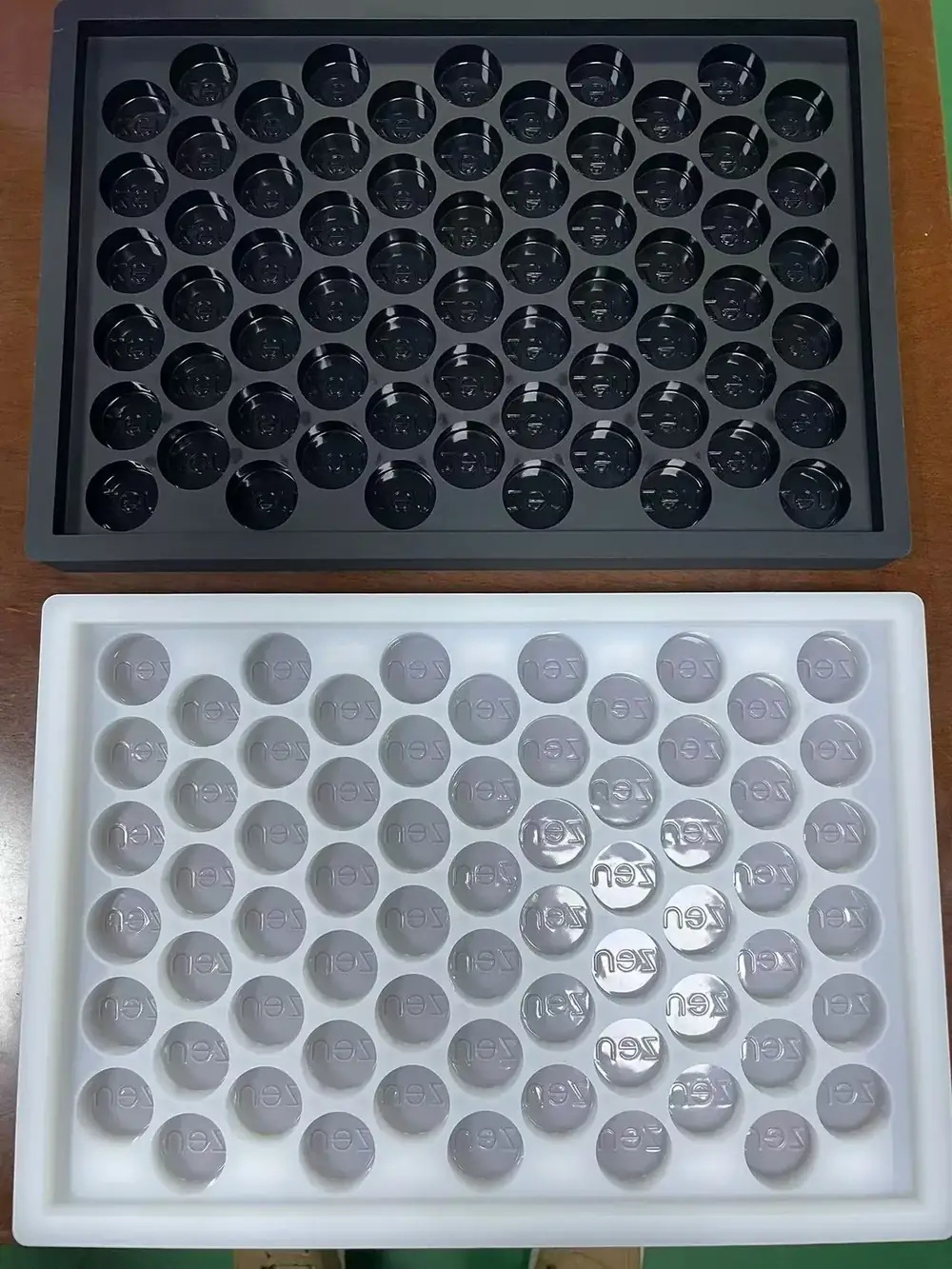
Step 1 — lock the finished gram count
9.2 g, 6.2 g and 8.8 g were treated as separate volume targets. Formulation density still belongs on the RFQ. Sequence we used:
target piece weight → cavity geometry → sample validation → production cavity map. Not: pick a cavity count, draw a tray, hope the grams land.
Jumping from 70 to 100 wells on the “same sheet” changes spacing, outer-row support, silicone between cavities, footprint, loaded stiffness, demold, and whether the filling head still hits every well. Pitch language lives on depositor-compatible trays.
Step 2 — freeze the map and the envelope
One documented 80-cavity 9.2 g tray: 354.4 × 284.9 × 17 mm overall, Ø30.48 × 9.8 mm cavity, 3 mm spacing, about 0.77 mm on the documented face detail, plus a reinforced perimeter on the production drawing. Do not paste those numbers onto a different geometry.
Step 3 — edge support vs less rubber
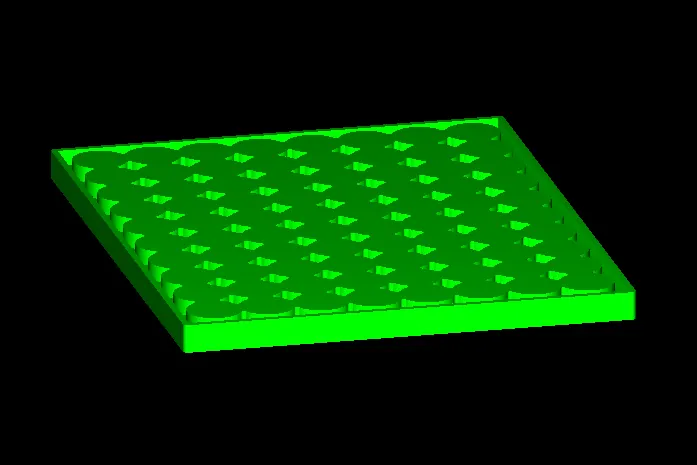
Outer rows have less surrounding silicone than the center. Weak edges flex when the tray is filled, moved or peeled. Extra perimeter rubber adds weight; too little support shows up as outer-row grams and torn lands.
Edge extension was reviewed as DFM, not cosmetics. Trade-off: minimum material vs enough support under real handling.
Step 4 — keep Shore A 30 unless you re-validate
Approved mold notes referenced Shore A 30. Repeat orders stay on that band so handling and demold do not drift. A dull face is usually a cavity/tool surface job, not a hardness swap. A new gel, geometry or process that truly needs another Shore is a new sample loop.
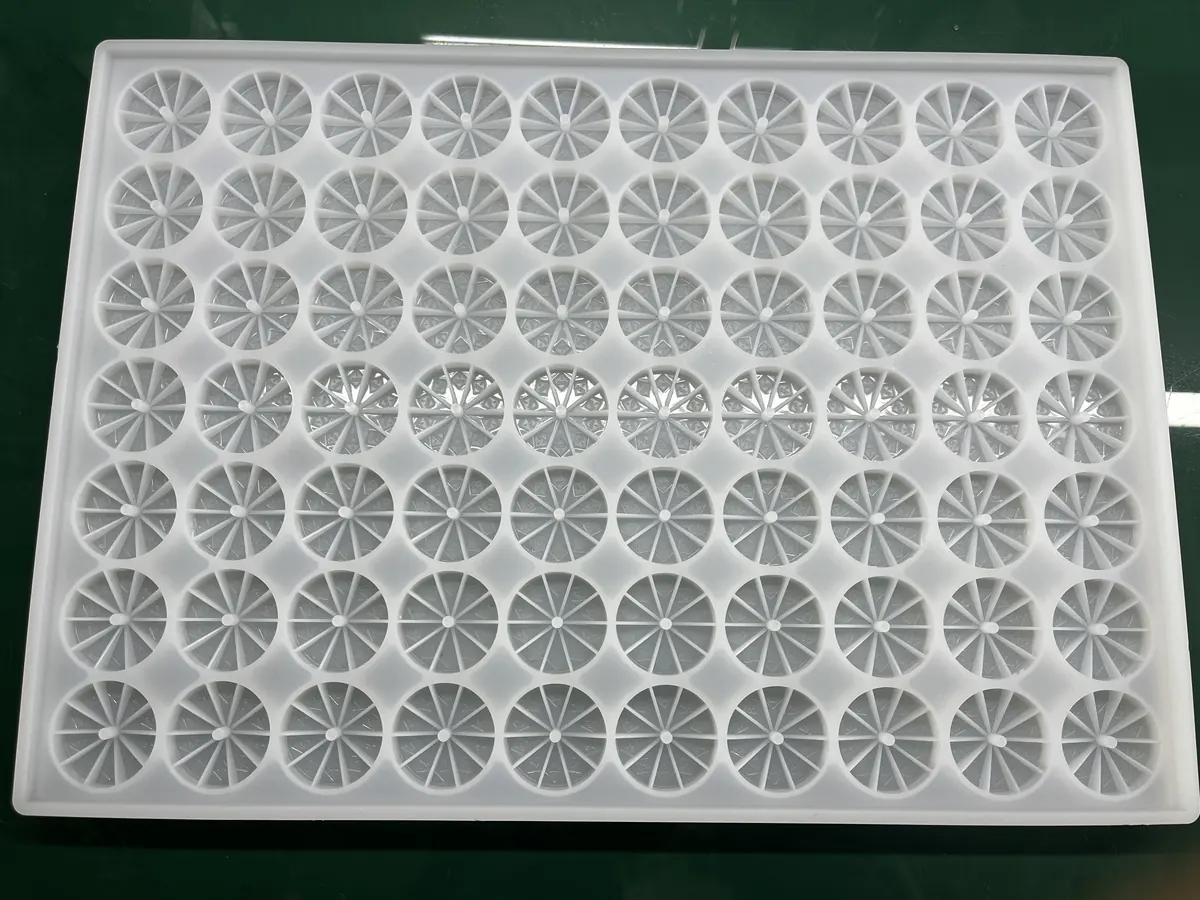
Step 5 — prove the face before you multiply 80 or 100 times
Bottom smoothness, raised or debossed marks, logo height (~0.77 mm on one revision), and product-in-tray photos were part of the lock. A small nick in one insert becomes a full-tray defect once the map is steel.
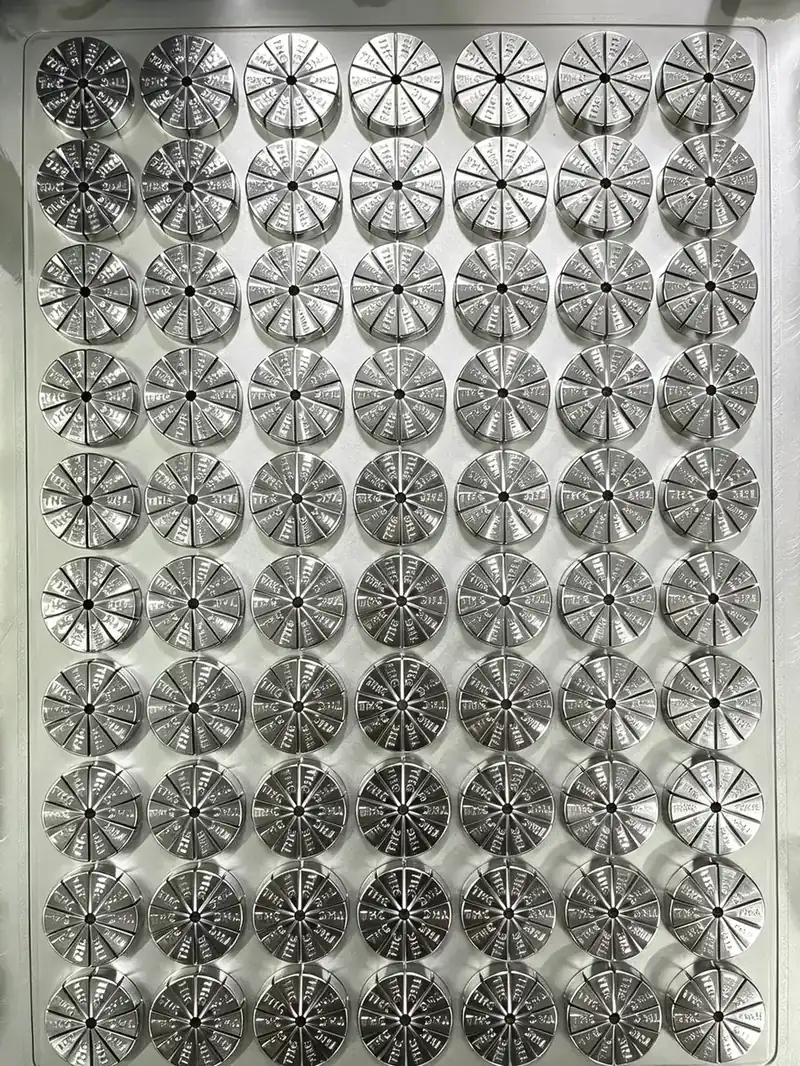
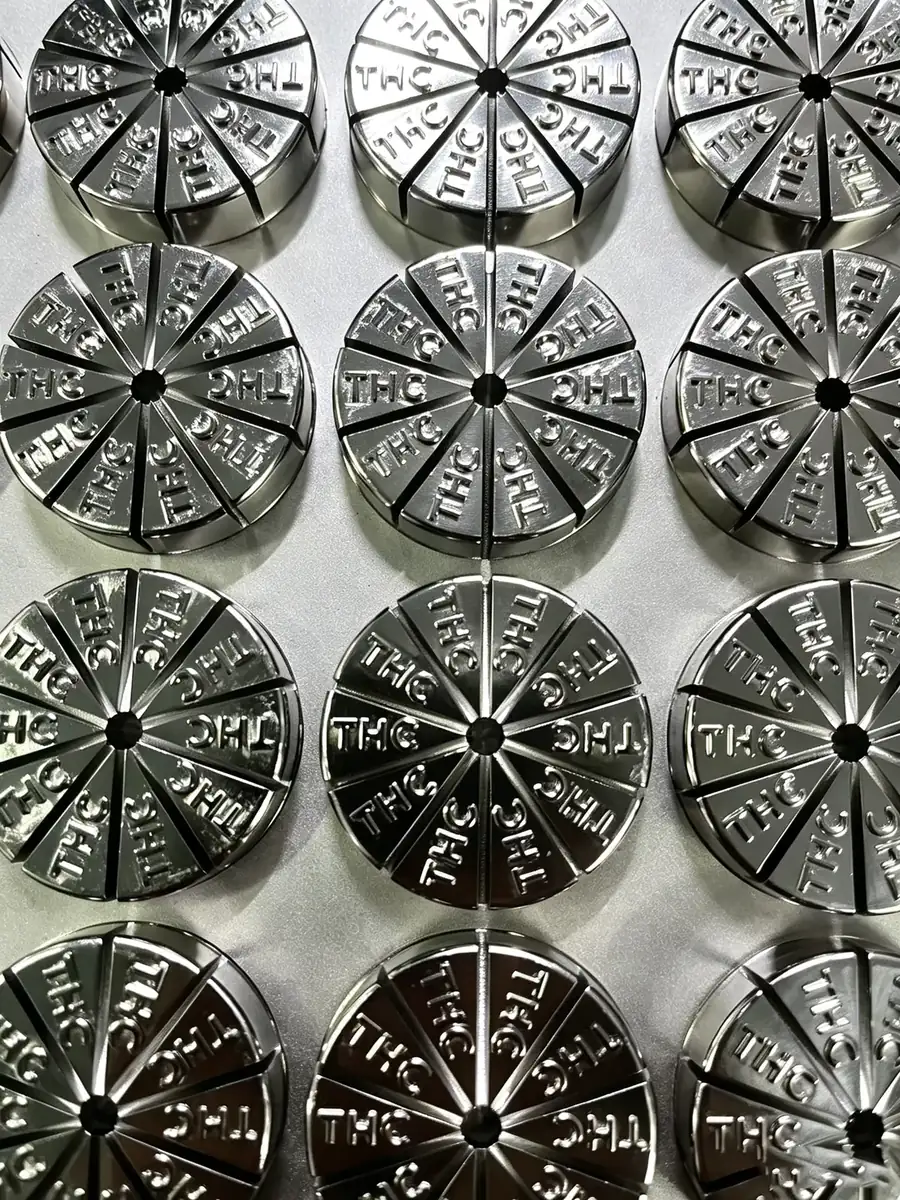
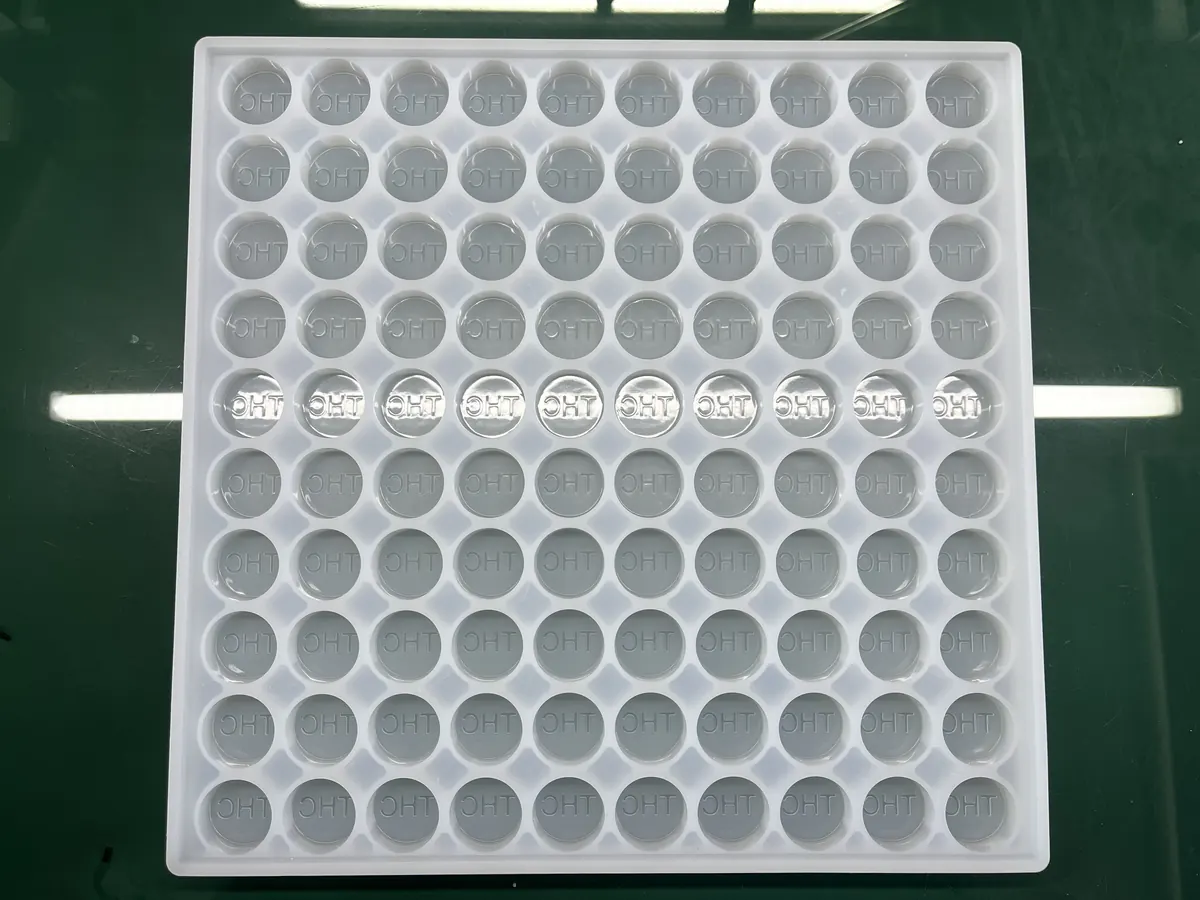
High cavity count is not automatically more output
A much higher cavity-count concept was explored and then paused. That was the right call. More wells help theoretical pieces per tray only if spacing, support, edge stiffness, handling area and the filling process still work.
Ask: how many validated cavities can this tray carry? Not: what is the maximum we can pack.
Repeat orders from 2023–2026 needed a written reference per SKU: grams, cavity geometry, count, envelope, Shore A, logo/deboss, tooling revision. A new SKU does not silently overwrite the last one. Soft-tray commercial path: custom silicone gummy molds. Food-contact paperwork is per article and market on food-grade documents.
What to send before we quote a similar tray
- Target finished gummy weight per cavity.
- Formulation or approximate density, if you have it.
- 3D, drawing, artwork or reference shape.
- Preferred cavity count.
- Maximum tray dimensions.
- Depositor or filling-machine constraints.
- Required logo, text or surface detail.
- Preferred hardness, if already validated.
- Prototype quantity and expected production quantity.
- Destination market and food-contact document needs.
Copy fields into the RFQ checklist. Soft trays often start at MOQ 20 per design after sample approval; this program’s commercial qty stayed on the PO.
On file vs not claimed
| Item | On file | Not claimed |
|---|---|---|
| Weights | 9.2 / 6.2 / 8.8 g families | One density for every gel |
| Maps | 70 / 80 / 100 (and an 84-up gen) | Max packing = best output |
| 80-up envelope | 354.4 × 284.9 × 17 mm | Universal tray size |
| Hardness | Shore A 30 on approved notes | Shore swap as a finish fix |
| Buyer | U.S. commercial line, anonymized | Customer legal name |
Questions after seeing the steel and the sheets
- Can one tray family carry 9.2 g, 6.2 g and 8.8 g?
- Not as interchangeable labels. Those three weights were separate cavity families. Mixing them on one map without a new volume check multiplies the wrong gram count.
- Does 100 cavities beat 70 on the same sheet?
- Only if spacing, outer-row support, footprint and the filling process still hold. This program paused a much higher cavity-count concept instead of forcing it.
- Are the 354.4 × 284.9 mm numbers universal?
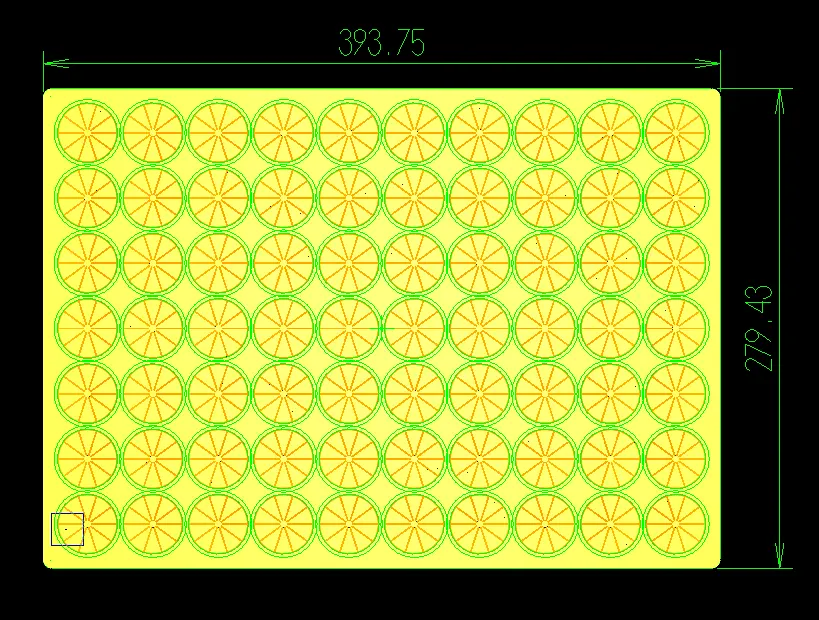
- No. They belong to one documented 80-cavity 9.2 g revision. A later orange-slice map on file is 393.75 × 279.43 mm. Copy the approved drawing for that SKU, not a neighbor.
- Should we change Shore A to fix a dull cavity face?
- Not as a first move. Approved notes on this program referenced Shore A 30. Face finish is usually a cavity/tool surface issue. A new hardness is a new validation.
- What do you need to quote a similar tray?
- Target grams per cavity, formulation or density if known, shape file, preferred cavity count, max tray envelope, depositor constraints, logo/detail, hardness if already locked, prototype and production quantity, and the food-contact document path for the destination market.
Send the grams, the envelope and the filling constraint
WYD reviews cavity geometry, tray layout and the manufacturing route from Bao'an before production tooling is cut. Prototype timing is typically 3–7 days after CAD lock when the file is frozen.