
Two-Color and Dual-Hardness Silicone Molding
Custom two-color and dual-hardness silicone parts with DFM for interface geometry, color boundaries, material compatibility, second-shot distortion and repeat production.
On this page
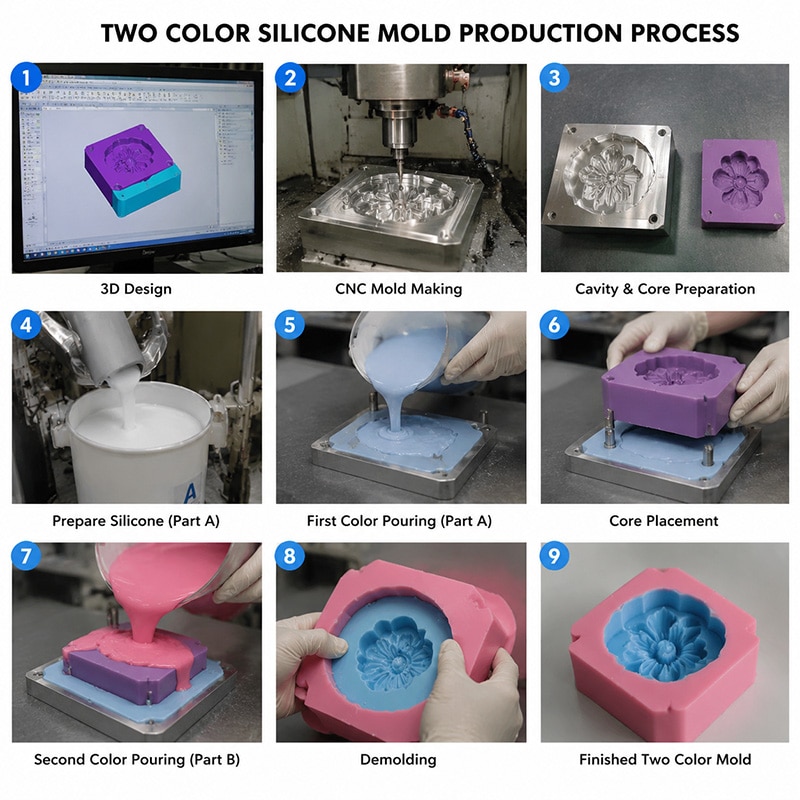
Two-color silicone molding is not only a cosmetic process.
The design must control:
- color/material boundary
- interface geometry
- cure compatibility
- first-shot positioning
- second-step distortion
- flash at the boundary
- shrinkage difference
- final feel
WYD develops two-color and, where technically suitable, dual-hardness silicone components for consumer, industrial and branded products.
Start With the Function of the Second Zone
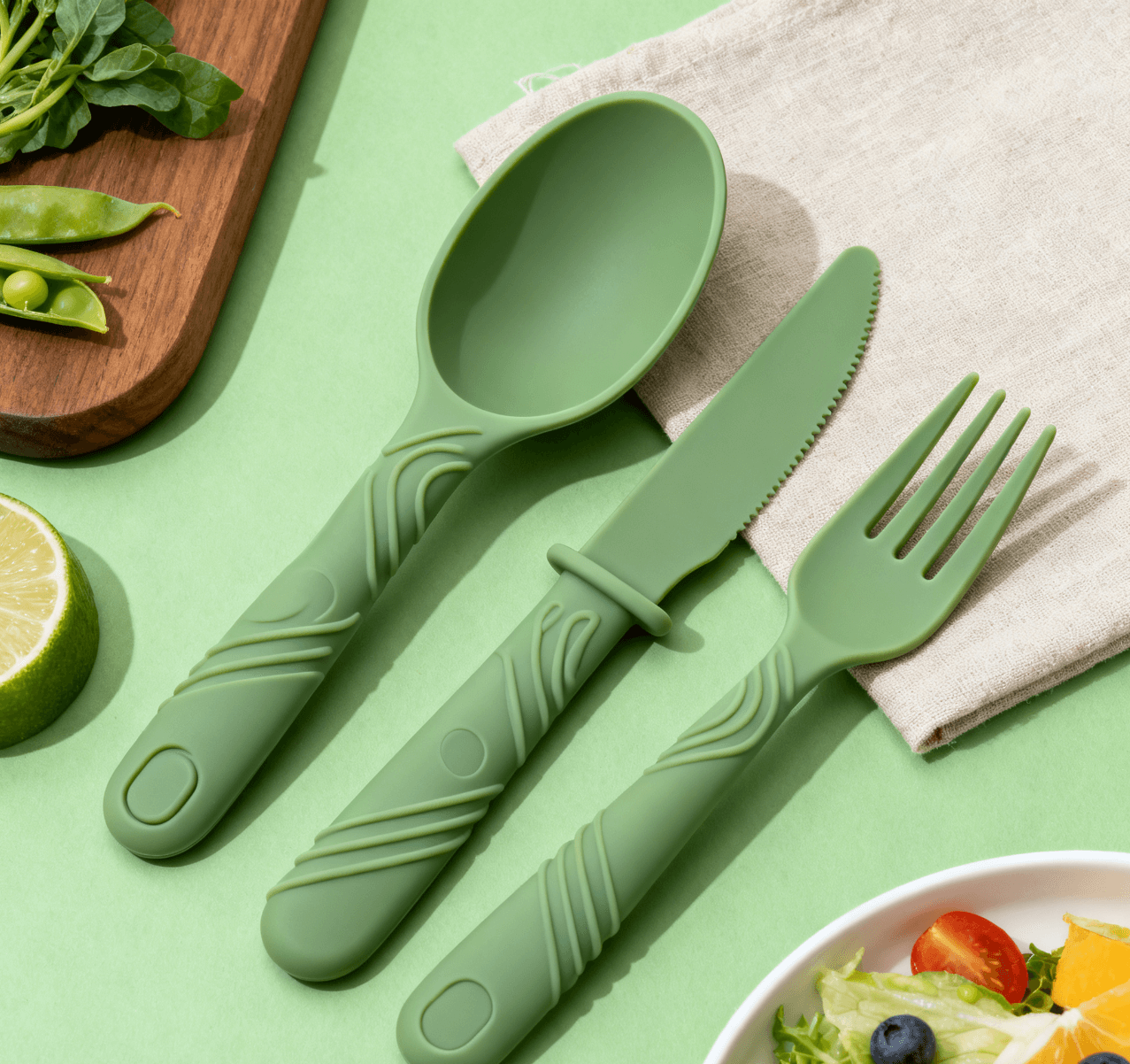
The second color/material may be used for:
- branding
- visual identification
- softer grip
- firmer structural zone
- tactile differentiation
- inspection/assembly cue
The purpose affects the tooling route.
Cosmetic Boundary
For a visible color boundary, define:
- allowed boundary variation
- hero surface
- flash limit
- parting line
- texture on each zone
A perfect Pantone match does not compensate for a poor boundary line.
Dual Hardness
If two regions require different hardness, review:
- deformation under load
- interface stress
- cure/material compatibility
- repeated flex
Do not assume any two Shore grades can be combined successfully without process validation.
First-Shot Retention
During the second molding step, the first section must remain located.
Retention may use:
- geometry
- mechanical capture
- fixture/tooling
- process sequencing
If the first section moves, color/material boundaries drift.
Shrinkage and Distortion
Different material zones may respond differently during cure and cooling.
Prototype the actual material combination and final geometry.
Color Matching
Approve cured production-intent samples.
Color appearance depends on:
- pigment
- base compound
- surface texture
- section thickness
- lighting
Process Selection
Depending on the design, two-color production may use:
- sequential compression molding
- insert-style secondary molding
- LSR/two-shot concepts where tooling/machine capability fits
The production route should be selected after DFM.
Prototype Checks
- color boundary
- zone hardness
- interface integrity
- distortion
- dimensions
- flex
- wash/use condition where relevant
Two-Color vs Printed Color
Not every multi-color design needs two-color molding.
If the secondary color is only a small logo or icon, alternatives may include:
- printing
- color fill
- laser/marking process where suitable
Two-color molding is more valuable when the second zone is an integrated material region rather than only surface decoration.
Design for the Boundary
A clean boundary benefits from:
- clear shutoff geometry
- adequate local material section
- stable first-shot location
- controlled flash path
Very thin decorative color islands can increase tooling and yield risk.
Production Volume
Two-step or two-shot processes usually require more tooling/process complexity than a single-color part.
The business case should compare:
- annual volume
- secondary-operation cost
- cosmetic requirement
- functional need for a second hardness/material
Repeat-Order Control
Retain:
- color master
- material grade for each zone
- hardness
- interface geometry
- process/tool revision
This is especially important when the second zone is functional, not only decorative.
Related WYD Pages
Final Recommendation
Define what the second material/color zone must do. Two-color tooling should follow function, interface control and annual volume—not appearance alone.
Ready to order custom silicone molds?
Send your drawing, sample or project requirements for DFM and quotation.