
Custom chocolate molds
Custom Silicone Chocolate Molds
WYD develops custom silicone chocolate molds for branded shapes, bars and sculptural pieces. We review the design around filling, demolding and the required finish, with prototype testing used to check the result in your chocolate process.
Send the finished size, target weight, artwork, cavity count and any depositor constraints. Initial manufacturability review is free. Required CAD creation, model changes or additional engineering work is quoted separately.
Silicone Mold or Polycarbonate Mold?
Silicone and polycarbonate molds solve different production needs.
| Silicone Mold | Polycarbonate Mold |
|---|---|
| Useful for custom shapes, prototypes, smaller production runs and flexible demolding | Commonly used for rigid professional chocolate production when the geometry is suitable |
| Easier to work with for certain undercuts or non-standard shapes | Best when the shape is finalized and straight release is practical |
| Can be developed as RTV molds or production silicone trays depending on quantity | Typically chosen for repeat rigid-mold workflows |
| Surface finish depends on the master/tool surface and chocolate process | Can produce high-gloss chocolate when mold surface and tempering process are controlled |
Do not treat either material as universally better.
Chocolate Mold DFM
We review:
- finished dimensions
- target piece weight
- cavity depth
- logo orientation
- logo depth and draft
- surface finish
- cavity spacing
- tray stiffness
- demolding
- depositor or production-line constraints
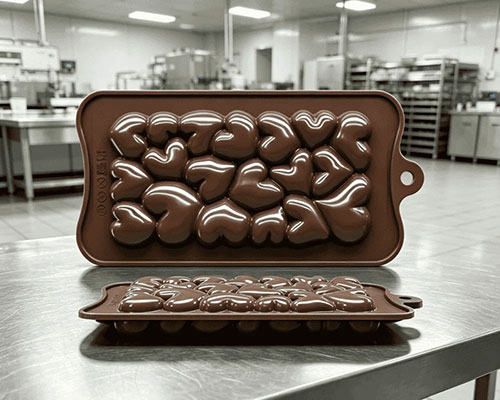
A deep fine logo may trap chocolate or break on release. A shallow logo may not read clearly. Logo depth is often in the 0.3-0.6 mm band when the mark has to fill and release; we lock it against your artwork and a real pour, not against a render of an empty cavity. The prototype should be tested with the actual chocolate process before repeat production.
Piece Weight Validation
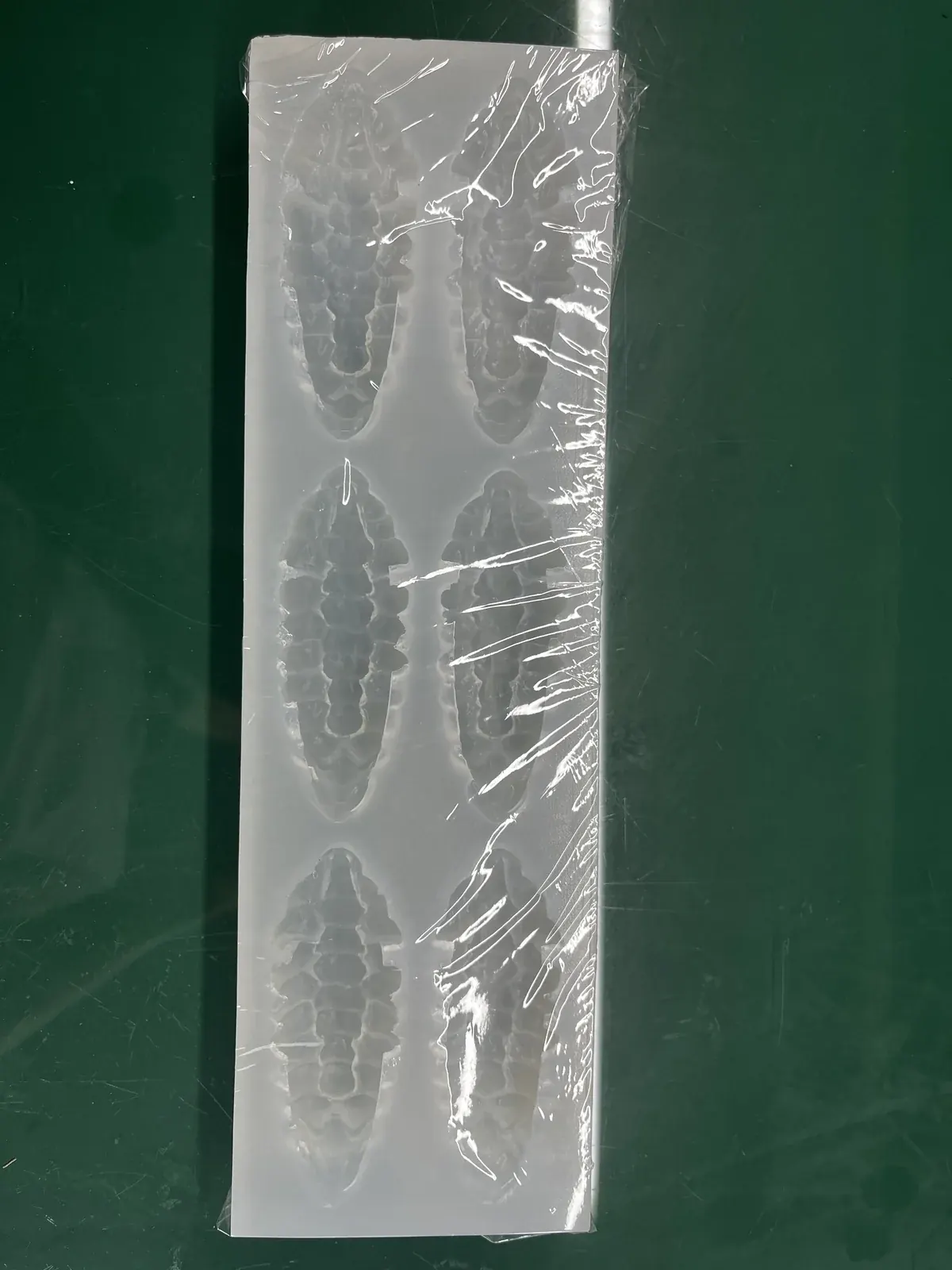
Cavity volume is an engineering starting point. Final chocolate weight depends on formulation/density and filling process. If piece weight is a pack or label number, validate it on a sample with your chocolate and fill method. CAD volume is only the starting point.
RTV Mold or Compression-Molded Tray
RTV Silicone Mold
Useful for prototypes, complex custom geometry and lower-volume development. A typical route is 3D model → resin master model → RTV silicone mold.
Compression-Molded Silicone Tray
Useful for repeat production when the design and cavity layout are stable.
Chocolate Mold Development Case
Our cacao-fruit chocolate tray case shows how an organic 3D design was prepared for sampling. The work included cleaning unwanted STL features and reviewing the geometry through physical samples before a small production run.
Read the cacao-fruit chocolate tray development case for the project photos and design decisions. Its dimensions and sample hardness are specific to that shape; another chocolate mold needs its own review.
Chocolate FAQ
- Silicone mold or polycarbonate mold?
- Neither is universally better. Silicone is useful for custom shapes, prototypes, smaller runs and flexible demolding. Polycarbonate is commonly used for rigid professional chocolate production when the geometry can release straight. We review both against your shape, quantity and shine target.
- How is piece weight determined?
- Cavity volume is an engineering starting point. Final chocolate weight depends on formulation, density and filling process. Critical piece weight should be validated on a real sample, not estimated from dimensions alone.
- Can you work from artwork or a sample?
- Yes. Send finished chocolate dimensions, target weight, logo/artwork, cavity count, expected quantity and whether you use an existing depositor. If the file is not production-ready, initial manufacturability review is free. Required CAD creation, model changes or additional engineering work is quoted separately.
- Is this the same as a gummy or candy mold?
- No. A chocolate mold is designed around tempering, demolding and surface finish. Gummy deposit and cooked-sugar candy use different cavity maps — those jobs belong on the gummy or candy mold pages.
- What food-contact documentation can you provide?
- Documentation is confirmed for the selected silicone compound, the finished article, the destination market and the intended contact condition. That is not a factory-wide FDA-approved claim. See our silicone materials and compliance documentation guide for the information to include with your inquiry.
Send Your Chocolate Design
Send finished dimensions, target weight, logo/artwork, cavity count, expected quantity, and depositor pitch if you already have one. Note what is still open.