
Gummy Depositor Pitch RFQ: Match the Tray to the Machine
Specify nozzle pitch, row spacing, first-cavity datum, tray indexing and support so custom gummy trays align with commercial depositors.
On this page
# Gummy Depositor Pitch RFQ: Match the Tray to the Machine
A commercial gummy tray can look correct in CAD and still fail on the line if the cavities do not align with the depositor.
Machine compatibility starts with pitch + datum + indexing, not cavity count alone.
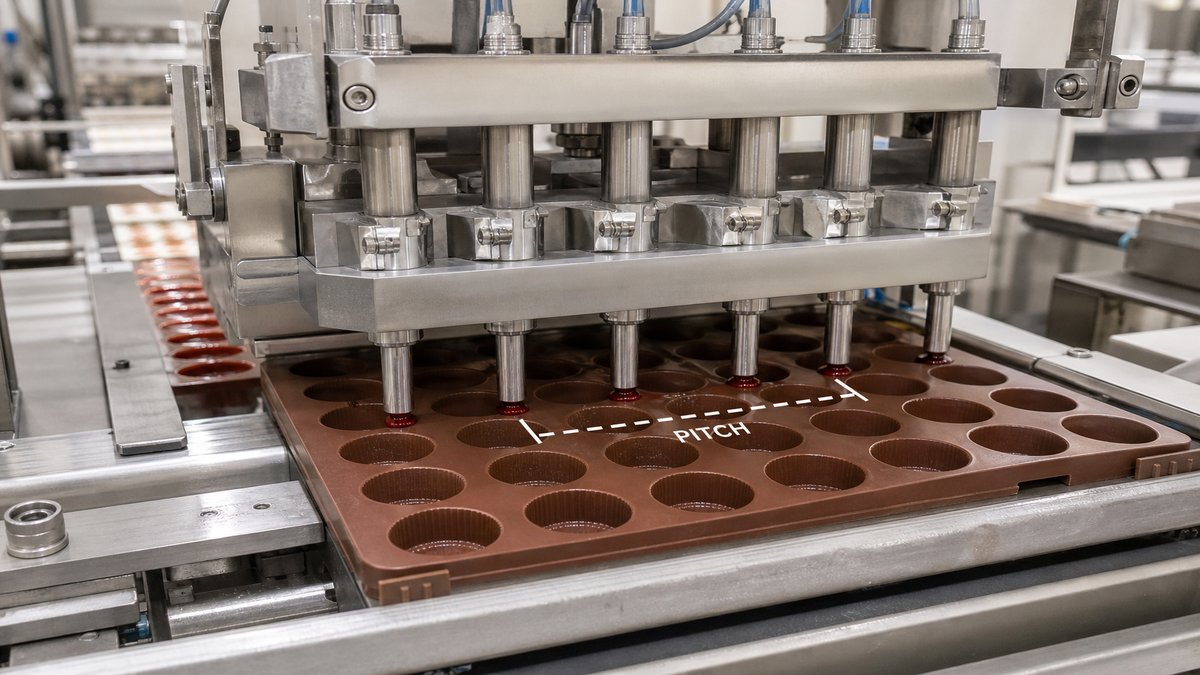
What Pitch Means
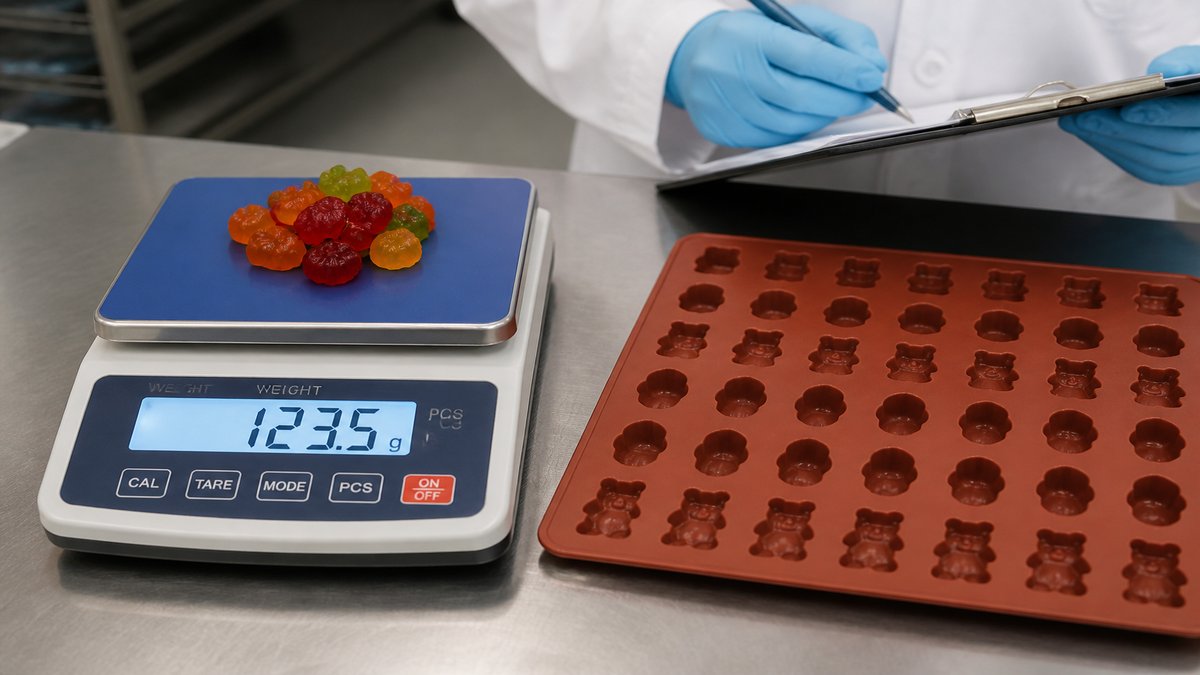
Useful dimensions can include:
- nozzle-to-nozzle pitch
- cavity-to-cavity pitch
- row-to-row pitch
- locating edge to first cavity center
- indexing distance
- multiple nozzle-bank spacing
Do not assume these are the same.
First-Cavity Datum
A tray can have perfect 25 mm pitch and still miss every nozzle if the first cavity begins 6 mm too far from the locating edge.
That is why the tray needs:
pitch + first-cavity datum
Nozzle Count Is Not Cavity Count
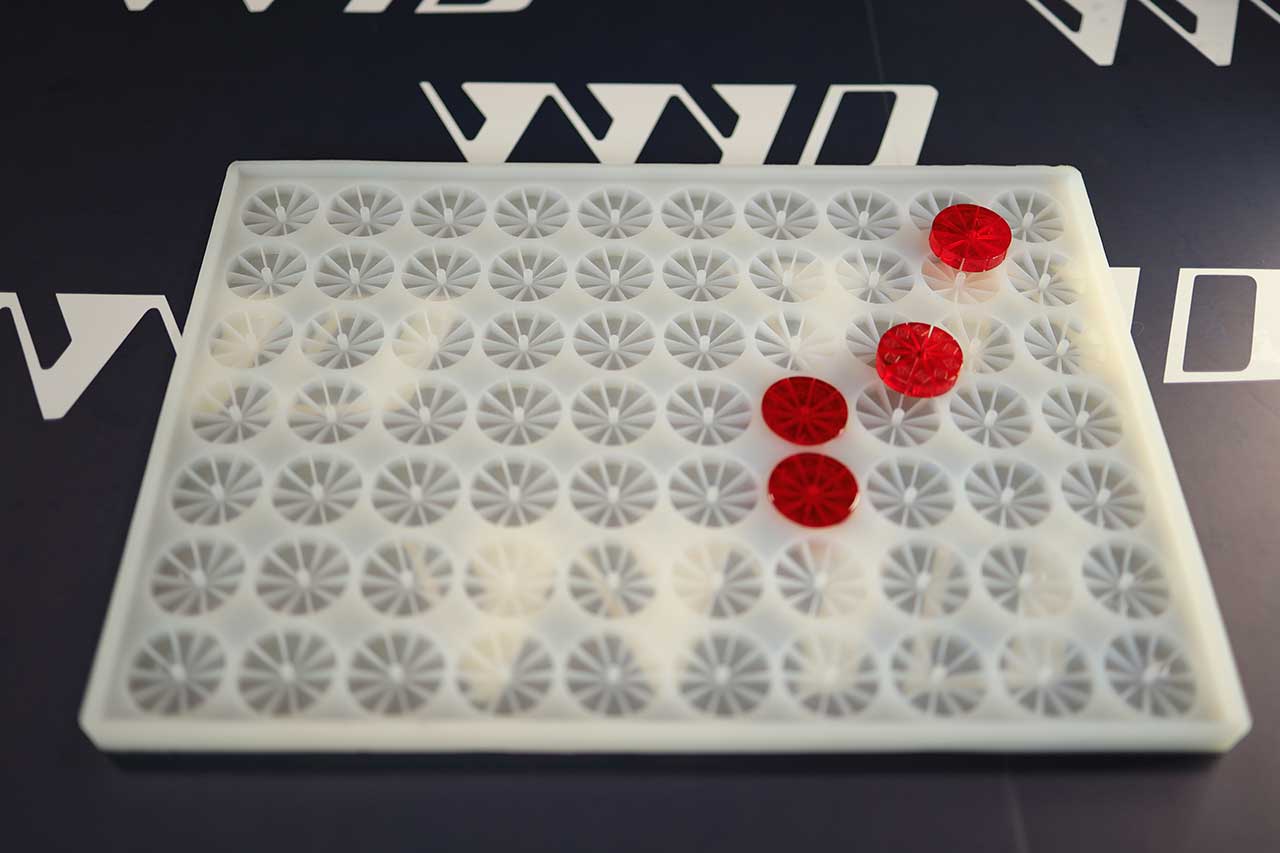
A 12-nozzle depositor might fill:
- 12 cavities once
- 24 cavities in two indexes
- 48 cavities over multiple steps
The tray layout must reflect the actual machine sequence.
Use the Existing Successful Tray
If the machine already runs a good tray, send:
- tray sample
- drawing
- outer dimensions
- cavity-center coordinates
- locating features
- support nest
That is often safer than rebuilding the line interface from a photo.
Machine Envelope
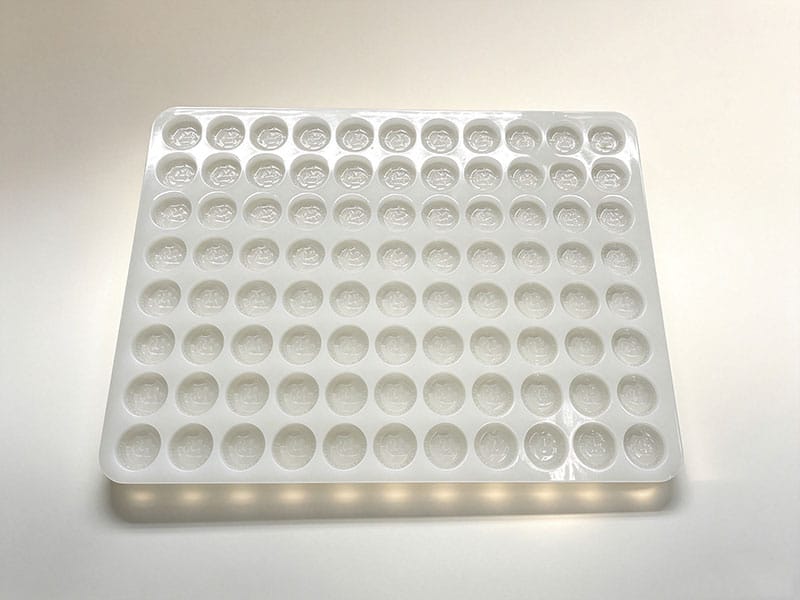
Confirm:
- maximum tray length
- width
- height
- conveyor/nest size
- guide rails
- clamp areas
- keep-out zones
- leading edge
A rigid carrier may control the machine interface better than trying to locate directly on a soft silicone edge.
Pitch Is Only the First Gate
After alignment, review:
- target gummy weight
- cavity volume
- depth
- logo
- formula
- tray stiffness
- loaded flatness
- nozzle Z-height
- support
Perfect XY pitch does not help if the tray bows and changes the nozzle distance.
Prototype Validation
- verify outside dimensions
- verify first-cavity datum
- verify pitch
- install in the real nest
- dry-check nozzle alignment
- run the real formula if possible
- check first/center/last nozzle groups
- weigh pieces by position
- check loaded flatness
- demold
The prototype passes when the machine and mold work together.
What to Send WYD
Machine
- manufacturer/model
- nozzle count
- nozzle pitch
- head or tray movement
- indexing distance
- locating method
Tray
- max envelope
- support/nest
- existing successful tray
Product
- target grams
- formula family
- cavity geometry
- desired count
Z-Height Matters Too
Pitch controls XY alignment, but nozzle-to-cavity Z distance can still cause fill variation.
Z-height can change with:
- tray sag
- support thickness
- nest variation
- cavity depth
- edge curl
A tray that aligns perfectly in plan view can still produce inconsistent deposits if the cavity plane moves vertically.
Locator on Silicone vs Locator on Rigid Carrier
When machine precision matters, it can be more repeatable to locate a rigid carrier/nest and let the flexible tray seat inside it.
Trying to locate the machine from a soft unsupported silicone edge can introduce variation.
Change Control After Approval
If the depositor, nozzle bank or nest changes later, treat tray compatibility as a new interface review. Do not assume the old tray will still run simply because the product shape has not changed.
Related WYD Pages
Final Recommendation
Do not lock production tooling from “48 cavities” and a product rendering. Lock the machine interface first.
Ready to order custom silicone molds?
Send your drawing, sample or project requirements for DFM and quotation.