
From drawing, sample or photo
Custom Silicone Mold From Drawing, Sample or Photo
Have a sketch, product sample, reference image, or 3D file? The first failure is manufacturing the wrong object. A flexible RTV casting mold, a compression-molded silicone tray, and a finished LSR/HCR part use different tooling and development routes — even when the incoming file looks the same.
WYD can help turn that input into a manufacturable custom silicone mold or molded silicone product. Workshop route (RTV, compression tray, or LSR part) is identified after the file and quantity are reviewed. RTV mold making and resin-mother work are quoted on this site when that route fits.
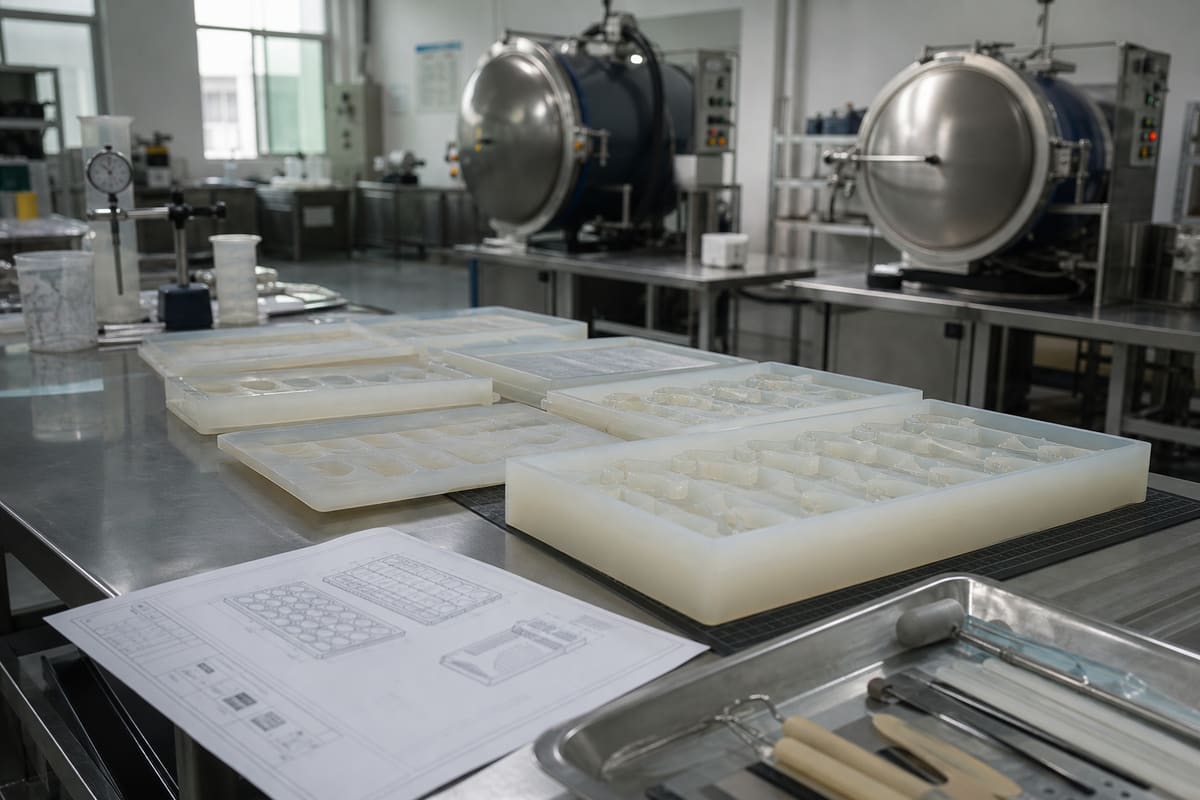
Start with the object — not the buzzword “custom mold”
| If you actually need… | Typical route | When it tends to fit | Tradeoff to accept |
|---|---|---|---|
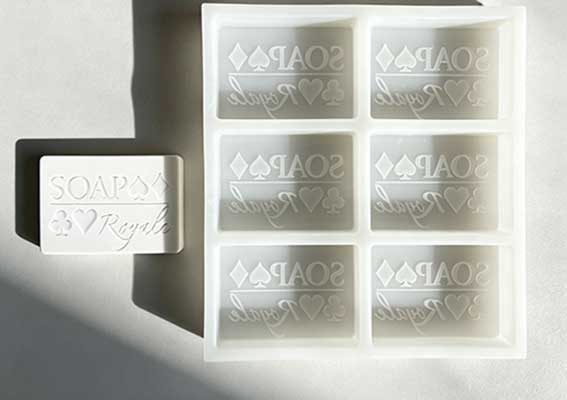
| A flexible mold you pour resin, wax, plaster, soap, or candle mix into | RTV: 3D → resin mother → RTV mold (± support shell) | Complex 3D, undercuts, lower volume, peel demold | Soft tool wear; not a depositor tray |
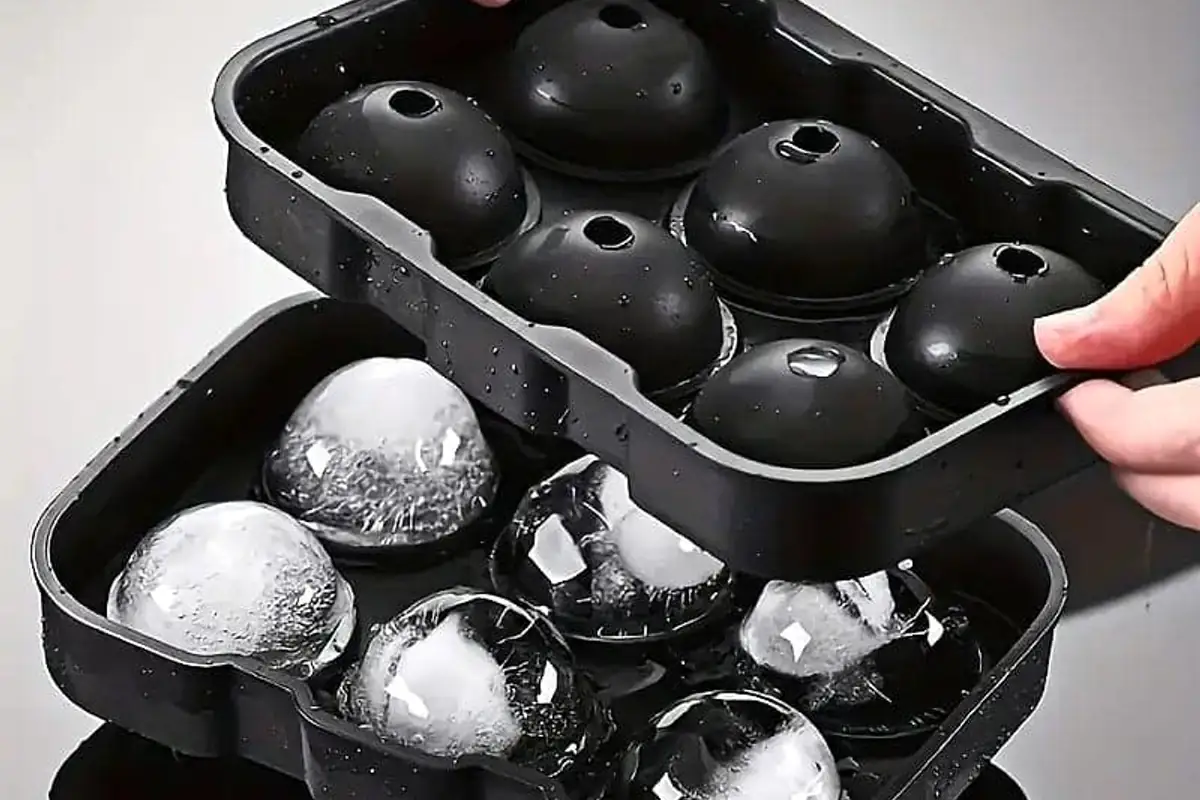
| A multi-cavity silicone tray for food or repeat pours | Soft tray / HCR–HTV compression | Stable cavities, repeat orders, logo trays | Needs cavity pitch and tray stiffness review |
| A finished silicone part (seal, grip, cover, kitchenware) | Compression or LSR | You are buying articles, not a casting cavity | Different tooling logic — say “OEM part” |
Process deep-dives: /rtv-silicone-mold-making/, /silicone-compression-molding/, /lsr-injection-molding/. Process fork: /resin-mother-vs-steel-compression/. If you only know “China manufacturer,” read /custom-silicone-mold-manufacturer/ after you pick a row.
Route cards — confirmed capability vs review vs your validation
RTV silicone casting mold — confirmed on WYD
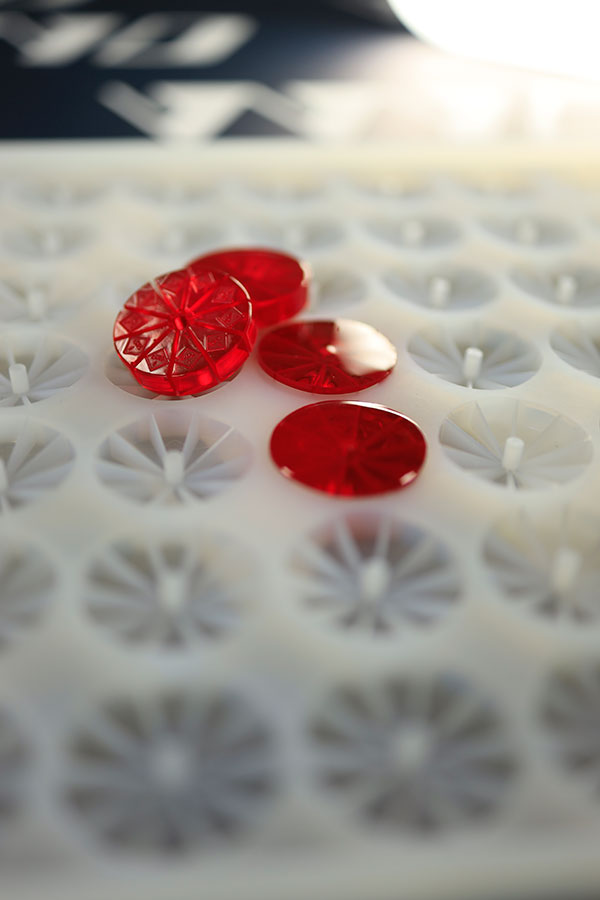
Typical route: 3D/CAD → resin master (mother) → RTV silicone mold. Often appropriate for complex 3D castings, plaster, resin, candle, soap, and lower-volume projects.
Engineering review: split line, registration keys, silicone thickness, Shore vs demold tear, mother / support-shell stiffness, inhibition risk if your master is a fresh print.
You validate: fill, cure, seam acceptance, and how many pulls *your* process can tolerate — we do not quote a fixed cycle life.
Sculpture with undercuts? Expect a planned split and often a rigid support shell — not a one-piece open tray hope. Resin-focused purchase page → /products/custom-silicone-resin-molds/. Shore stretch vs hold (support only) → /blog/shore-10a-vs-30a-silicone-complex-resin-casts/.
Compression-molded silicone tray or product — confirmed
Typical route: CAD/DFM → steel tooling (when justified) → HCR/HTV compression → sample → production. Often appropriate for repeat food trays, kitchenware, gaskets, covers, and other molded silicone products.
Engineering review: cavity spacing, draft, logo depth, loaded sag, equipment envelope.
You validate: piece weight with your formula, demold on your line, cleaning chemistry.
Food hubs when the SKU is already known: /custom-food-silicone-molds/, /custom-silicone-gummy-molds/, /custom-silicone-chocolate-molds/.
LSR injection molded product — when justified
LSR injection molding may suit finished silicone components when the material, geometry and production requirements justify this process. Send the component drawing, application and expected quantity for a tooling review. For flexible molds used to cast another material, we will assess the appropriate mold-making route separately. See also custom molded silicone products.
What goes wrong on a drawing / sample / photo job
| Wrong move | What you usually see |
|---|---|
| One phone photo, no dimension | CAD that looks right and measures wrong |
| Treat photo-to-CAD as free DFM | Geometry work gets buried inside a “review” |
| Force a one-piece open mold on a locked sculpture | Tear at the undercut, or a broken casting |
| Skip prototype because the render looks finished | First pour or first deposit fails the risk the render hid |
| Jump to steel while the cavity is still changing weekly | Tooling money spent on a revision that is not frozen |
No 3D file yet?
We can start from a sketch, reference images, a dimensional drawing, a physical sample, an existing product, or an STL / STEP / STP file.
For image-only projects, we normally need multiple views and at least one known dimension before accurate 3D development. Photo-to-CAD is possible; it is still CAD scope, not free DFM magic → /silicone-dfm-cad/.
Free DFM review vs paid CAD development
| Question | Service | Commercial |
|---|---|---|
| Can this design be manufactured reliably? | Free DFM | Review before tooling money |
| What geometry should we manufacture? | Paid CAD | Often ~US$50 for simple adjustment or modeling when that scope applies; complex sculpting / reverse engineering itemized |
A DFM finding may identify changes that require separately quoted CAD. Free DFM does not mean unlimited redesign loops.
Why prototype before production?
Prototype testing should verify the highest-risk items for *your* route:
- demolding (especially undercuts)
- fit
- hardness feel
- cavity weight / portion
- surface finish
- logo detail
- undercuts / seam acceptance
- assembly / function
- support-shell behavior when filled
Skip prototype only when geometry and process are already proven and both parties accept residual risk in writing → /silicone-prototyping/.
When the project is suitable, sample molds are typically 3–7 business days after CAD approval — we confirm suitability on the quote.
Soft production for selected tray / mold designs usually starts around 20 molds/sets per design after sample approval. One prototype or a small validation set before that production quantity is a separate line.
Soft tray today, production tooling later

If cavity geometry is still changing weekly, soft tooling usually wastes less money than steel. If geometry is frozen, volume is rising, and abrasion or cleaning is eating soft trays, discuss steel timing on /soft-tooling-to-production-tooling/. Move when conditions say so — not because a brochure promised N cycles.
What to send for a quote
Send in one pack:
- File or reference (STEP/STL/photos/sample)
- Overall dimensions + any CTQs
- Application (what you cast or what the silicone part does)
- Prototype quantity (if needed) and expected first production quantity
- Destination market / docs you will request
- Whether you need NDA before file share → /contact/
- Ask for an itemized quote (CAD · tooling or mother · samples · unit · packing/freight)
CTAs: Start custom mold RFQ → /silicone-mold-rfq/ · Contact → /contact/ · Manufacturer → /custom-silicone-mold-manufacturer/ · Resin molds → /products/custom-silicone-resin-molds/ · Plant → /baoan-plant/
What changes cost on a drawing / sample / photo job
Expect the quote to separate:
- CAD or reverse-engineering from photos/sample
- Master / resin mother when an RTV route is chosen
- Support shell if required
- Production metal tooling when compression trays are the long-term route
- Prototype / sample molds
- Unit molds or trays
- Packing and freight
Ask for those lines explicitly. Ownership and transfer rights are contract terms — confirm before tooling deposit. Paying a mold fee does not automatically mean you can move the tool.
Short FAQ
Is this the manufacturer page?
No. This page chooses the mold/object route from your drawing, sample, or photo. Credentials and procurement scope live on /custom-silicone-mold-manufacturer/.
Can you make CAD from a photo or sketch?
Yes, when views and at least one dimension support accurate modeling. CAD is quoted; production starts after design approval.
Sculpture with undercuts — split + support shell?
Often yes. Release path and tear risk drive structure; we review before locking a one-piece open mold.
When does a soft tray move to steel?
When geometry is frozen, volume is rising, and observed wear or cleaning says so — not on a promised cycle count. See /soft-tooling-to-production-tooling/.
What Shore for complex resin undercuts?
Start from release vs cavity-hold — see /blog/shore-10a-vs-30a-silicone-complex-resin-casts/. Do not treat Shore as a quality ranking.
Food contact on this route page?
Project-based compound documentation for the selected silicone and market. Not an FDA-approved factory claim. You validate finished-article suitability.
Send your design for review
Send your file or reference, overall dimensions, application and expected quantity. We will identify the correct development route before quoting.