
Ice molds
Custom Silicone Ice Molds
Custom silicone ice molds for cubes, spheres, logo ice, and hospitality trays. Cavity, lid, and tray stiffness follow how you fill, freeze, carry, and release.
For a first review, send the finished ice dimensions, logo artwork if needed, target pieces per batch, and the freezer shelf or rack size. A drawing or sample is useful, but an approved CAD model is not required to identify the main design questions. MOQ, CAD work and tooling are quoted against the selected mold structure.
A custom ice mold is not only a cavity with the correct shape.
For commercial use, the mold also needs to:
- hold the required water load
- fit the freezer, rack or service workflow
- release frozen ice without damaging the mold
- reproduce logo or surface detail
- remain practical for repeated filling, freezing, cleaning and handling.
A custom ice-mold project can start from CAD, drawings, reference products or an approved concept for cubes, spheres, logo ice, large-format presentation ice or multi-cavity trays.
The first design question is:
> What ice must come out of the mold, and how will the operator fill, freeze, move and release it?
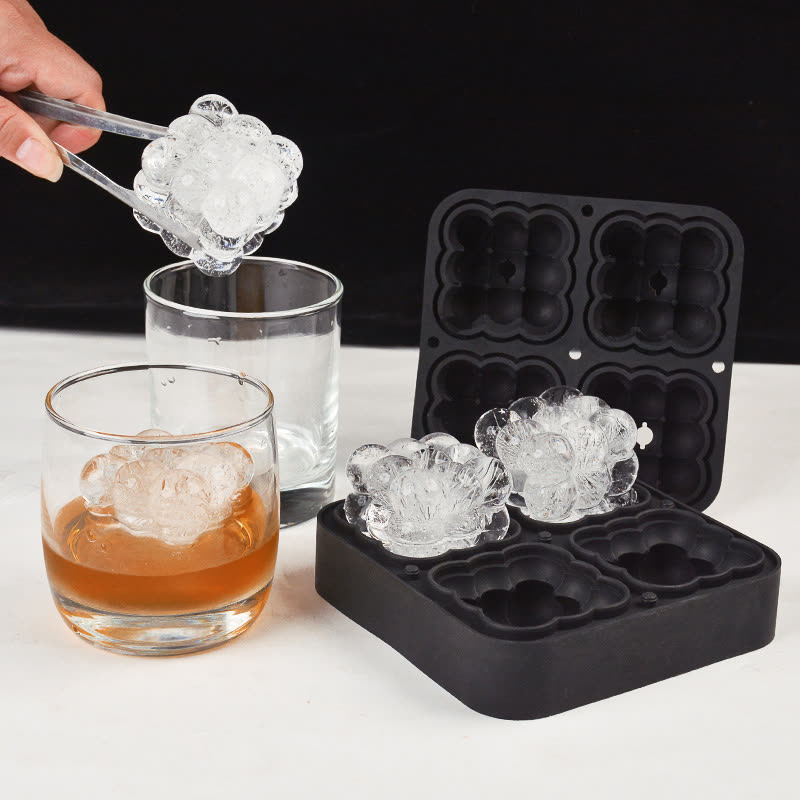
Start With the Finished Ice
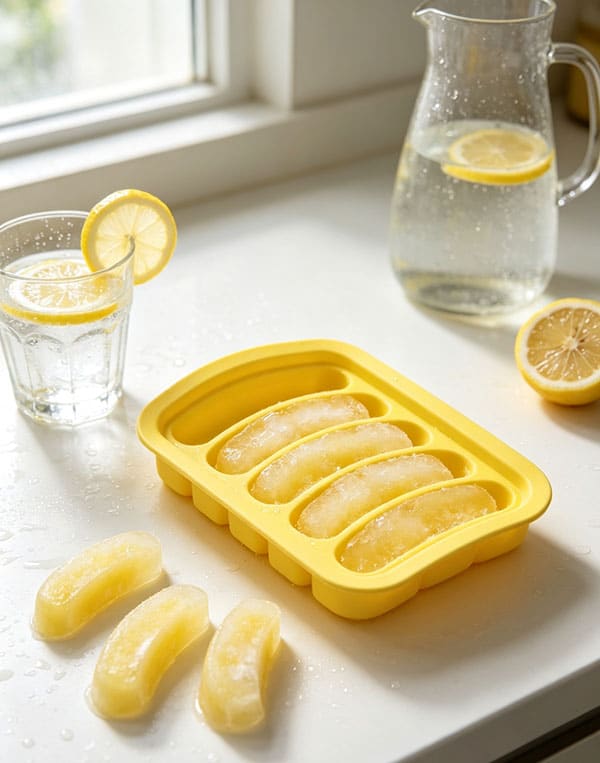
Define the finished ice before the tray.
Useful inputs include:
- cube, sphere, cylinder, spear, logo or custom geometry
- target dimensions
- glass or serving-vessel constraints
- approximate finished weight if relevant
- logo/artwork
- cavity count
- presentation look (clarity depends on water and freeze process, not the mold alone)
- whether the mold is filled manually or with equipment
- freezer/rack envelope
- service workflow
- first order and repeat forecast.
A large sphere and a shallow logo cube may use the same general silicone family but need completely different mold structures.
One-Piece Tray, Closed Mold or Split Structure?
Open cube or logo tray
A one-piece open tray can work well when the ice releases in one main direction.
DFM should review:
- cavity depth
- corner radius
- logo position
- tray span
- perimeter support
- handling when full.
Sphere or near-closed geometry
A sphere mold often needs a more deliberate fill and split/closure strategy.
Review:
- fill opening
- vent path
- seam location
- alignment between mold sections
- how the mold opens after freezing
- how water expansion affects the interface.
The split should be placed where the frozen ice can release without excessive peel stress or damage to thin silicone sections.
Large presentation ice
Large-format ice can increase:
- water load
- freeze time
- demolding force
- need for support.
Do not scale a small cube mold directly into a larger product without rechecking the structural and handling conditions.
Tray Stiffness Is More Than Shore A
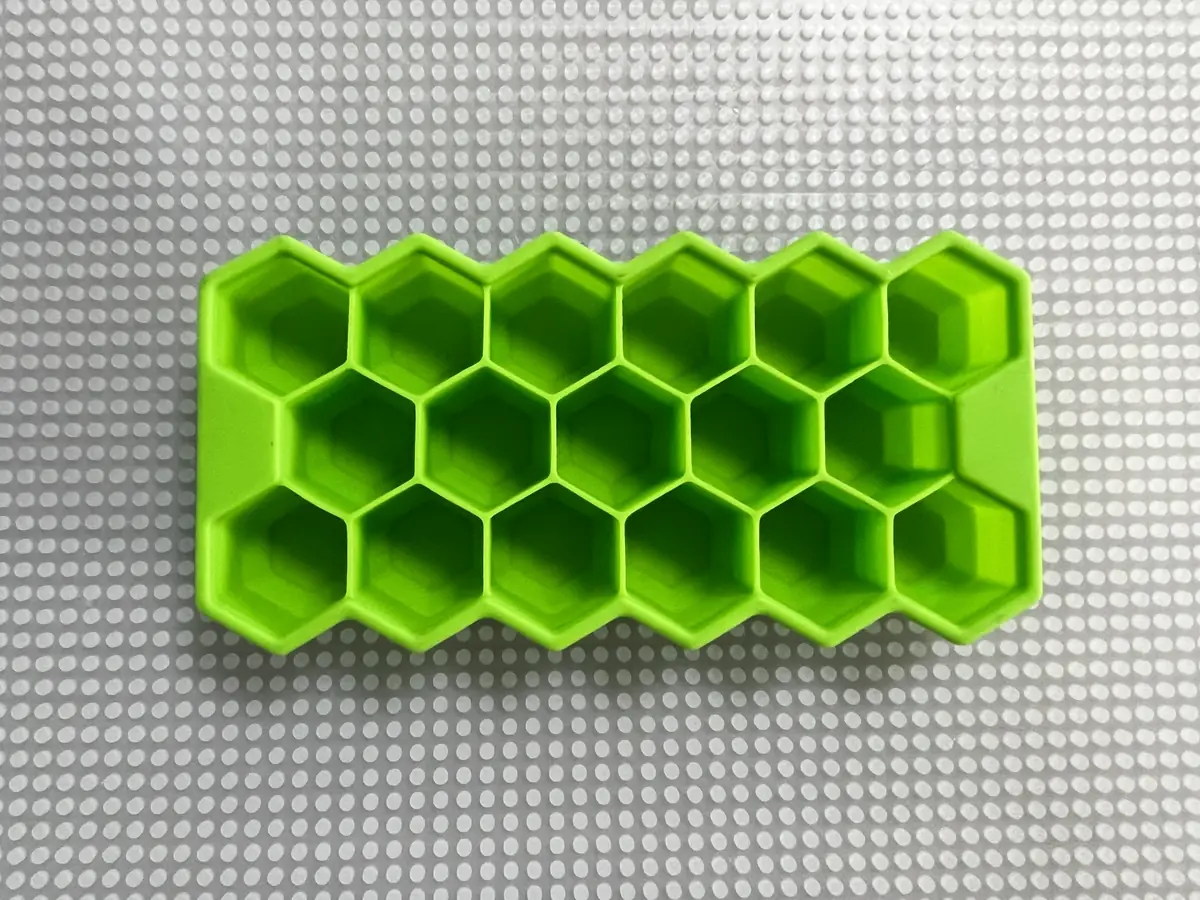
Buyers often ask for one “best” hardness.
But loaded behavior also depends on:
- wall thickness
- flange width
- cavity spacing
- tray span
- local ribs
- number of cavities
- total water mass
- external support.
A relatively soft material can still work well in a properly supported tray.
A harder sheet can still sag if the span is wide and unsupported.
For commercial trays, evaluate:
- empty condition
- full-of-water condition
- frozen condition
- operator handling.
Do not approve the tray from an empty tabletop photo alone.
Logo Ice: Design for the Frozen Result
Logo ice is especially sensitive to detail scale.
Useful artwork inputs include:
- final logo size
- stroke/line width
- raised or recessed effect
- orientation in the glass
- desired visibility after partial melting
- whether text must remain readable.
Very fine lettering can look sharp in CAD and still produce weak frozen detail.
Possible design changes include:
- simplifying small text
- widening critical strokes
- reducing unnecessary depth
- changing logo location
- adding local release geometry.
The prototype should be judged from the actual frozen ice, not only from the silicone cavity.
Technical guide: Custom Silicone Ice Cube Molds
Filling and Freezing Need a Real Workflow
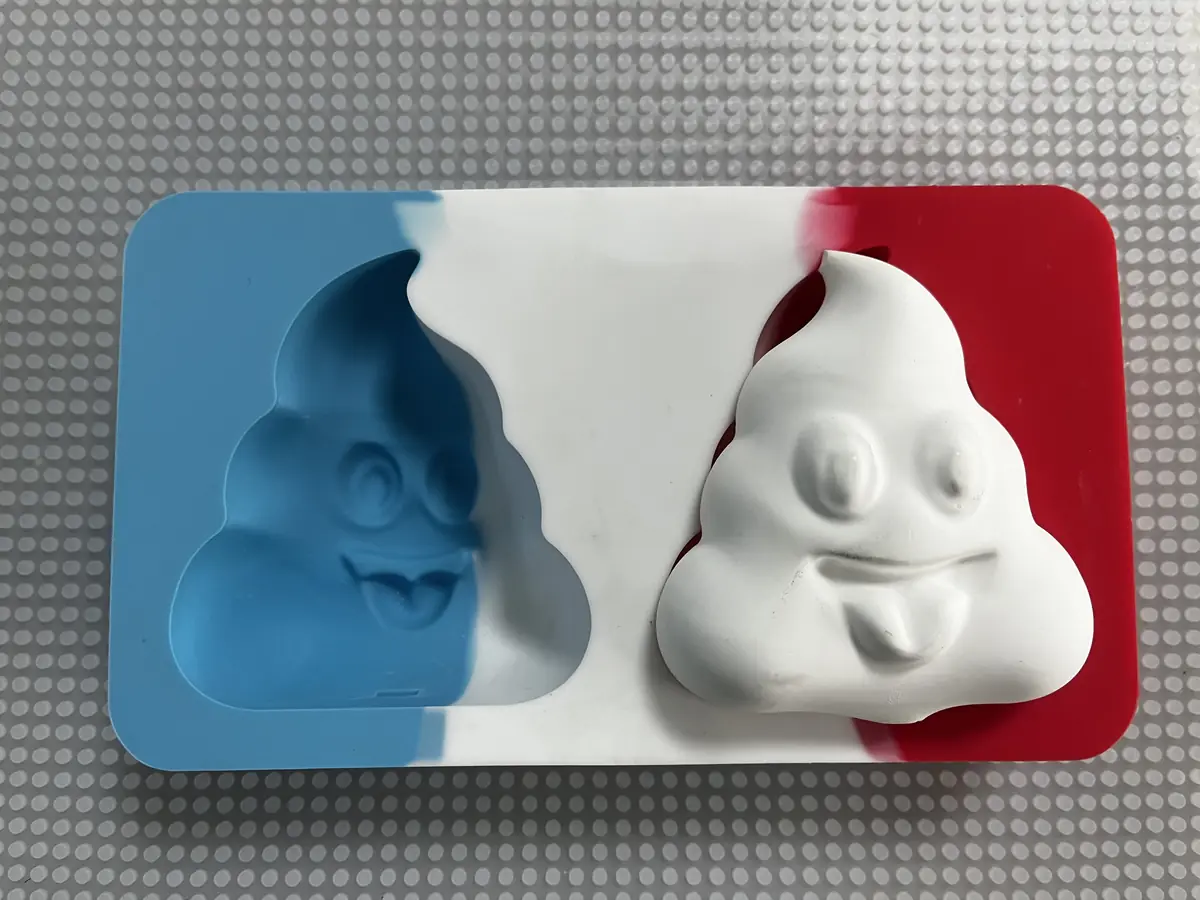
For each project, define how the mold is filled.
Open tray
Review:
- fill line
- spill control
- movement after filling
- tray support.
Closed or semi-closed sphere mold
Review:
- fill opening
- venting
- overfill behavior
- closure alignment
- frozen seam.
Water changes volume during freezing, so the mold should not assume the frozen condition behaves exactly like the liquid fill.
A physical freeze test is valuable where closure, seam or fill level affects the finished ice.
Food-Contact Documentation and Freeze Performance Are Separate
Two separate questions need to be answered.
1. Is the selected material/documentation appropriate for the intended food-contact use?
Define:
- target market
- contact condition
- repeated use
- cleaning
- requested documentation.
2. Does the finished mold work under the freezer and handling conditions?
Validate:
- filled support
- frozen release
- repeated bending
- logo detail
- cleaning
- storage.
A food-contact report does not prove the tray will remain practical in a walk-in freezer.
A successful freeze test does not replace the material-document review.
Related: Silicone Materials & Compliance
Prototype With the Actual Freeze Cycle
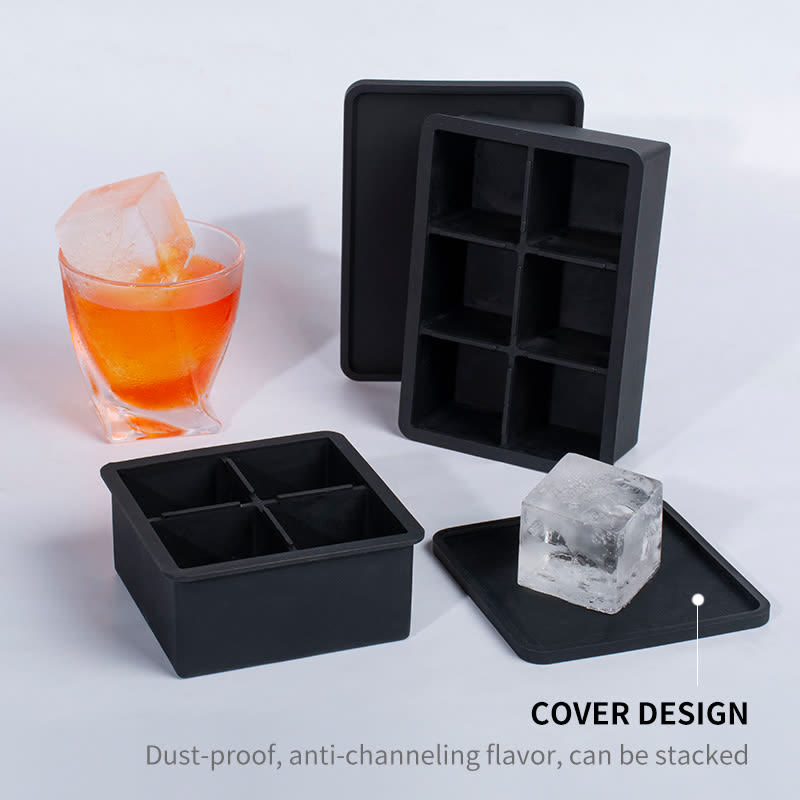
Test the sample with the intended water fill, freezer shelf or rack, and the same handling method operators will use. Check the tray while full, not only when empty: can it be moved without excessive flex or spills, and does a lid or split mold stay aligned as the water freezes? After release, inspect finished dimensions, seams, broken edges and logo legibility on the actual ice.
For a bar or hospitality program, repeat the fill-freeze-release sequence with the people who will use the mold. Record the freezer setup, fill level and time needed to release a batch. A mold that produces one good presentation cube may still be too slow or awkward for daily service. Approve a specific sample revision and test setup before ordering repeat-production trays.
Cavity Count Should Match Batch and Freezer Capacity
More cavities increase output per mold, but also increase:
- total water mass
- tray size
- freezing footprint
- handling load
- consequences of tray sag.
Tell the supplier:
- target pieces per service period
- freezer shelf or rack size
- number of molds used per cycle
- whether trays are stacked
- how filled molds are moved.
Several smaller trays may sometimes be more practical than one very large tray.
What Changes the Quote
Quotation can be affected by:
- CAD/artwork work
- cube vs sphere vs split geometry
- logo/detail
- cavity count
- tray dimensions
- support/closure structure
- material/documentation requirement
- prototype freeze test
- first quantity
- repeat volume
- packaging
- freight.
If the design is still changing, identify that before tooling.
Minimum order requirements and lead time should be quoted for the selected manufacturing route rather than treated as sitewide constants.
What to Send for an Ice-Mold Quote
Finished ice
- target geometry
- dimensions
- logo/artwork
- cavity count.
Workflow
- fill method
- freezer temperature or equipment
- rack/shelf dimensions
- service/demolding method
- cleaning.
Mold
- overall tray-size limit
- support frame/lid if used
- first mold quantity.
Commercial/documentation
- repeat forecast
- target market
- requested documents
- destination
- target date.
If the concept is incomplete, send the finished-ice requirement first. The mold structure can be developed around it.
Minimum Order
Soft-tray production often starts at 20 pieces per approved design. Sphere, split, large-format, or other structures are quoted against that structure. The quotation states the MOQ that applies. Tooling, material, validation and freight remain project-specific.
Freeze path, not a hotter compound note
Send a project for review
Send the target ice shape and size, logo file or reference photo, cavity count, freezer or rack dimensions, filling method and first order quantity. For spheres or other closed shapes, include how the mold will be filled and opened. If the layout is still undecided, tell us the pieces needed per batch so the tray size can be reviewed before tooling is quoted.