
Plant case · anonymized
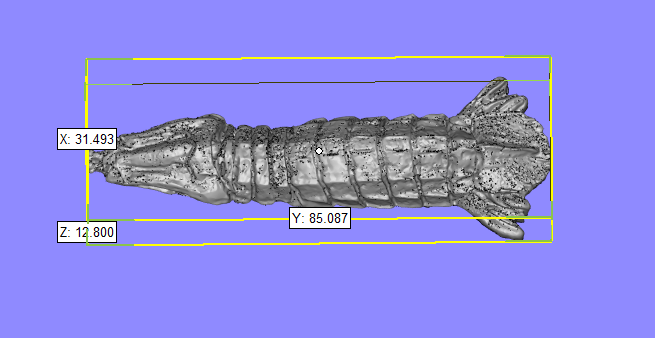
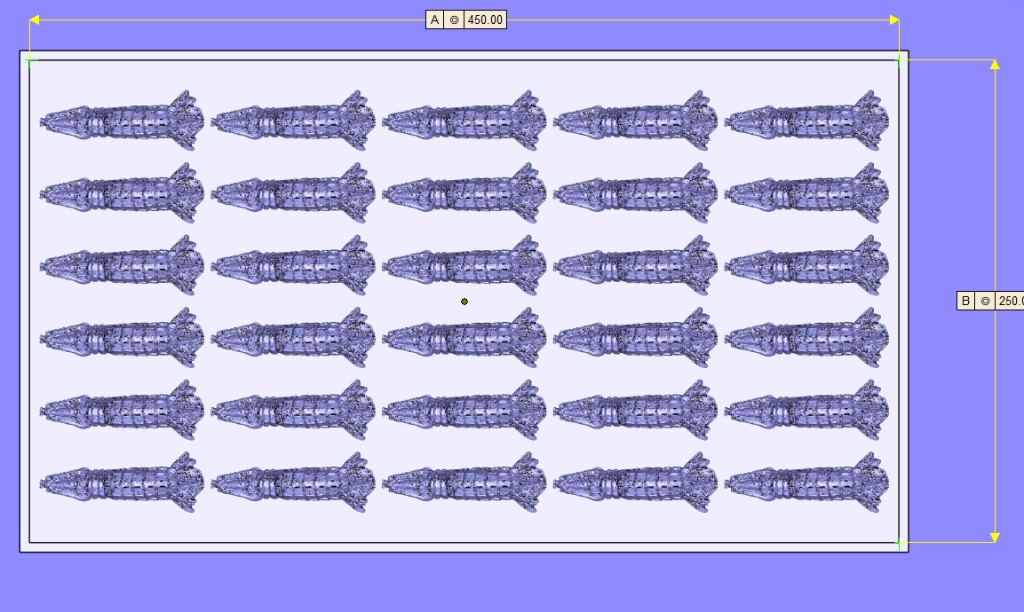
30 cavities on a 450 × 250 mm sheet — scan box 85.1 × 31.5 × 12.8 mm
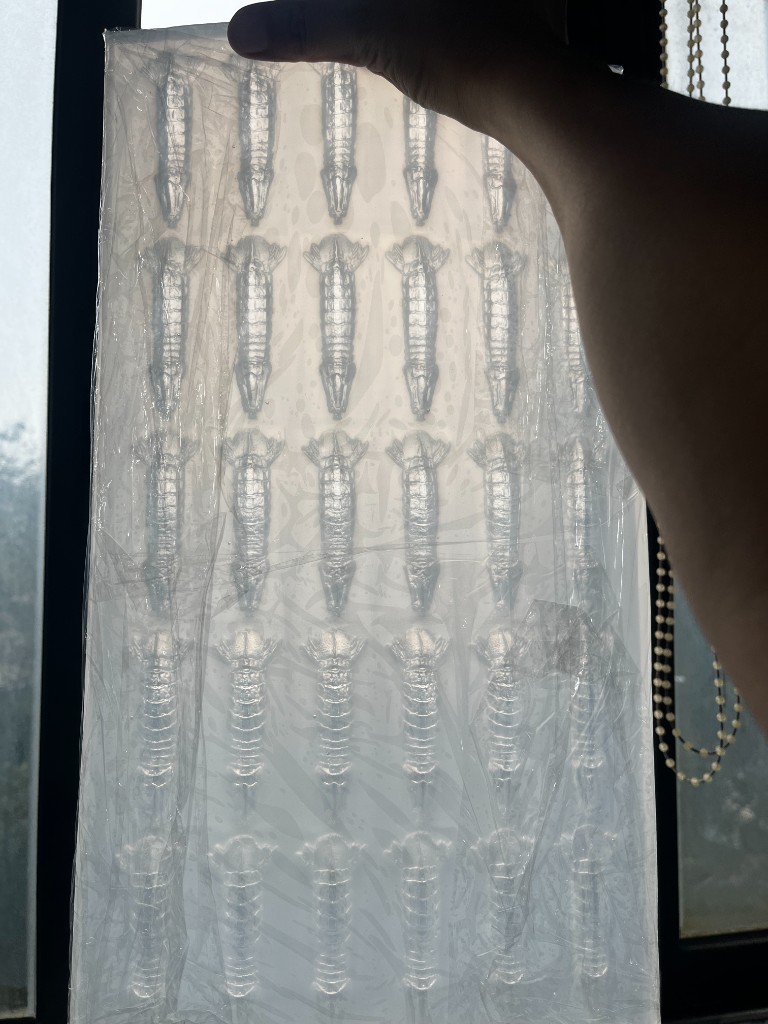
Buyer sent an organic 皮皮虾 (mantis shrimp) shape that a flat photo cannot nest. We locked one scan, laid a 6 × 5 nest on a 450.00 × 250.00 mm plate, then cut the translucent tray. Logo and company stay off this page.
Numbers on the drawing
Taken from the CAD nest and the scan bbox. No invoice totals, no invented yield.
- Cavities
- 30 (6 × 5)
- Sheet (drawing)
- 450.00 × 250.00 mm
- Scan bbox X
- 31.493 mm
- Scan bbox Y
- 85.087 mm
- Scan bbox Z
- 12.800 mm
- Path
- Scan → nest → tray
Buyer context
One master had to survive 30 identical cavities
The part is a mantis shrimp with plate ridges, side spines, and a flared tail. That geometry dies if you scale a phone photo onto a 6 × 5 grid. The scan file wrote a bbox: X 31.493 mm, Y 85.087 mm, Z 12.800 mm. Those three numbers are what the nest used — not a mood-board length.
The plate on the drawing is 450.00 mm by 250.00 mm. Thirty cavities sit 6 across and 5 down. Wall and draft stay in the leftover metal/silicone between those boxes. If you want 40 cavities on the same sheet, say so on the RFQ — we will tell you which dimension breaks first.
Pour material for this SKU is not published here. Food-contact grade, if the line needs it, is a path discussion on food-grade documents plus destination market — not a blanket factory stamp.
What failed if we skipped the scan
- 1
Tail fan and plate ridges flatten
A JPEG nest averages the mesh. The physical tray in backlight still shows segment lines because the scan, not the photo, drove the cavity.
- 2
30-up without a written bbox
You cannot prove cavity-to-cavity match if the first piece has no X/Y/Z. We locked 31.493 / 85.087 / 12.800 mm before the 6 × 5 layout.
- 3
Sheet size guessed from “about A4”
The drawing states 450.00 × 250.00 mm. Press and pour station have to fit that rectangle — we do not invent a stock sheet after the fact.
Process clip
Scan and nest, then the tray
Floor video for this job (~13 s, 1920 × 1080). Use it as the path proof: mesh → 30-up → silicone sheet. DFM notes and Shore band for a new RFQ still go through CAD / DFM. Typical shop path for soft trays: prototype often 3–7 business days after CAD lock; this case’s calendar is not published.
Verified Project Specifications
| Item | On file | Not claimed |
|---|---|---|
| Single-piece bbox | 31.493 / 85.087 / 12.800 mm | Piece weight in grams |
| Sheet | 450.00 × 250.00 mm | Press brand / cycle seconds |
| Nest | 30 cavities, 6 × 5 | Yield % or reject rate |
| Output | Translucent multi-cavity sheet | FDA-approved factory |
| Buyer | Anonymized | Company name or invoice $ |
If your line is a food tray, start on custom food molds. Plant photos live on Bao'an floor. Copy the RFQ checklist before you upload the scan.
RFQ copy-paste for a similar organic shape
- Master: scan, STEP/STL, or a physical part we can measure.
- One-piece target size (or say “use the scan bbox”).
- Sheet size you can run — this job used 450 × 250 mm.
- Cavity count or pieces per cycle — this nest was 30 (6 × 5).
- What you pour, destination market, food-contact docs if needed.
Questions buyers ask after seeing the tray
- Can you start from a physical shrimp sample, not a STEP file?
- Yes. This job locked a scan bbox first (31.493 × 85.087 × 12.800 mm). A photo-only nest would lose the tail fan and plate ridges. Send the master plus the pour material.
- Why 30 cavities on 450 × 250 mm instead of packing more?
- The nest on the drawing is 6 × 5. Cramming extra cavities eats wall and draft. We do not raise cavity count until the single-piece bbox and sheet size are written down.
- Is this a food-grade tray?
- Food-contact grade and FDA / LFGB paperwork are quoted when you name the pour and the destination market. This page does not claim a factory-wide food badge for every SKU.
- Soft silicone or steel for this kind of relief?
- This case is a soft multi-cavity sheet. If daily pours or tray life outgrow it, steel / depositor tooling can reuse the same archive — separate quote, same Bao'an floor.
- What should I send to get a similar quote?
- One master (scan, STEP/STL, or physical part), target sheet size, cavity count or pieces per cycle, pour material, and whether you need food-contact docs. Soft trays often start around MOQ 20 per design; this job’s tray MOQ was not published.
Have a scan or a messy organic master?
Send the file and the pour. We will write bbox, sheet, and cavity count before anyone talks about a pretty tray photo.