
Craft molds
Bulk Custom Craft Silicone Molds
WYD makes custom silicone molds for craft brands and production teams that need their own shape rather than a catalog cavity. Tell us what you cast—resin, plaster, wax, soap or another material—the finished dimensions, and how many molds you need for the first order. Those inputs help us decide whether a one-piece RTV mold, a split mold with a support shell, or a repeat-production tray is the right starting point.
For complex 3D shapes and smaller production runs, RTV silicone molds made from a resin master model are often the most practical route. For repeat tray-style production, we can also review whether a compression-molded silicone tray is justified.
Soft-tray MOQ 20. CAD / 3D modeling is about USD 50 when the model still needs lock. Send artwork or STL, the casting material, and whether the piece is flat-back or full 3D.
Match the Mold Structure to the Casting
A flat-back ornament may only need a one-piece open mold. A full 3D figurine with undercuts may require:
- a split RTV silicone mold
- registration keys
- controlled parting lines
- pour channels and vents
- a rigid mother mold/support shell
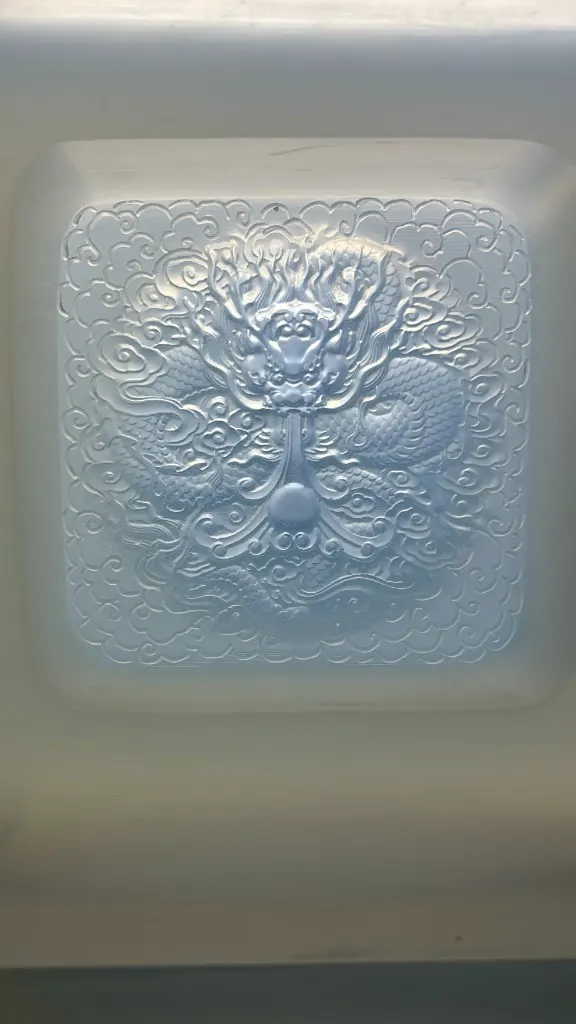
Dragon, tiger, and phoenix wells, with the dragon-cavity short →
The correct structure depends on the geometry and casting material, not on one standard template.
From Artwork or STL to a Resin Master
If the final 3D file already exists, we review it for mold making. If the project begins with artwork, photos or a sketch, the 3D model can be developed first.
After approval, the typical RTV process is:
3D model → resin master model → RTV silicone mold → test casting
Use resin master model or master pattern for the solid master. Use mother mold only for the rigid support shell outside the flexible silicone mold.
What We Check Before Making the Mold
- flat-back or full 3D
- overall dimensions
- fragile protrusions
- undercuts
- parting-line location
- casting material
- desired surface finish
- number of cavities
- expected number of molds
- whether test casting is required
From First Sample to Repeat Orders
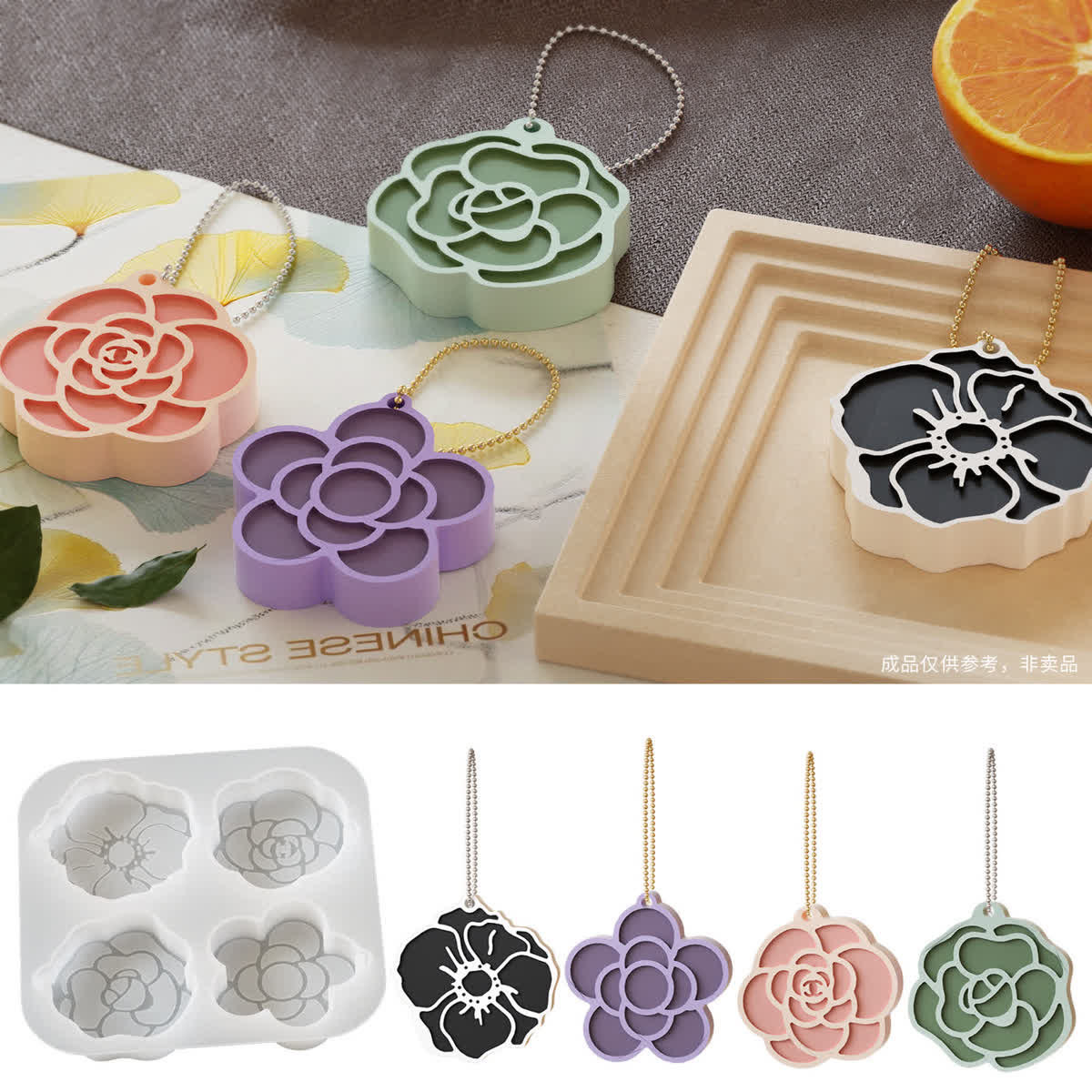
For a repeat order, the approved master matters as much as the first mold. Record the master or CAD revision, the casting material, the surface areas that must reproduce cleanly, and the way the part will be released. If a thin tip breaks during demolding or detail fills differently across copies, it is better to resolve that on a test casting than to multiply the same defect across a batch of molds.
Tell us whether you need several identical molds for one design, multiple designs in a collection, or a cavity layout for a defined production output. These are different quoting jobs. The number of silicone molds, the number of cavities per mold, and the number of finished castings you expect per shift should not be treated as one quantity.
Current packing lot
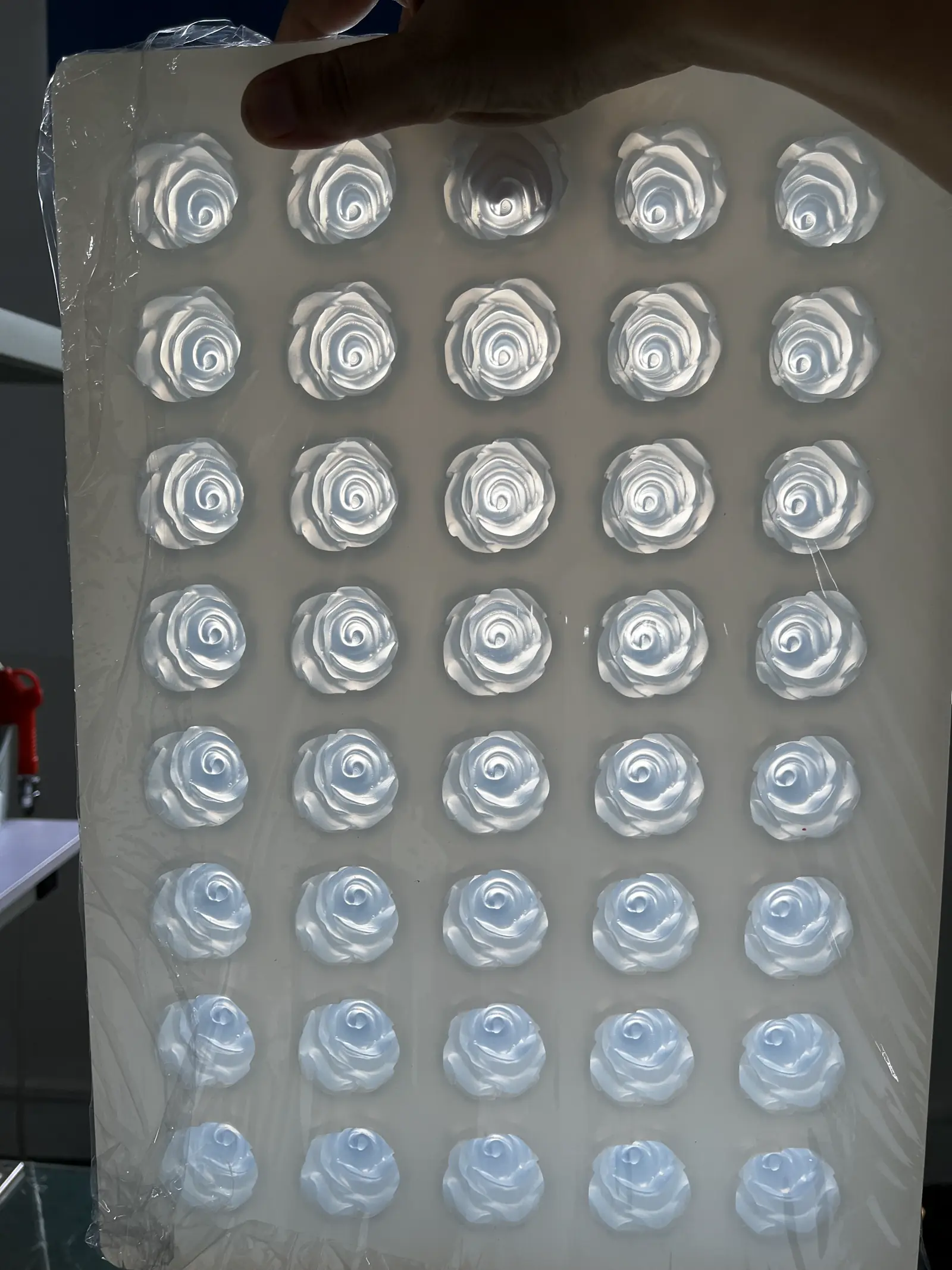
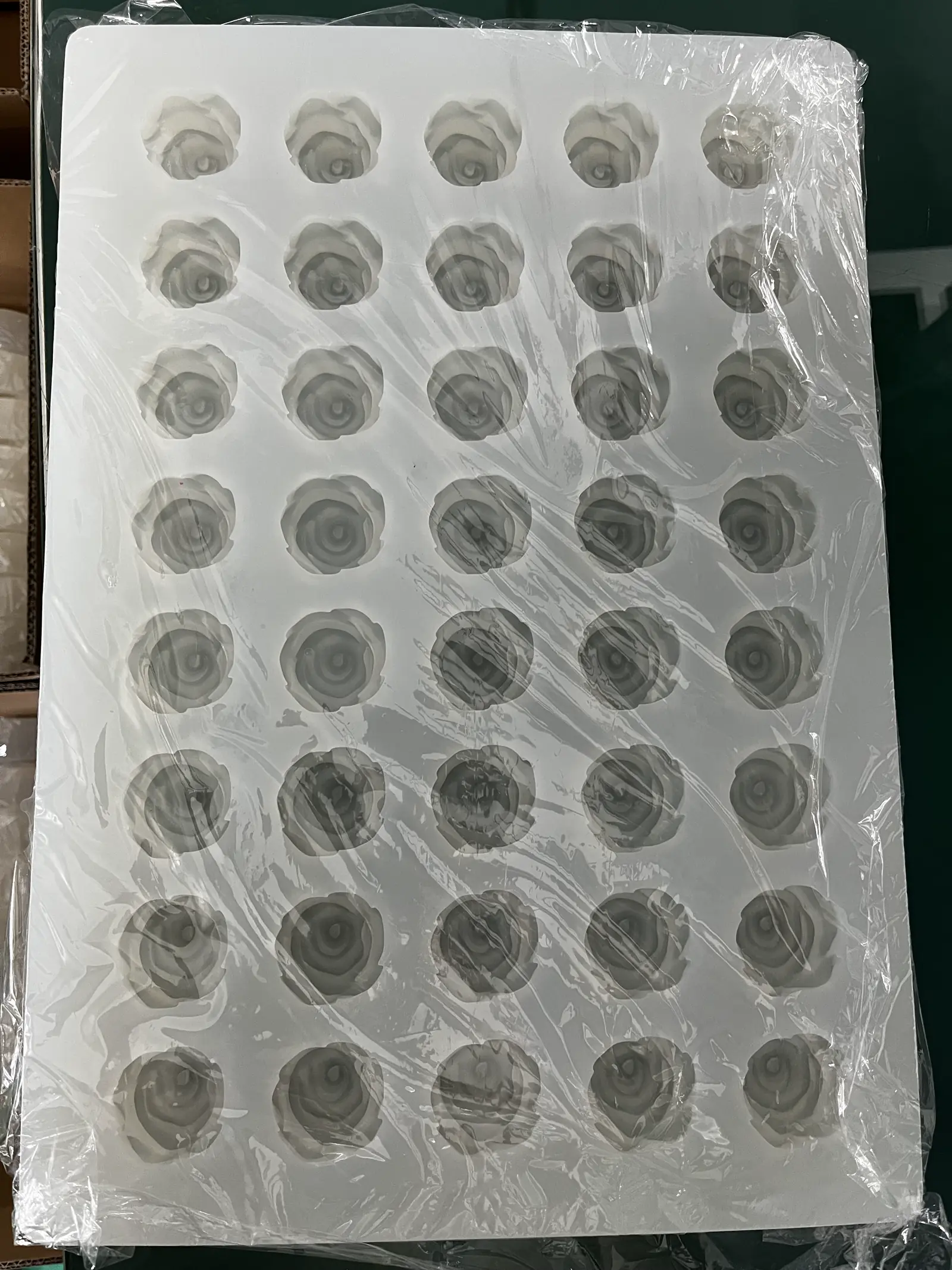
Rose cavities and character borders from this floor
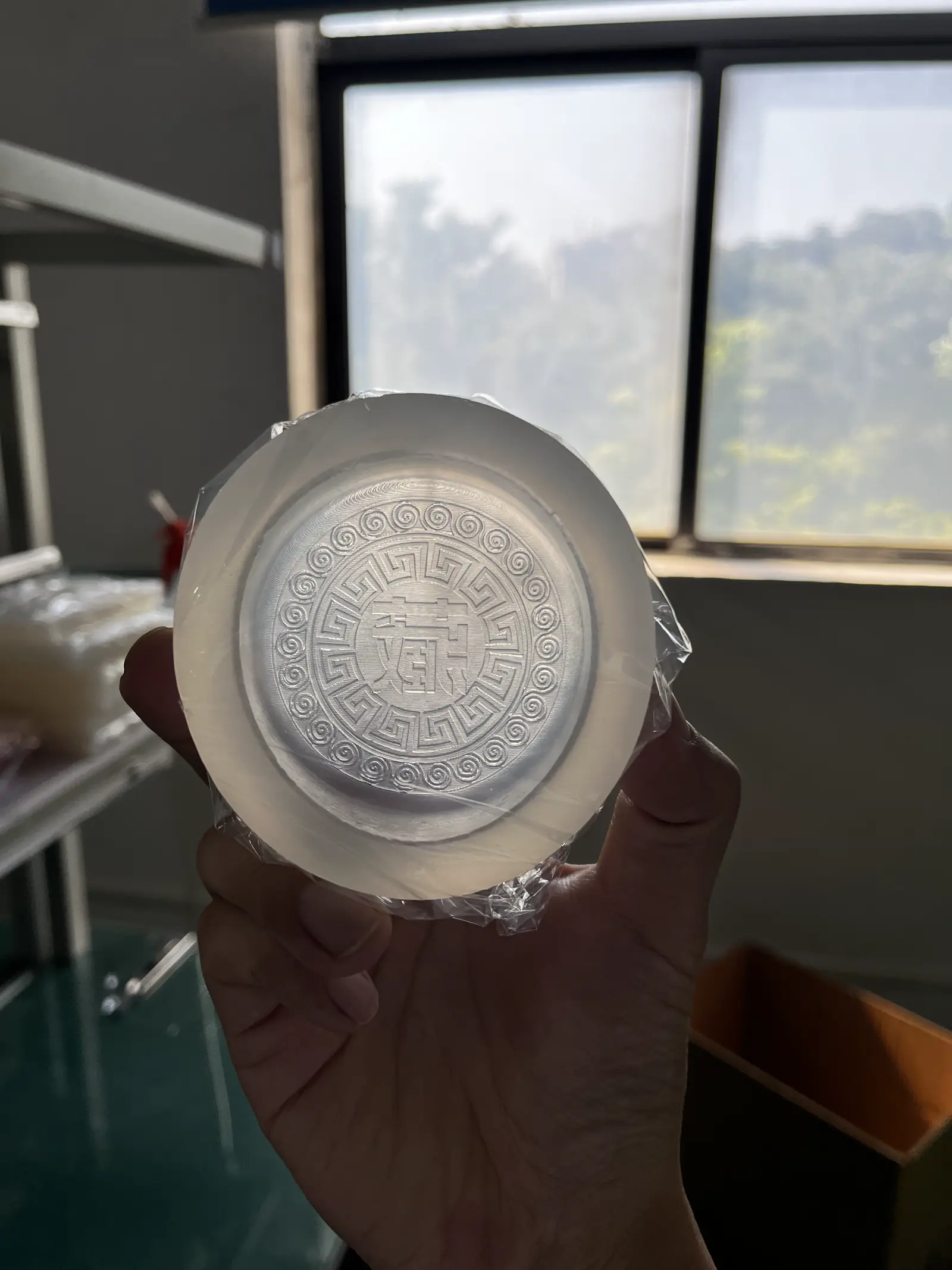
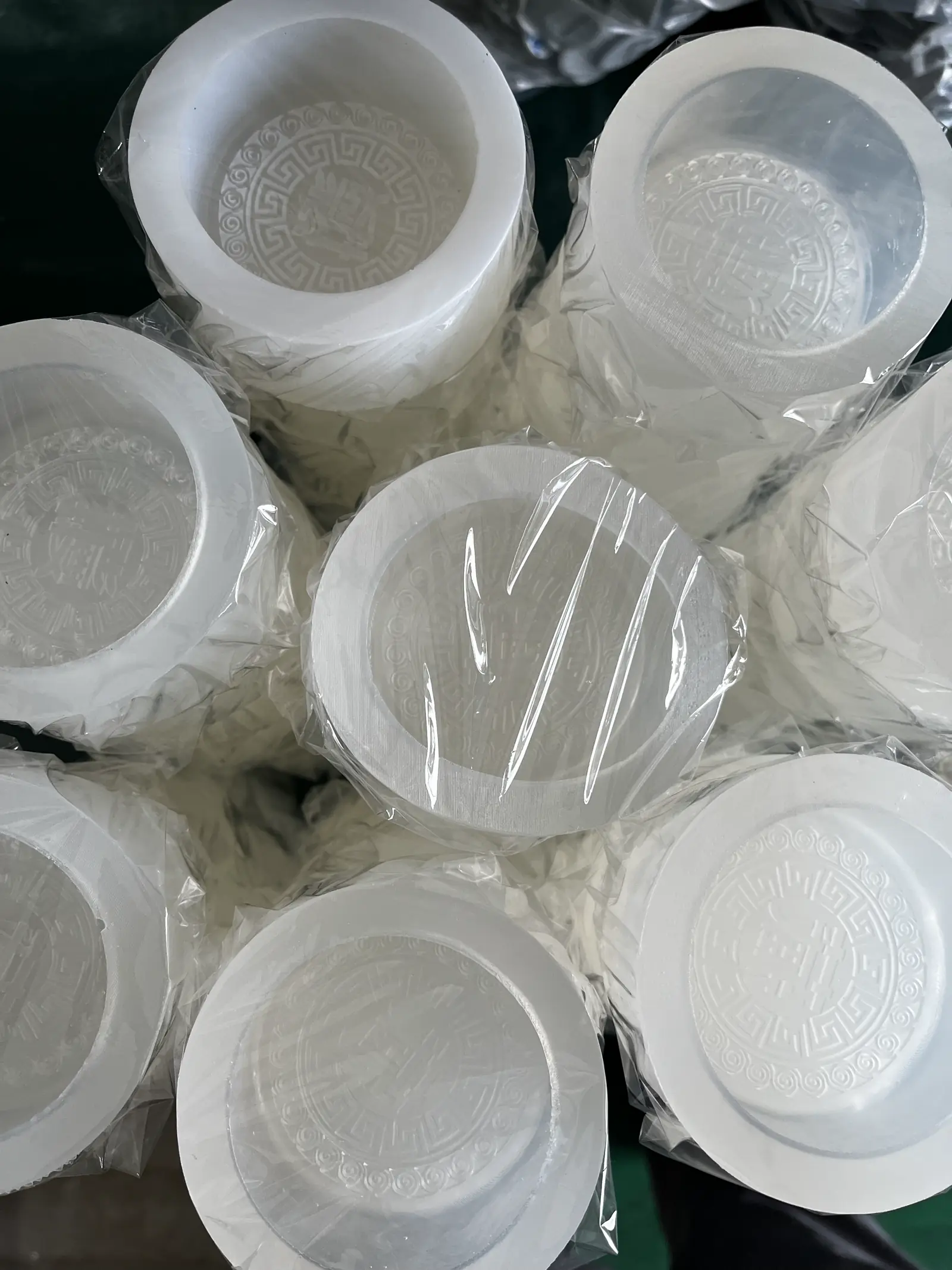
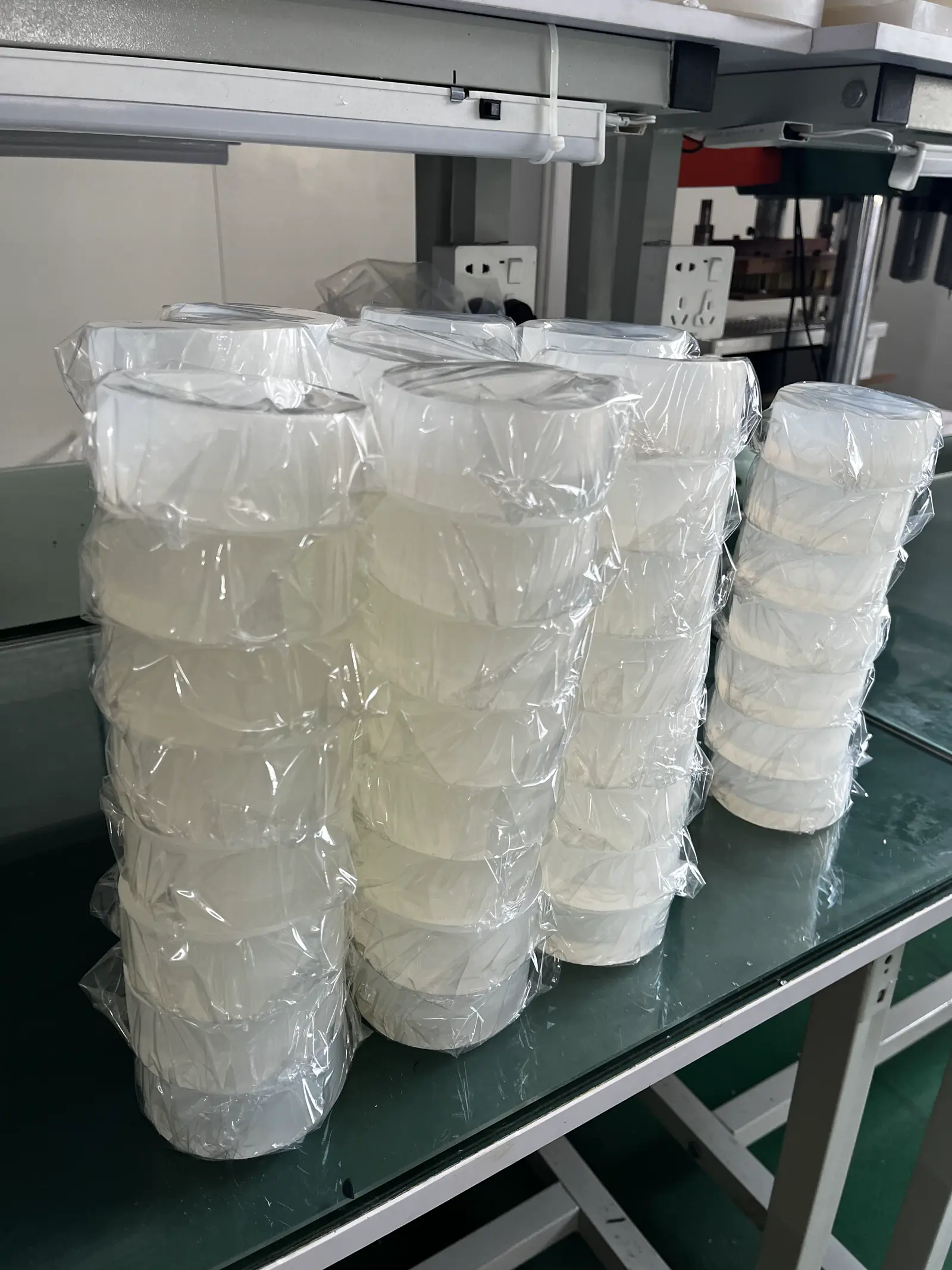
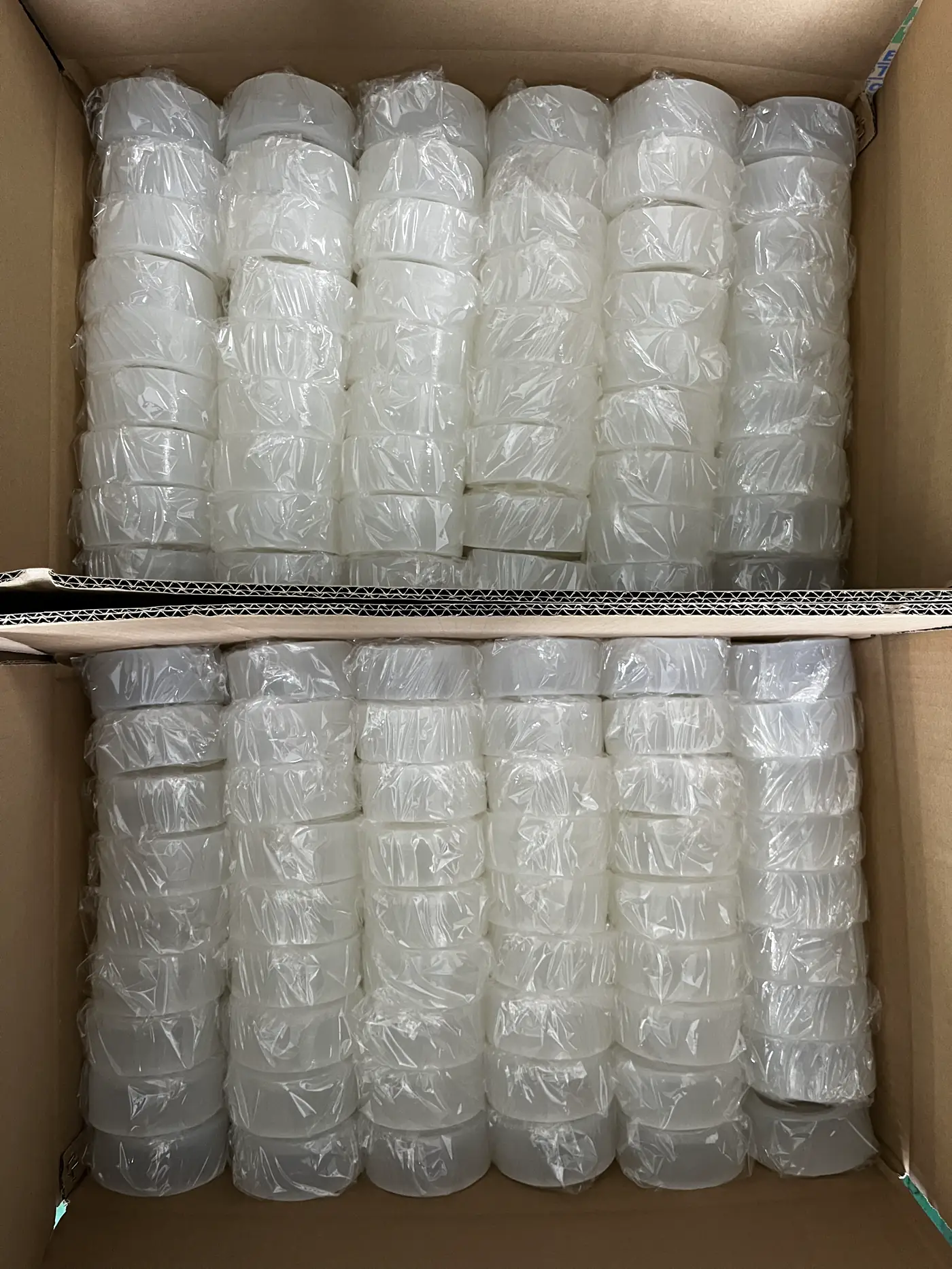
These are WYD molds from a current lot. The rose sheet has to keep petal lines. The round wells carry a center character inside a key-fret ring. Bagged stacks are the round family leaving the table.
Piece count, Shore, and the pour stay on the job sheet. Send the artwork if you want a matching cavity.
What to Send for a Quote
You do not need every line filled before the first note. Mark unknown items as to confirm after we see the files or sample.
- Artwork, STL/STEP file, measured photos, or a physical sample
- Finished casting dimensions and the casting material (for example, epoxy resin, UV resin, plaster, wax, or soap)
- Flat-back or full 3D shape; mark fragile projections, deep undercuts, and surfaces where a parting line is unacceptable
- First-order number of molds, cavities per mold if already specified, and likely repeat-order quantity
- Current casting or demolding problem, if you are replacing an existing mold
- Whether you need a test casting before approving repeat molds
Send Your Craft Mold Design
Send the artwork or STL, the casting material, and whether the piece is flat-back or full 3D. We will name the mold structure before tooling.