
Tensile and Tear Strength Specs for Silicone Parts
ASTM D412 tensile is an un-nicked pull. ASTM D624 tear starts a nick. Part life at undercuts tracks tear, and Die B is not interchangeable with Die C.
On this page
If you're speccing “high strength silicone” on an OEM part, tensile is a straight pull. Tear is a nick that runs.
Datasheets print both. Shops buy the wrong one. A high tensile number with modest tear is a rubber that snaps in a clean stretch and unzips the moment an undercut or a knife nick exists. Deep-undercut parts and RTV prototype molds live and die on tear and elongation. Tensile still matters for thin walls in a straight draw and for HCR/LSR gaskets that are loaded in tension. They are not a single strength.
Don't treat a forum megapascal as a spec. General-purpose silicones often sit in a broad tensile band on the order of several to around ten-plus MPa (ASTM D412) and a tear band that runs from low teens to high tens of kN/m (ASTM D624), with high-tear grades at the top. Those are industry ranges, not your lot. Read the grade, the die, and the unit.

Die B is not Die C
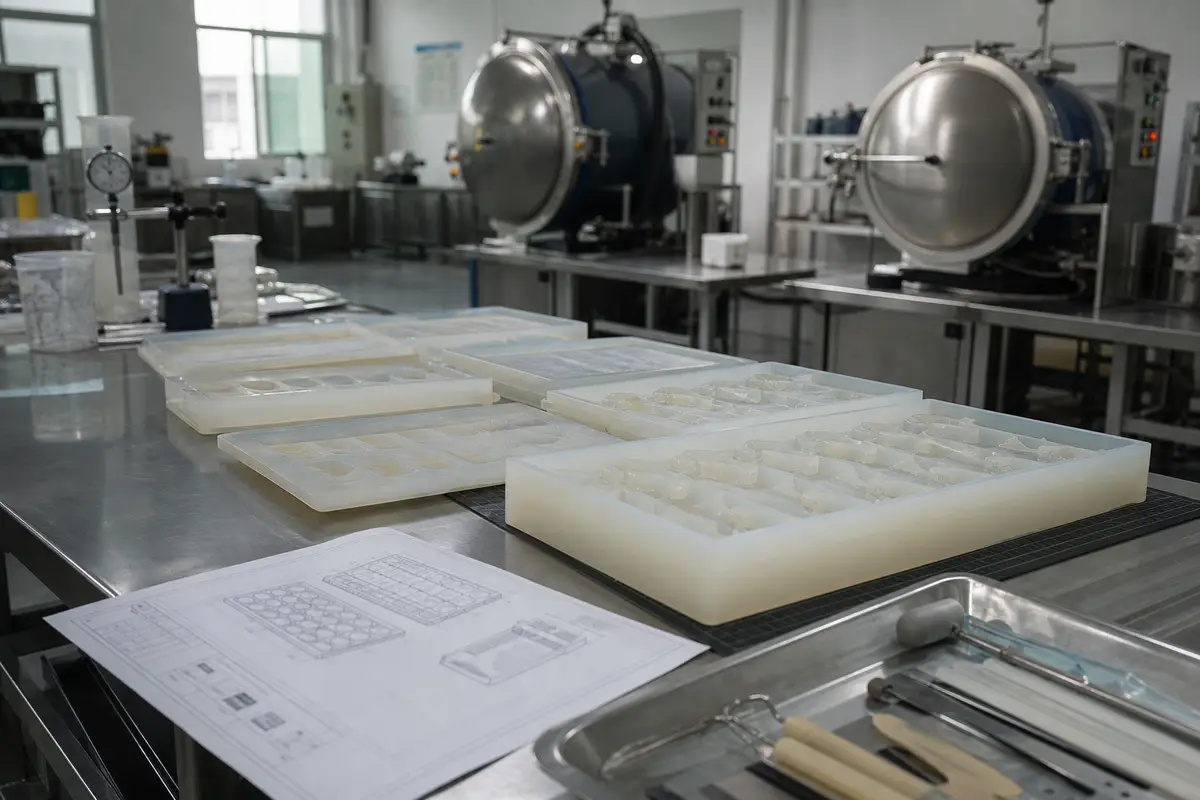
A buyer asks for high strength silicone without naming D412 versus D624, then ranks two quotes where one tear is Die B and one is Die C. Paying a tooling charge on a cover photo does not tell you which break you bought. Don't call the LSR stack a “LIM hot tool.”
A 70 × 40 mm bellows is three strength plaques
Say you need a 70 × 40 mm silicone bellows with a barb lock, Shore 30A, 80 validation pieces and about 6,000 a year.
For the 80, a shop may pour a high-tear 10A platinum RTV prototype mold to prove the barb, or cut an aluminum one-cavity if the CAD already splits.
For a few thousand millable bellows, you'll usually cut a heated two-plate HCR tool. Typical shrink ~1.5-2.5%. Tear and elongation are acceptance; tensile is recorded.
If annual volume justifies LSR, the production tool needs cavity heat, gates, vents, and usually a cold-runner. Typical shrink ~2-3%. Those three PDFs can all say “high-tear mold.” You're not buying the same plaque.
Checks before you rank two strength quotes
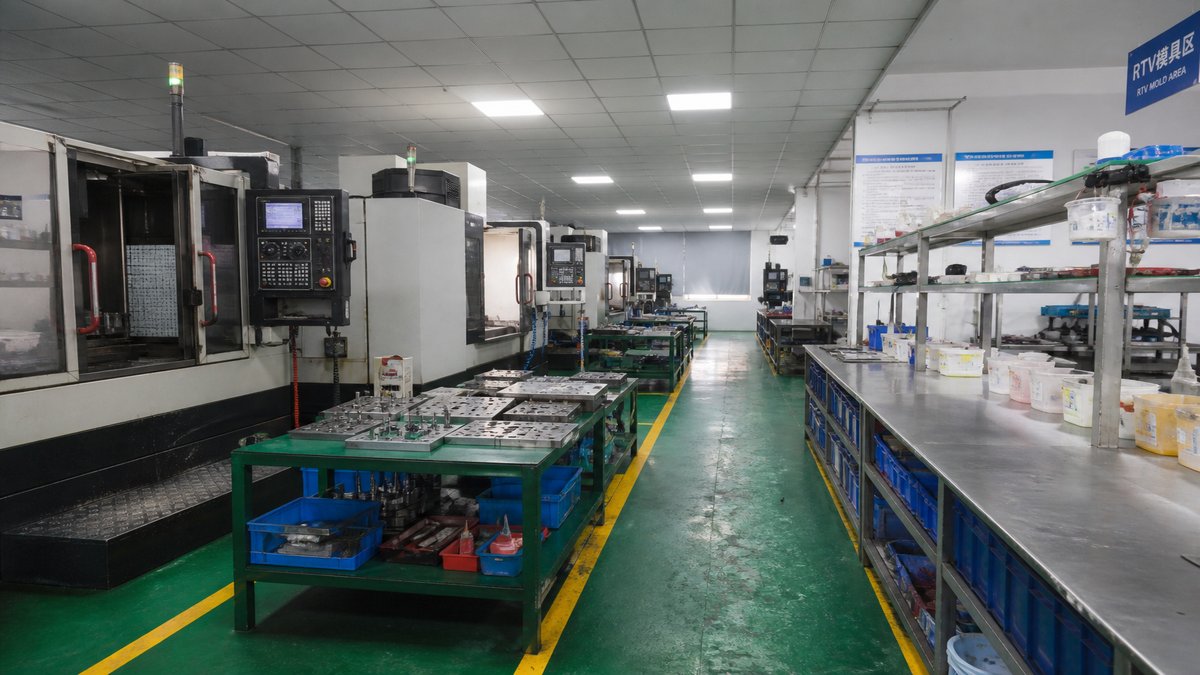
Before you compare prices, get answers on:
- ASTM D624 tear with die stated (B or C), plus ASTM D412 tensile and elongation?
- Process: HCR compression vs LSR injection (cold-runner vs dump-runner) vs RTV prototype mold?
- Post-cured plaque or not-compare post-cure to post-cure?
- Who owns the plates and inserts after the tooling charge, and can you move the tool?
- ISO 3302-1 class on the drawing (M2 is a common default)-strength is not a tolerance class.
If those lines are missing, the cheaper quote is usually the incomplete one.
Two tests, two failure modes
Tensile (ASTM D412 / ISO 37). An un-nicked dumbbell is pulled. You get tensile strength at break, elongation at break, and often a modulus at 100% strain. Failure starts in a relatively smooth gauge. This is the number that answers: will a thin rib survive a straight stretch?
Tear (ASTM D624). The specimen is nicked or cut by the die geometry, then pulled so the nick wants to propagate. This is the number that answers: will a sharp inside corner, an undercut, or a small cut at the flash line unzip the part?
A glove prototype mold fails in tear. A stretched gasket without a nick can fail in tensile. A part you demold with a screwdriver fails in tear, and then you blame the supplier's tensile line.
Shore A is neither test. Soft high-tear 10A and brittle low-tear 10A can share a durometer and not share a life. Platinum versus tin does not replace tear. LSR versus HCR does not replace it either; process families have typical tear habits, still grade-specific.
ASTM D412 is a dumbbell pull
Practical reading:
- Tensile strength in MPa or psi. Higher is not automatically the better part. A stiff high-tensile 50A can still be a bad glove.
- Elongation at break in percent. Glove inversion and deep undercuts want the high end of the typical silicone elongation band (often hundreds of percent). If elongation is modest, you need a split line no matter how pretty the tensile is.
- Modulus (M100). How much force at 100% stretch. High modulus at a given Shore feels snappy. Useful for a cavity that must push back. Hostile to inversion.
- Units and speed. D412 has specified crosshead speeds. Comparing a random lab pull to a TDS is how arguments start.
Specimen condition: post-cured or not, aged or not. Food-contact and medical lots are often post-cured; that can move tensile and set. Compare post-cure to post-cure.
ASTM D624 is a nick that wants to run
Die geometry is the trap.
Die B and Die C (and others in the method) do not give the same number on the same rubber. Die C values are often higher. A supplier who quotes tear without the die is quoting a slogan. Two quotes, one Die B and one Die C, are not a ranking.
Units: kN/m or ppi (pounds per inch). Convert if you must; don't mix them in a table.
High-tear grades exist because undercuts are nicks. Fumed-silica reinforcement and polymer design push tear up. They may raise haze, viscosity, or cost. For a texture block with no lock, you can live with moderate tear. For a one-piece miniature prototype mold, you cannot.
A nick in service (knife, embedded plaster grit, a torn flash) turns the rest of the part into a D624 specimen. That's why abrasion plus low tear is a short life.
Datasheets lead with tear for a reason
For RTV prototype mold rubber (platinum first, tin if inhibition forces it):
- Spec tear (D624, die named) and elongation together with Shore.
- Use tensile as a secondary screen and as a check that the compound is not crumbly.
- Don't substitute an LSR injection TDS. That plaque was pressed in a mold, post-cured as a part, and is not your poured block.
For LSR or HCR parts (not flexible prototype molds):
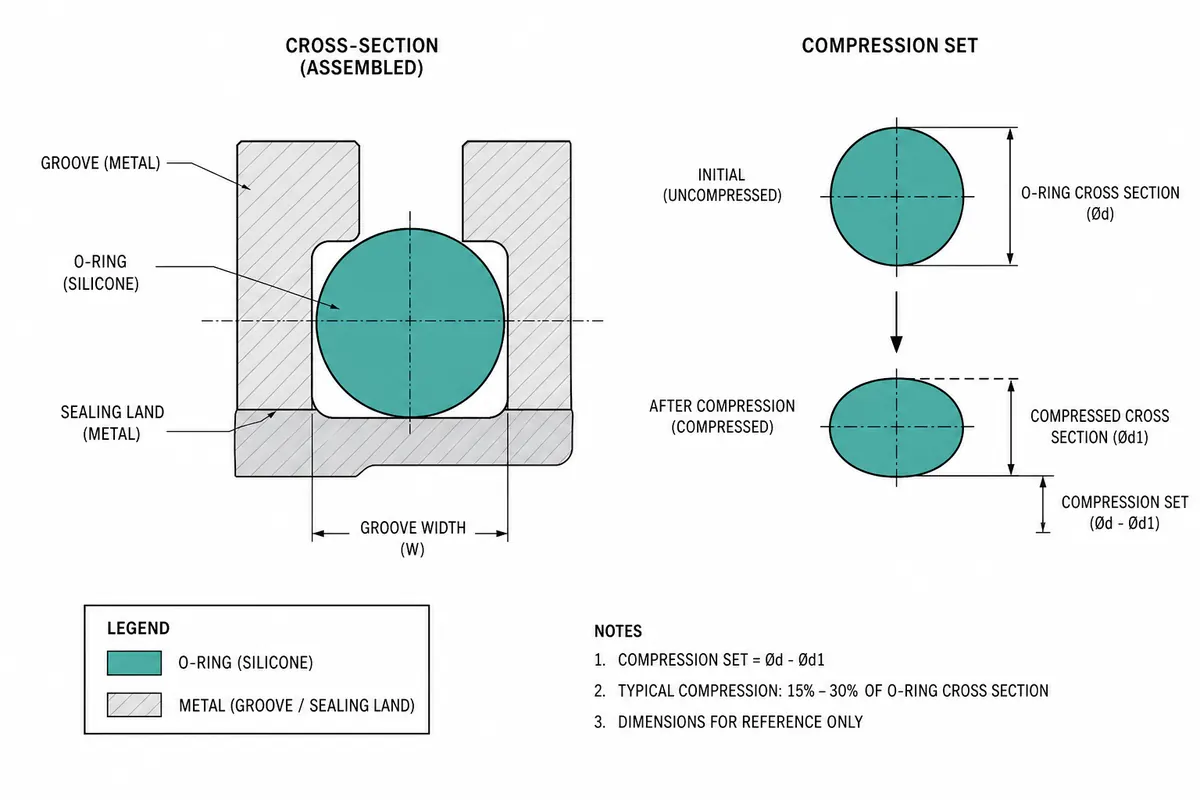
- Tensile, elongation, and tear all belong, plus compression set (ASTM D395) if the part seals.
- High-tear HCR/LSR grades exist (some military and healthcare lines). They still are not RTV glove specs.
Shop mapping:
- Unzips at undercut: tear too low, elongation too low, or Shore too high. Jumping Shore without tear is the wrong fix.
- Snaps a thin wall on a straight pull: tensile or elongation. Buying tear-only ultra-soft that cannot hold the cavity is the wrong fix.
- Nick from a pick grows each cycle: tear. More release without a recast is the wrong fix.
- Soft prototype mold slumps, tear was fine: Shore or missing jacket. Blaming D412 is the wrong fix.
When this article is the wrong quote
If you need a reusable RTV cavity (gummy, chocolate, resin) rather than a vulcanized silicone part, tear still matters on the jacket-but the quote is a master + box + jacket job, not HCR/LSR steel. If the part is a straight-draw gasket with no nick risk, don't overbuy glove-mold tear. A cheap aluminum one-cavity can beat both a full LSR cold-runner and a large RTV stack when the bellows is tiny and annual quantity is only a few hundred.
Related reading: Shore A for deep-undercut parts, silicone mold tooling explained, LSR vs HCR prototype tooling, design-for-manufacture (DFM) for silicone parts.
What to send for a strength quote
Copy this into the RFQ.
- STEP/STL and 2D with the worst undercut, plus a rubber tolerance class (often ISO 3302-1 M2)
- What ships: molded silicone part, or a flexible cavity
- Shore named, ASTM D624 tear with die stated, ASTM D412 tensile and elongation on a post-cured plaque if the grade is sold post-cured
- First quantity and annual quantity
- Process preference: HCR compression vs LSR injection (cold-runner vs dump-runner)
- Who should own plates/inserts after the tooling charge
- Which failure you had, if this is a transfer: a clean snap or a running nick
Send the STEP file, the break mode, annual quantity, and HCR vs LSR preference. That is enough for a plate-stack sketch before anyone mills steel.
Do not rank Die B against Die C
Do not compar quotes across dies, substituting tin-cure or LSR values onto an RTV prototype mold, or cutting a steel LSR tool with a cold-runner before a 70 × 40 mm bellows has run as a one-cavity prototype mold-unless annual volume and automation are already on the PO. Do not jump Shore without tear. Do not treat a tooling charge as ownership.
WYD Prototype → Compression → LSR (use this on the RFQ, then ignore quantity if geometry disagrees):
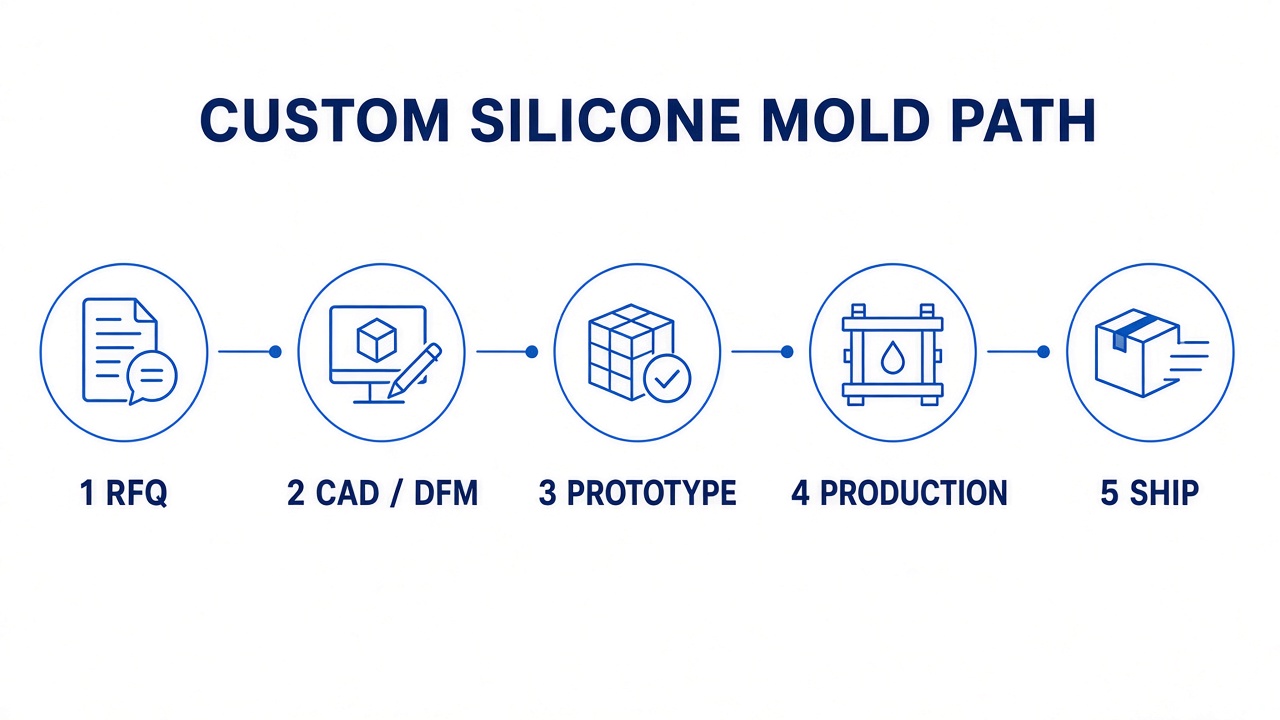
Route the RFQ from what actually ships: if Reusable RTV cavity, go to an RTV master-and-jacket quote on the WYD quote form; if Molded silicone part, go to Break mode and annual qty; if Tens to low hundreds / validation, go to Aluminum or high-tear RTV prototype mold; if Thousands, millable HCR, simple shut-off, go to HCR compression: mill, preform, flash land, deflash; if Higher annual, LSR grade, automation, go to LSR injection: cavity heat, gates, vents, cold-runner.
Geometry and what actually ships override the process name. A tiny bellows at 400 pcs/year is still a compression job. A deep undercut at 50,000 pcs still needs side actions no matter which rubber family you pick.
RFQ comparison bands: 70 × 40 mm bellows
| Route | Typical first qty | Hardware | Typical shrink allowance | Typical drawing class |
|---|---|---|---|---|
| RTV prototype mold / jacket | 20-50 | Master + box + jacket | Platinum RTV ~0.1-0.3% | Cavity, not a rubber-article class |
| HCR compression | Low thousands | Two-plate, flash land, platen or cartridge heat | ~1.5-2.5% | ISO 3302-1 M2 unless the 2D says M1/M3 |
| LSR + cold-runner | High annual, automation | Steel, cavity heat, gates/vents, cold-runner | ~2-3% (grade/temp) | Same drawing class + first-article inspection (FAI) remeasure |
These are shop-normal bands for RFQ comparison, not a named lot.
FAQ
Why can two 20A grades share a durometer and not share a part life? Shore A is neither tensile nor tear. Soft high-tear 10A and brittle low-tear 10A can share a durometer. Deep-undercut parts and RTV prototype molds live and die on tear and elongation; a high tensile with modest tear snaps in a clean stretch and unzips the moment an undercut or a knife nick exists.
Is a higher tensile MPa always the better glove prototype mold? No, a stiff high-tensile 50A can still be a bad glove. Glove inversion wants the high end of typical silicone elongation. If elongation is modest, you need a split line no matter how pretty the tensile is. Use tensile as a secondary screen that the compound is not crumbly.
Can I rank two quotes if one tear is Die B and one is Die C? No. Die B and Die C do not give the same number on the same rubber; Die C values are often higher. A supplier who quotes tear without the die is quoting a slogan. Convert units if you must; do not mix kN/m and ppi in a table and call it a ranking.
Does a screwdriver nick at the flash line turn the rest of the part into a D624 specimen? Yes. A nick in service (knife, embedded plaster grit, torn flash) wants to propagate. That is why abrasion plus low tear is a short life, and why jumping Shore without tear is the wrong fix when a part unzips at an undercut.
Should I copy an LSR injection TDS onto a poured RTV prototype mold? No. That plaque was pressed in a mold, post-cured as a part, and is not your poured block. For RTV prototype mold rubber, spec tear (D624, die named) and elongation together with Shore. For LSR or HCR parts, tensile, elongation, and tear all belong, plus compression set if the part seals.
Ready to order custom silicone molds?
Send your drawing, sample or project requirements for DFM and quotation.