
LSR vs HCR: Which Suits Silicone Prototype Tooling
LSR matches production injection chemistry. HCR in aluminum is often faster to first article. Neither is RTV mold rubber. Pick the process, not a brand.
On this page
If you're choosing LSR versus HCR for a prototype tool, LSR is the wrong default for most first articles.
It's the right default when the prototype must be the same chemistry, flash logic, and hardness as a future liquid-injection part. It's the slow, expensive default when you needed five gaskets yesterday and you don't own an LSR cell. HCR compression in aluminum (or even a well-prepped 3D-printed tool in some shops) still wins that race. Poured platinum RTV is a third process. It makes a prototype mold, or a room-temperature part, not an injection duplicate.
The question is not which rubber is better. It is which factory process the prototype is supposed to represent.
LSR, HCR, and RTV are not one silicone
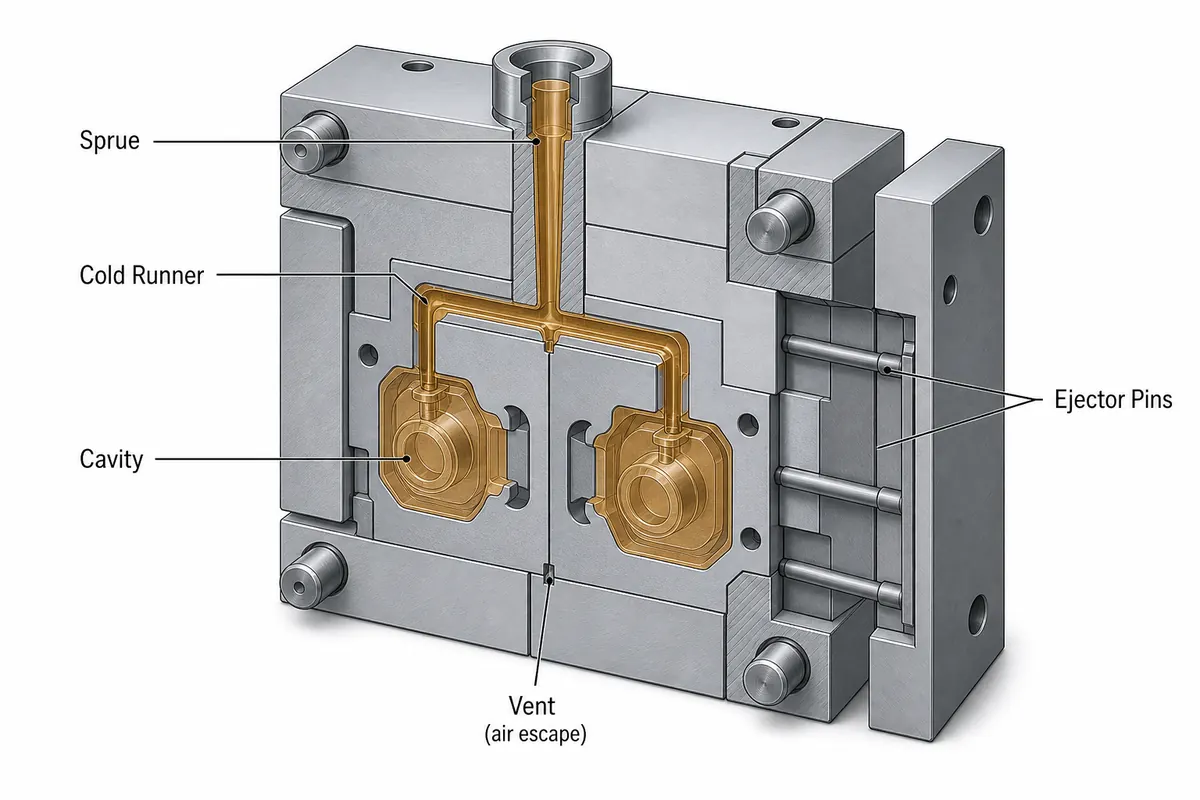
Buyers treat LSR, HCR, and RTV as interchangeable “silicone,” then paste RTV cycle-life folklore onto a steel quote. The mill, the press, and the spare-parts list are not the same. Paying a tooling charge on a cover photo does not tell you whether you bought a two-plate compression stack or a cold-runner. Don't call the LSR stack a “LIM hot tool.” The cavity is heated; the runner, when it's a cold-runner, is kept cool.
What an 85 mm gasket prototype is proving
Say you need an 85 mm ID gasket, 3.2 mm sealing section, Shore 50A, 40 first articles and about 12,000 a year, production process not yet frozen.
For the 40, a two-plate aluminum HCR tool a mill can cut this month is usually the honest first article.
For a few thousand millable gaskets, you'll keep that HCR family: mill, preform, flash land, deflash, ventilated post-cure if peroxide.
If annual volume and an LSR grade are already on the PO, the production tool needs cavity heat, gates, vents, and usually a cold-runner. Those three PDFs can all say “prototype mold.” You're not buying the same manufacturing asset. A pretty RTV casting is not an LSR first article.
Process questions that belong on a prototype RFQ
Before you compare prices, get answers on:
- Production process target: HCR compression / transfer, or LSR injection (cold-runner vs dump-runner)?
- Compound family: platinum LSR / platinum HCR / peroxide HCR, Shore A, post-cure?
- Must prototype size match production shrink, or is this a geometry witness?
- Who owns the plates and inserts after the tooling charge, and can you move the tool?
- Tests the prototype must support (fit, compression set, a named food or medical screen)-not “medical grade” as a Shore?
If those lines are missing, the cheaper quote is usually the incomplete one.
LSR and HCR are factory processes, not Shore numbers
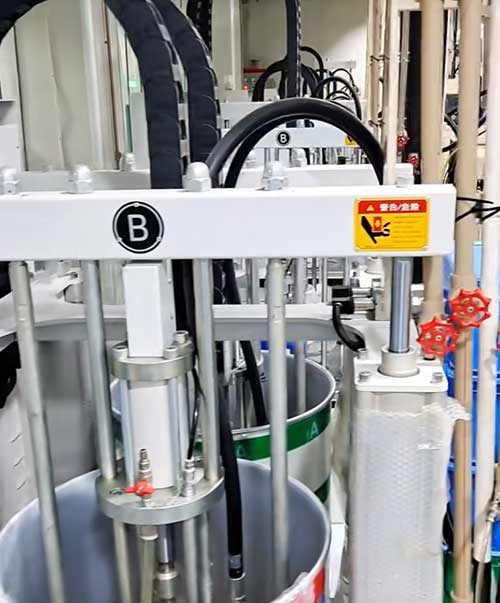
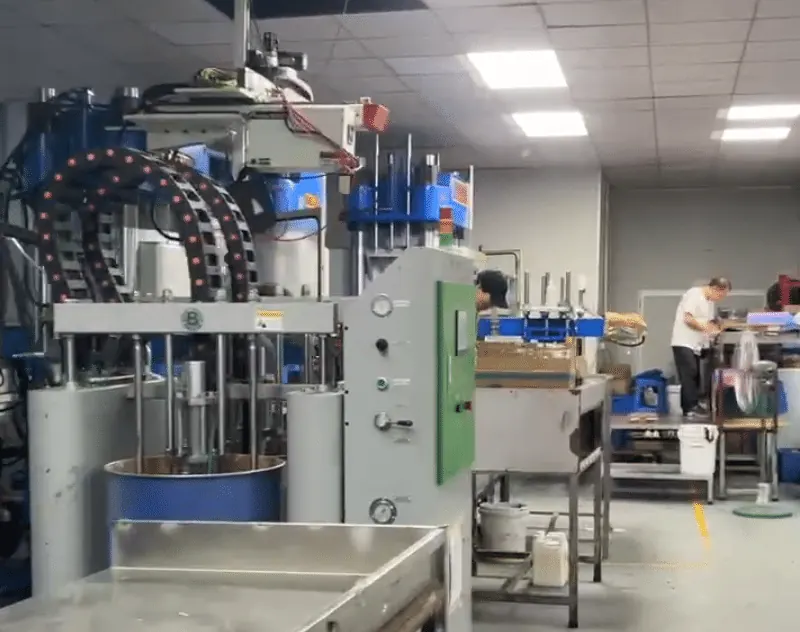
LSR (liquid silicone rubber). Two-component, platinum addition-cure, pumpable. Injected into a hot tool (often steel, sometimes aluminum for short runs). Short cycles. Tight flash control when the tool is built for it. The production path for baby care, many medical components, and high-volume consumer parts. Mix ratio and pot life are machine problems, not cup problems.
HCR (high consistency rubber, millable, sometimes called HTV). Gum on a mill. Peroxide or platinum. Compression, transfer, or extrusion. Longer cycles. Cheaper tooling for large or simple parts. Sheets, keypads, gaskets, some bakeware. Prototype-friendly because a two-plate aluminum compression tool is a machining job, not a cold-runner LSR job.
Platinum RTV and tin-cure RTV. Room-temperature poured mold rubbers. Useful to prototype a cavity or to cast a handful of parts in a flexible tool. They do not qualify an LSR production compound. Shrinkage, flash, knit, and post-cure will not match injection. Tin-cure also keeps shrinking.
If a quote treats these four as interchangeable “silicone,” send it back.
A prototype can mean a silicone part or a silicone mold
Buyers mix the words.
Prototype silicone part. You need 5-200 articles that look, seal, or flex like production. Tooling is the means. Chemistry match to the production grade is the requirement that decides LSR versus HCR.
Prototype silicone mold. You need a flexible cavity to cast resin, wax, or low-melt alloy. That is RTV mold-making. LSR/HCR prototype-tooling articles do not answer that RFQ. Send that buyer to a master + box + jacket quote.
This article is the first meaning: tooling to mold silicone articles, at prototype volume.
Injection-like first articles favor LSR
Choose LSR prototype tooling when:
- Production is already specified as LSR injection, and the prototype is a design verification of that compound (same Shore, same tear, same biocompatibility or food-contact path).
- Flash, gate vestige, and knit lines must be argued now, not after steel.
- The part is small, detailed, and will never be compression-friendly (thin membranes, complex cores, tight shutoffs).
- You have access to an LSR machine, or a prototype house that does, including cold-runner or dump-runner economics that you accept.
Prototype LSR tools are still tools. Aluminum, hybrid, or even some high-temperature 3D-printed cavities exist for short runs. They do not make LSR “cheap RTV.” You still need injection, heat, and a compound that is LSR, not a poured 1:1 craft kit with a similar Shore.
LSR shrink is typically around 2-3% depending on grade and post-cure, not the ~0.1-0.3% platinum RTV band. HCR is typically ~1.5-2.5%. Cut the prototype tool with the production shrink factor you intend to keep, or accept that the prototype size is a process witness, not the production size. ISO 3302-1 M2 is a common drawing default; it is not automatic because someone said LSR.
Compression in aluminum favors HCR
Choose HCR when:
- You need parts this month from a two-plate tool a mill can cut.
- The geometry is compression-legal: reasonable flow, no impossible undercuts without picks or splits, thickness the press can fill.
- Production might also be HCR (gaskets, bumpers, masks, sheets), so the prototype is the real process at low cavity count.
- You do not yet know if the program deserves LSR steel.
Peroxide HCR needs a ventilated post-cure. Platinum HCR exists when you need addition-cure in a millable format (some medical and food paths). Don't assume HCR means peroxide, and don't assume peroxide HCR is a drop-in for an LSR USP or ISO file.
Tear, elongation, and compression set will not match LSR even at the same Shore A. If the prototype is a seal, test the HCR as HCR. Don't file the data as “silicone, 50A” and later buy LSR.
For very small quantities, some shops mold HCR in simple tools and will also hand-fabricate from sheet. That is a prototype of the article geometry, not of flash or knit.
Do not paste RTV cycle-life onto either
RTV mold-life folklore (how many resin pours a block survives) is irrelevant to LSR versus HCR prototype tooling. The tool is metal or a high-temp printed cavity. The rubber is the part.
A step past the usual SERP: matching Shore A does not match perceived stiffness, compression set, or flash logic. Wall, process, and the compound family override the pin.
When this article is the wrong quote
If you need a reusable RTV cavity (gummy, chocolate, resin, soap) rather than a vulcanized silicone part, stop here and quote a master + box + jacket job on the WYD quote form instead. A cheap aluminum one-cavity HCR tool can also beat both a full LSR cold-runner and a large multi-core RTV stack when the gasket is tiny and annual quantity is only a few hundred. Geometry and what actually ships override the process name on the RFQ.
Related reading: silicone mold tooling explained, material shrinkage, HCR compression molding, LSR injection tooling.
What to send for a prototype-tooling quote
Copy this into the RFQ.
- STEP/STL and 2D with critical dimensions and a rubber tolerance class (often ISO 3302-1 M2)
- What ships: molded silicone part, or a flexible cavity other people will pour into
- Production process target: HCR compression vs LSR injection (cold-runner vs dump-runner)
- Compound family: platinum LSR / platinum HCR / peroxide HCR, Shore A, color, post-cure
- Prototype quantity and whether size must match production shrink
- Tests the prototype must support; explicit ban on poured RTV as a chemistry stand-in
- Who should own plates/inserts after the tooling charge, and whether the tool may be moved
Send the STEP file, production-process target, annual quantity, and who should own the tool. That is enough for a plate-stack sketch before anyone mills steel.
Why most first articles start on HCR
Do not cut a steel LSR tool with a cold-runner before an 85 mm gasket has run as a one-cavity HCR or aluminum prototype mold, unless annual volume and automation are already on the PO. Do not substitute poured RTV, tin-cure, or a different cure family to hit the date. Do not treat a tooling charge as ownership. If the agreement is silent, you have not bought unrestricted transfer.
WYD Prototype → Compression → LSR (use this on the RFQ, then ignore quantity if geometry disagrees):
Route the RFQ from what actually ships: if Reusable RTV cavity, go to an RTV master-and-jacket quote on the WYD quote form; if Molded silicone part, go to What must the prototype prove?; if Tens to low hundreds / geometry / date, go to Aluminum HCR one-cavity prototype mold; if Thousands, millable HCR, simple shut-off, go to HCR compression: mill, preform, flash land, deflash; if Must de-risk LSR chemistry, flash, knits, go to LSR injection: cavity heat, gates, vents, cold-runner.
Geometry and what actually ships override the process name. A tiny gasket at 400 pcs/year is still a compression job. A deep undercut at 50,000 pcs still needs side actions no matter which rubber family you pick.
RFQ comparison bands: 85 mm ID gasket, 3.2 mm section
| Route | Typical first qty | Hardware | Typical shrink allowance | Typical drawing class |
|---|---|---|---|---|
| RTV prototype mold / jacket | 20-50 | Master + box + jacket | Platinum RTV ~0.1-0.3% | Cavity, not a rubber-article class |
| HCR compression | Low thousands | Two-plate, flash land, platen or cartridge heat | ~1.5-2.5% | ISO 3302-1 M2 unless the 2D says M1/M3 |
| LSR + cold-runner | High annual, automation | Steel, cavity heat, gates/vents, cold-runner | ~2-3% (grade/temp) | Same drawing class + first-article inspection (FAI) remeasure |
These are shop-normal bands for RFQ comparison, not a named lot.
FAQ
Is LSR the right prototype default if I needed five gaskets yesterday? Usually no. LSR is the right default when the prototype must match future liquid-injection chemistry, flash logic, and hardness. It is the slow, expensive default when you do not own an LSR cell. HCR compression in aluminum still wins that race.
Can poured platinum RTV qualify as an LSR first article? No. Platinum RTV and tin-cure RTV make a prototype mold, or a room-temperature part, not an injection duplicate. Shrinkage, flash, knit, and post-cure will not match LSR injection. A pretty RTV casting is not an LSR first article.
Why prototype in HCR if production might later be LSR? Choose HCR when you need parts this month from a two-plate tool a mill can cut, the geometry is compression-legal, or production might also be HCR. If you do not yet know the production process, prototype in the cheaper heat-cured process and say so on the report.
Does peroxide HCR drop into an LSR USP or ISO file at the same Shore A? No. Tear, elongation, and compression set will not match LSR even at the same Shore A. If the prototype is a seal, test the HCR as HCR. Do not file the data as silicone 50A and later buy LSR. Platinum HCR exists when you need addition-cure in a millable format.
Should I cut a prototype LSR tool with a 2.5% factor copied from RTV folklore? No. LSR shrink is in the heat-cure band (~2-3%), not the near 0.1-0.3% platinum RTV band. Cut the prototype tool with the production shrink factor you intend to keep, or accept that the prototype size is a process witness, not the production size. Do not paste RTV mold-life folklore onto either process.
Ready to order custom silicone molds?
Send your drawing, sample or project requirements for DFM and quotation.