
Custom Silicone Hard Candy Molds: Pour Temp Before Cavity Count
Hard candy syrup is hotter than gummy or chocolate. Grade temp rating, thermal shock, brittle edges, and what to send before steel.
On this page
Gummy, chocolate, and hard candy share a shelf. They do not share a pour temperature. Sugar syrup that hits a cold cavity will cook a food-grade tray that was only quoted for deposit or temper work.
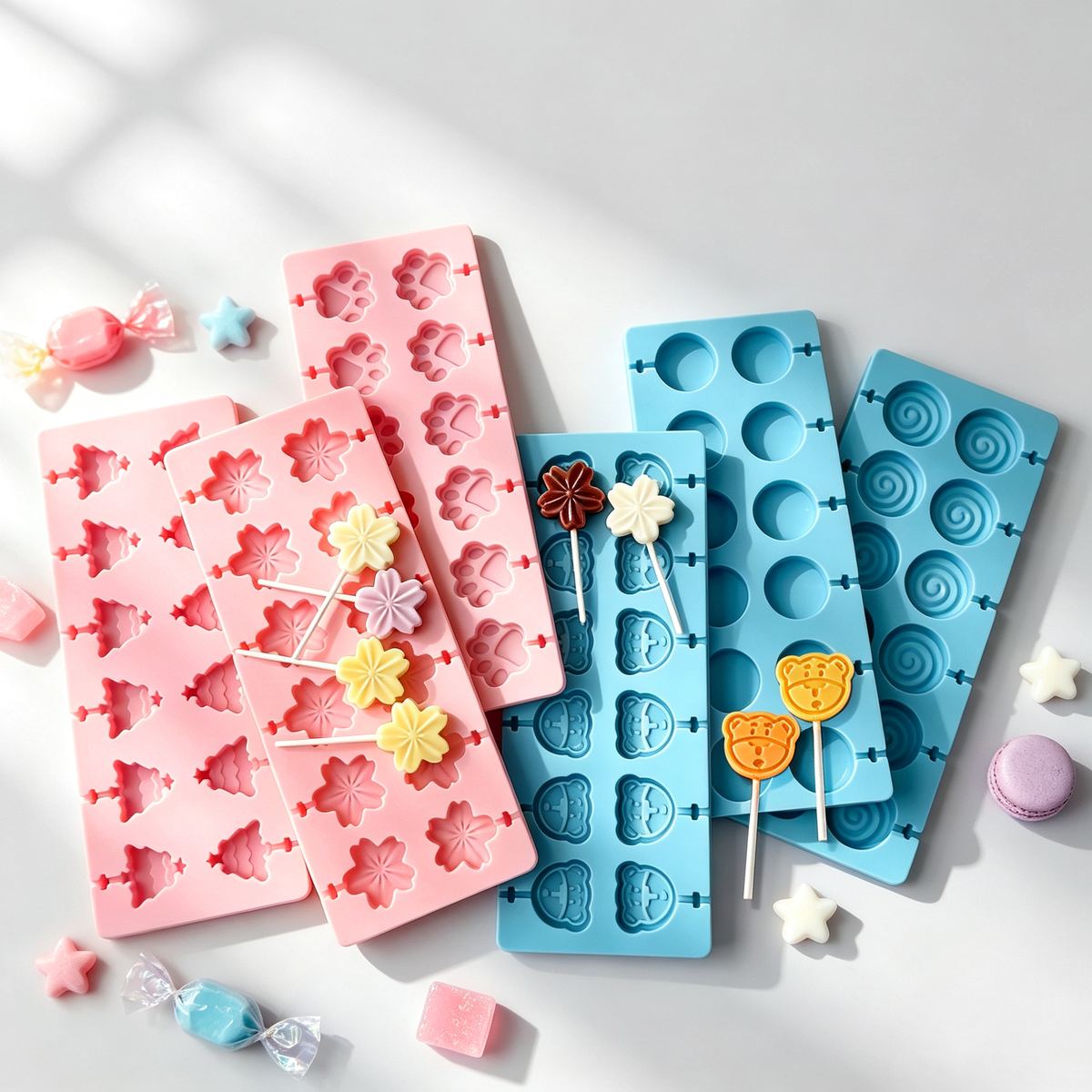
Commercial path: custom silicone candy molds. Gummy deposit stays on gummy molds.
Why hard candy is different
Cooked sugar is poured well above boiling water in many recipes. The cavity sees that heat every cycle, then cools hard. That is thermal shock plus a glassy surface that shows every tool scratch.
What changes in the mold spec
- Temp-rated food-contact grade matched to your actual pour temp - not a vague "oven-safe" line.
- Thermal cycling without warp or chalk after repeated hot fills.
- Wall thickness as a heat-sink trade: thicker slows set; thinner dumps heat faster. Pick with the recipe, not a catalog default.
- Polish for a clear / glossy candy - translucent candy shows cavity finish harder than opaque gummy.
Shape and demold timing
Set hard candy is brittle. Fine points break on demold and in packing more than the same silhouette in gelatin. Deep cavities take longer to set through; pull too early and the center sags. Time the cool to cavity depth and recipe, not a stopwatch from another plant.
Material and docs
Ask for the named grade, rated temperature band, and food-contact paperwork for your market (for example FDA 21 CFR 177.2600 or LFGB / EU paths when those apply). Docs ride the grade and use case - we do not call the plant FDA-approved.
How molds are made
Repeat commercial trays usually run compression in steel with a high-temp food grade. Small artisan runs can use RTV if the compound still matches pour temp. Process split: compression vs LSR. Soft-mold MOQ is often 20 when that path fits. Prototype after CAD lock is commonly 3-5 business days.
What to send
- Shape or reference candy.
- Actual pour temperature if known.
- Cavity count and piece size.
- Destination market and docs needed.
- Qty.
FAQ
Any food-grade tray OK? No. Match the grade to your pour temp.
Cloudy instead of glossy? Cavity finish, cool, or recipe. Compare a fresh undamaged cavity before blaming compound.
Days? Sample commonly 3-5 business days after CAD lock. Bulk timing follows tool and schedule - confirm on the RFQ.
Ready to order custom silicone molds?
Send your drawing, sample or project requirements for DFM and quotation.