
A silicone mold should be designed around the material that will be cast inside it.
Resin, candle wax, soap and plaster may all use flexible silicone molds, but they create different problems:
- resin can generate heat and lock around undercuts
- wax changes dimension as it cools and can expose seam/release issues
- soap can require large filled molds and careful logo release
- plaster is rigid and can break at thin details during demolding.
The correct mold is therefore not “the softest silicone” or “the thickest mold.” It is a structure that supports the casting, releases it safely and fits the customer's production method.
This guide explains the differences. For a project-specific quotation, use the matching commercial mold page.
1. First Define What You Are Casting
Before choosing mold hardness or wall thickness, identify:
- casting material
- finished part size
- flat-back or full 3D geometry
- undercuts
- fragile details
- pour/fill method
- cure/set condition
- expected number of molds
- expected casting frequency
- desired surface finish
- whether a rigid support shell is acceptable.
These inputs determine the mold architecture.
A small flat coaster and a 3D figurine may use the same general silicone chemistry but need completely different mold structures.
2. Resin Casting: Release, Exotherm and Surface Finish
Resin projects often need detailed cavity reproduction and controlled release.
Key variables include:
Resin chemistry
Epoxy, polyurethane, UV resin and filled systems can behave differently.
Ask for:
- resin type or product
- cure schedule
- working time
- exotherm information if known
- fillers/pigments
- expected casting frequency.
Do not assume one silicone is automatically compatible with every resin system.
Undercuts
Flexible silicone can release geometry that a rigid mold cannot, but deep returns can still:
- tear the mold
- break the casting
- require a split mold.
Surface quality
RTV silicone reproduces the master surface closely. If the master has print lines or scratches, the cavity may reproduce them.
Support
A wide or deep resin casting can distort a very flexible mold. Larger projects may need a rigid mother mold or support frame.
Commercial page: Custom Silicone Resin Molds
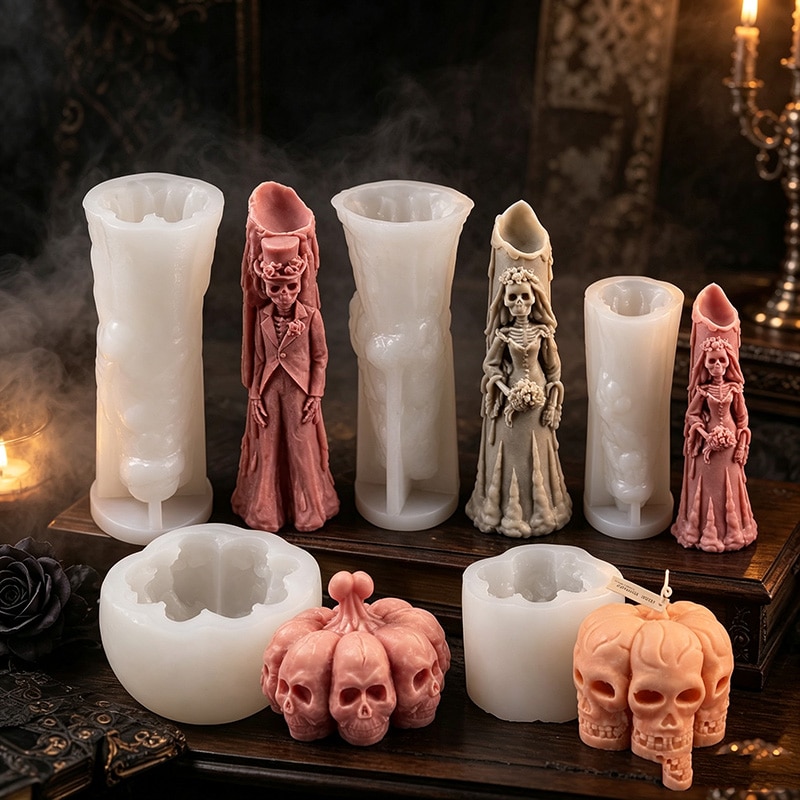
3. Candle and Wax Casting: Seam, Cooling and Shape Release

Candle molds are often highly three-dimensional.
Important questions include:
- wax type
- pour condition
- finished candle geometry
- shoulders/bulges
- decorative undercuts
- wick path if the mold design controls it
- visible seam tolerance
- cooling/demolding method.
One-piece vs slit vs split
A simple tapered pillar may release from a one-piece mold.
A bulbous character or figurine may require:
- a controlled slit
- a two-part mold
- registration
- vents
- support shell.
The mold should be designed around the peel path rather than relying on excessive stretching.
Surface detail
The mold must reproduce the desired finish while still releasing the wax without damaging fine features.
For candle projects, test the actual wax and cooling process where practical.
4. Soap Casting: Filled Weight and Demolding Matter
Soap molds include:
- individual bar cavities
- loaf molds
- multi-cavity trays
- decorative full-shape molds.
The design should start from:
- soap process
- finished dimensions
- target weight if controlled
- logo/artwork
- cavity count
- total filled mold weight
- demolding sequence.
Loaf molds
Large loaf molds may need external support so the walls do not bow under the filled mass.
Multi-cavity soap trays
More cavities increase output but also increase mold size and filled weight.
A large tray may need perimeter reinforcement or a support frame.
Logo detail
Deep or sharp branding can make the cured soap face harder to release. The actual bar should be tested, not only the empty mold.
Commercial page: Custom Silicone Soap Molds
5. Plaster and Gypsum: Protect Fragile Castings
Plaster and gypsum become rigid after setting.
The mold therefore needs a release path that does not require the casting itself to flex.
Typical DFM concerns include:
- thin limbs or decorative details
- sharp corners
- full 3D undercuts
- seam position
- air traps
- pour opening
- mold support.
A detailed figurine may need a two-part or multi-part mold with a support shell.
A flat-back ornament may work in a simpler open mold.
When a buyer starts from 2D artwork, the 3D relief or sculpture must be developed and approved before the master pattern and mold are produced.
6. One-Piece, Split or Supported Mold?
The same decision framework works across craft materials.
One-piece open mold
Use when:
- one face can remain open
- release is straightforward
- undercuts are limited.
Slit/peel mold
Use when:
- the silicone can flex around a 3D shape
- one controlled opening can release the casting
- minimizing visible seams is important.
Two-part / multi-part mold
Use when:
- geometry locks in more than one direction
- parting line needs control
- vents/fill features are required
- fragile castings cannot tolerate aggressive peel.
Support shell
Use when:
- flexible silicone needs help holding shape
- the mold is large
- the filled casting is heavy
- split alignment needs external support.
The structure should come from geometry and process—not from a default template.
7. Mold Material and Hardness Are Only Part of the System
Shore hardness influences flexibility, but it does not solve every design problem.
Material selection should consider:
- casting chemistry
- cure temperature/exotherm
- tear risk
- mold size
- undercuts
- support shell
- repeated use
- cleaning
- desired surface detail.
Examples:
- A small undercut resin piece may benefit from easier flex during demolding.
- A large flat mold may need better structural support.
- A thin decorative feature may require geometry changes rather than simply softer silicone.
Do not copy a Shore number from another product and assume it applies.
8. Prototype the Actual Casting Process
A craft mold prototype should prove more than “the silicone looks correct.”
Depending on material, test:
Resin
- fill
- bubbles/vents
- exotherm
- release
- surface
- seams.
Candle
- actual wax fill
- cooling
- release
- seam
- detail.
Soap
- filled stability
- bar weight/size
- logo release
- demold timing.
Plaster
- fill and air escape
- fragile detail
- split release
- breakage risk.
The actual casting process is the most useful validation method because many problems only appear after the cavity is filled.
Related guide: Prototype Approval Checklist
9. Multi-Cavity Layout: More Cavities Are Not Always Better
A multi-cavity mold can improve throughput, but cavity count changes:
- overall mold size
- filled mass
- handling
- material volume
- support
- production workflow.
Ask:
- Can the operator fill all cavities within the working time?
- Can the mold be moved while full?
- Does the table/rack support the span?
- Is one damaged cavity acceptable, or would several smaller molds reduce risk?
- How will demolding happen?
For resin with limited pot life, a very large cavity count may be impractical.
For soap, one large filled tray may be difficult to move.
Choose the layout around real production.
10. What to Send a Mold Manufacturer
For any craft mold project, provide:
- casting material
- 3D file, sample, drawing or reference images
- finished dimensions
- flat-back/full-3D requirement
- undercuts
- cavity count
- first quantity
- repeat quantity
- casting frequency
- surface finish
- target date.
If chemical compatibility or temperature is important, provide the actual product/TDS/SDS where possible.
Next Steps by Project
- Resin: Custom Silicone Resin Molds
- Soap: Custom Silicone Soap Molds
- Plaster: Custom Silicone Plaster Molds
- General custom mold review: Custom Silicone Mold Manufacturer
Send a project for review
Send the file or sample, the function, and the quantity.