
Food molds
Custom Food Silicone Molds
The same cavity outline fails differently on a depositor, in a temper cycle, in a freezer, or in an oven. This page is the food-tray family: pick the process first, then we lock pitch, tray envelope, and a prototype test that matches that process.
A first review can start from a drawing, sample, artwork, or target piece size or weight. Finished CAD is useful, not required. Send the food family, fill or deposit condition, cavity count, tray envelope, and any depositor, freezer, or oven constraint. MOQ, CAD work, and tooling stay on the quote for the selected mold structure.
A food silicone mold should be designed around what goes into the cavity, how the product is processed, how it is released, and how the tray is handled in production.
A custom food-mold project can begin with CAD, a reference product, artwork, a target piece size or a production requirement that still needs cavity development. The finished food, filling method, release and loaded handling should drive the design.
The first question is not “What Shore hardness do you use?” It is:
> What exactly will happen to this mold during filling, heating or freezing, demolding, cleaning and repeat production?
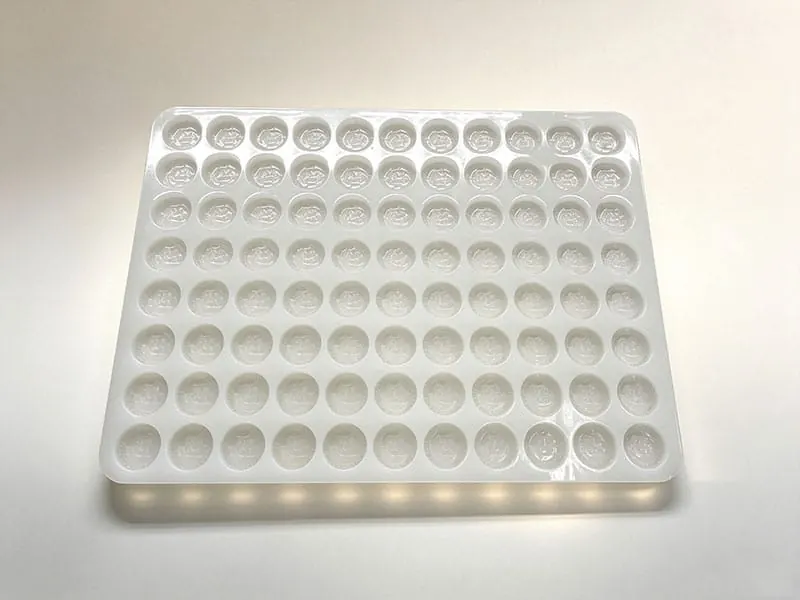
Define the Food Process Before the Mold
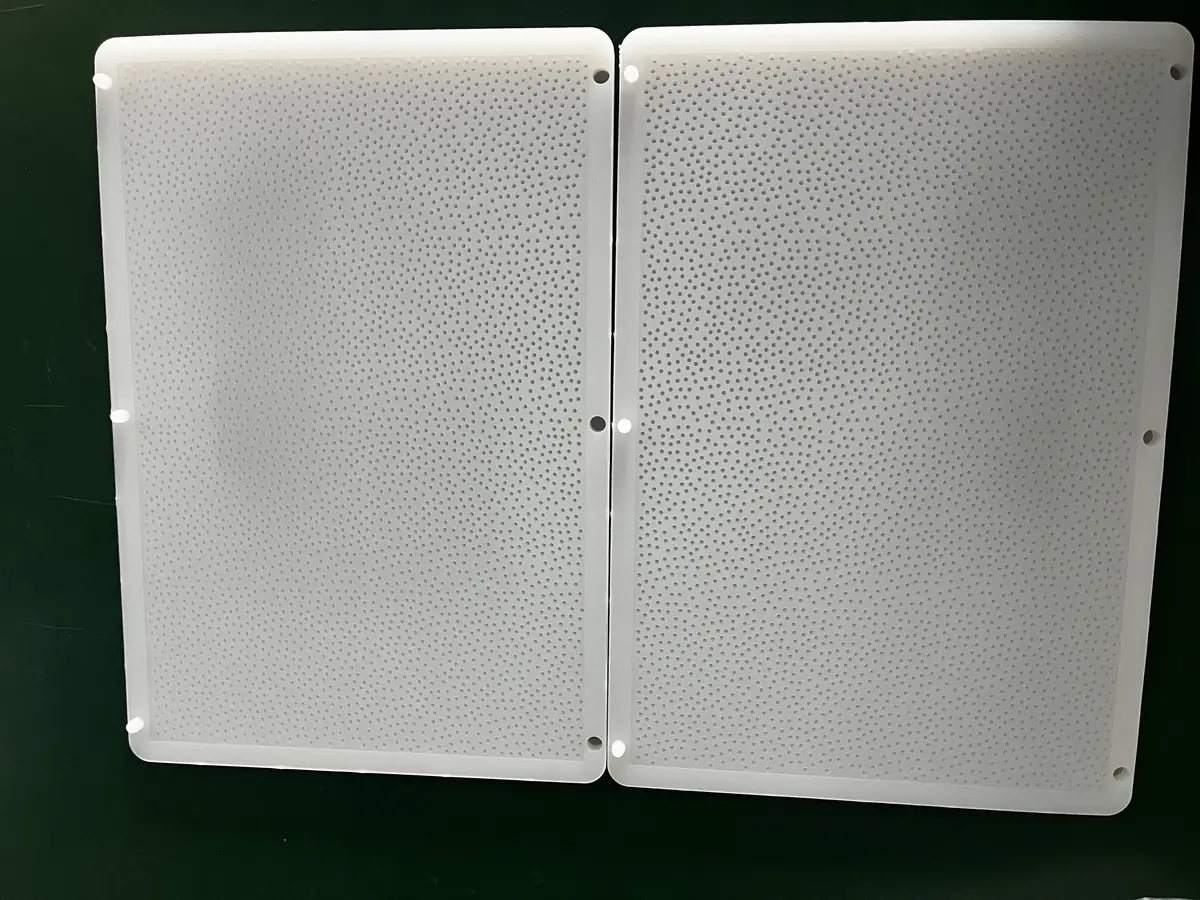
The same cavity shape can behave differently in two production processes.
A gummy is deposited warm and must release after setting. Chocolate finish depends on the cavity surface and the customer's tempering and cooling process. Ice expands and must release after freezing. A baking mold carries food while exposed to oven conditions and may need more structural support when loaded.
For an initial food-mold review, identify:
- food or formulation family
- fill/deposit condition
- target piece dimensions
- target weight or volume if controlled
- cavity count
- overall tray size
- production equipment constraints
- demolding method
- heating, freezing and cleaning conditions
- target market and required documentation
- prototype and first production quantity.
If several variables are still open, tell us which ones. The mold can then be developed around the decisions that actually control production.
Gummy and Confectionery Molds: Design Around Portion and Depositing
For a custom gummy mold, cavity appearance is only part of the job.
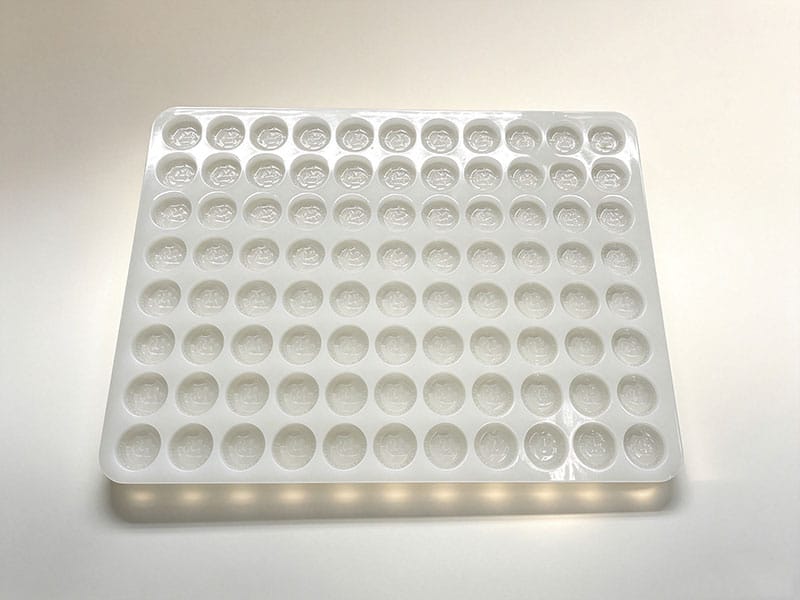
The tray may also need to work with a target piece weight, formulation behavior and an existing depositing system.
Useful inputs include:
- desired finished gummy dimensions
- target piece weight or volume
- gelatin, pectin or other formulation family where relevant to handling/release
- deposit temperature or process condition
- cavity count
- rows and columns
- nozzle count
- cavity pitch or machine reference positions
- maximum tray envelope
- manual or automated handling
- demolding method.
Target weight needs validation
A CAD volume can provide a design starting point, but finished weight depends on the actual product density/formulation and process. If target weight is critical, the prototype should be tested with the customer's actual or representative formulation.
Cavity pitch can be a machine interface
If an existing depositor will fill the tray, do not finalize the cavity map before checking nozzle spacing and reference position. A mold can be dimensionally correct as a standalone object and still be unusable on the production line.
Dedicated page: Custom Silicone Gummy Molds
Chocolate Molds: Geometry Is Only One Part of Surface Quality
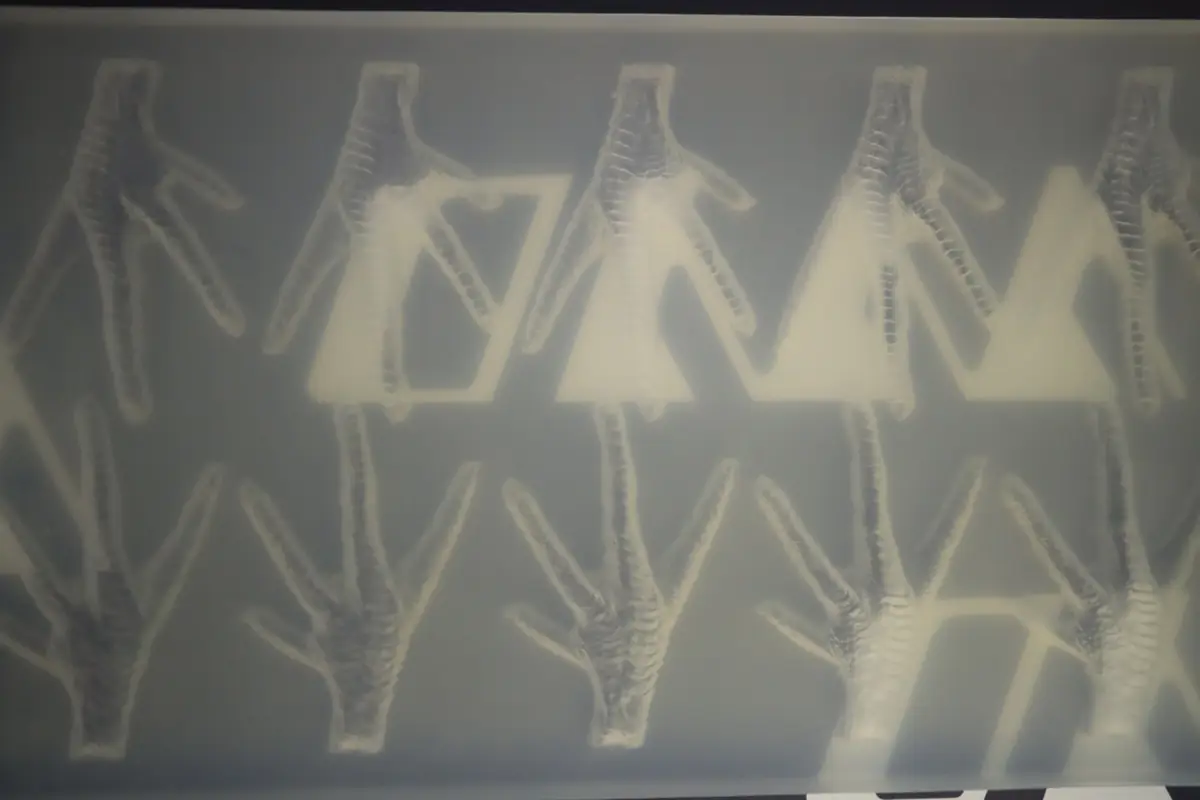
Chocolate projects may require:
- logo or lettering detail
- target piece weight
- consistent cavity geometry
- clean edge definition
- a surface finish compatible with the desired visual result
- practical release without excessive flex or damage.
Silicone flexibility can be useful for certain custom shapes and undercuts, but a silicone mold should not be sold as automatically superior to every rigid chocolate mold.
Final gloss and appearance also depend on the customer's chocolate formulation, tempering, mold cleanliness, filling and cooling process.
For prototype approval, evaluate the actual chocolate result rather than judging the empty silicone cavity alone.
Dedicated page: Custom Silicone Chocolate Molds
Ice Molds: Check the Tray When It Is Full and Frozen
An empty silicone ice mold can feel stable on a table and behave differently when every cavity is filled with water.
Important design inputs include:
- finished ice dimensions
- cube, sphere or branded geometry
- logo/text depth
- cavity count
- tray size
- freezer or rack envelope
- whether a lid or rigid support is used
- how the loaded tray is carried
- frozen demolding method.
For larger trays, edge reinforcement, local wall geometry and support can matter as much as nominal Shore hardness.
A prototype should be evaluated through a real freeze-and-release cycle. Room-temperature flexibility does not prove frozen release behavior.
Dedicated page: Custom Silicone Ice Molds
Baking Molds: Support the Food, Not Just the Empty Mold
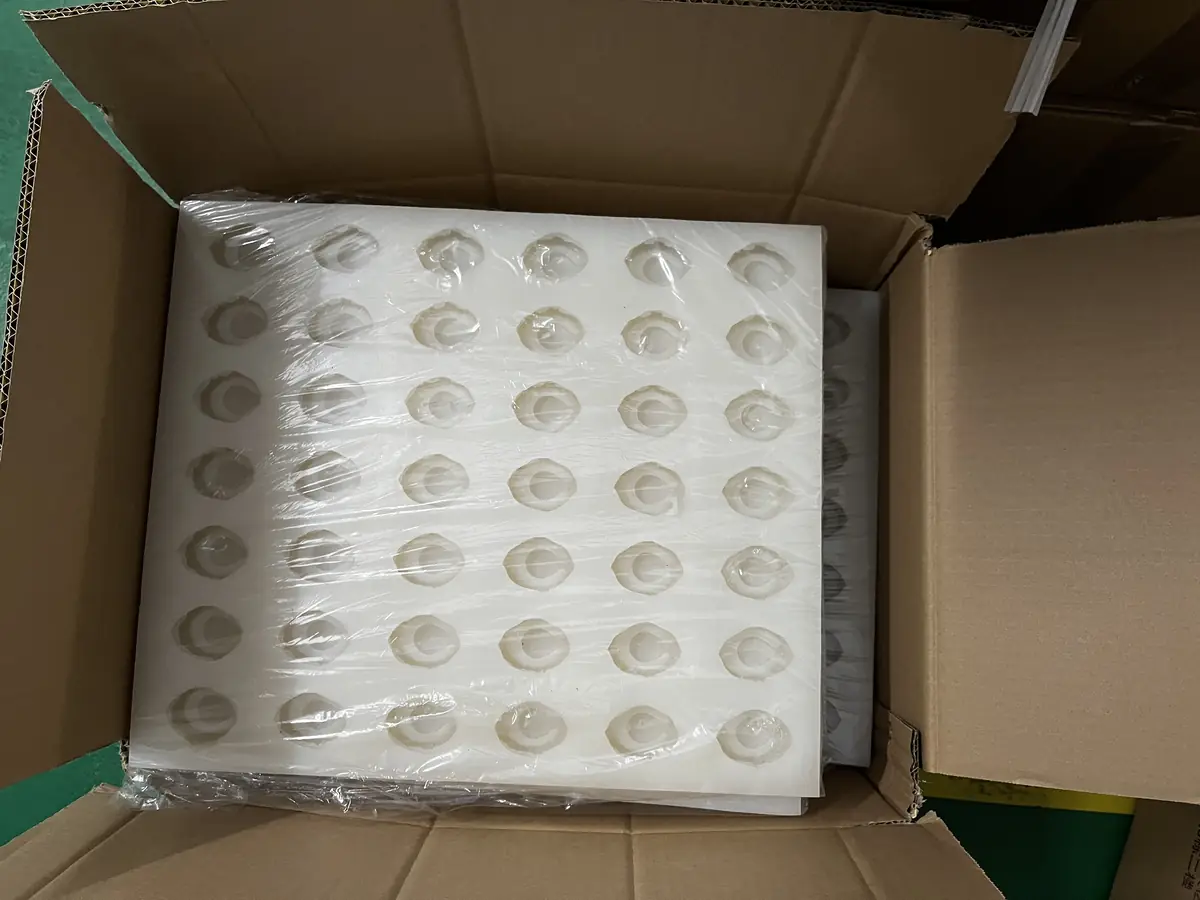
A baking mold must work while filled and exposed to the customer's actual oven/use conditions.
The design may need to account for:
- cavity size and depth
- food mass when loaded
- tray perimeter and handles
- how the tray enters and leaves the oven
- rack or pan support
- local reinforcement
- repeated heating and cleaning
- release after baking.
A real inquiry may involve more than a simple cavity. For example, an upright food-holding concept can require flexible internal support features and a closed bottom to retain liquid. Those features affect moldability, cleaning, handling and how much the silicone must deform.
That kind of project should be reviewed as a product system rather than treated as “just another baking tray.”
Dedicated page: Custom Silicone Baking Molds
RTV Mold or Compression-Molded Production Tray?
More than one manufacturing route can be appropriate for custom food molds.
RTV silicone mold route
An RTV route can be useful when:
- the geometry is complex or highly three-dimensional
- a master-based process suits the project
- the design is still being validated
- the required quantity is relatively limited
- the shape has undercuts better handled by a flexible mold structure.
Typical sequence:
3D/CAD → master pattern → RTV silicone mold → application test
HCR/HTV compression-molded tray
A compression-molded silicone tray can be appropriate when:
- the design is stable
- repeat production of matching trays is required
- multi-cavity geometry is suited to metal production tooling
- dimensional repeatability and cavity layout are important
- the program justifies production tooling.
Typical sequence:
CAD/DFM → production tooling → HCR/HTV molding → first article → repeat production
Neither route is automatically “higher quality.” They solve different manufacturing and commercial problems.
Related guide: RTV vs HTV Silicone Molds
Material and Food-Contact Documentation
“Food grade” is not a complete specification.
For a food-contact program, the appropriate silicone compound and documentation path depend on the intended application and destination market.
Tell us:
- target market
- food type
- contact temperature
- contact duration
- repeated-use condition
- cleaning method
- any buyer-specific test or documentation requirement.
A raw material document or supplier declaration should not be used as a blanket statement that every finished silicone mold is appropriate for every food-contact condition.
Likewise, thermal capability and food-contact compliance are different questions. A silicone material being able to tolerate a temperature does not by itself establish suitability for the customer's food-contact application.
Temperature, Freezing and Cleaning Must Be Specified as Conditions
Avoid sending only “high-temperature mold” or “freezer safe.”
For useful material review, separate:
- normal operating temperature
- maximum short-term temperature
- duration at that temperature
- number of heating or freezing cycles in the customer's validation plan
- cleaning temperature
- detergent or sanitizer
- whether the tray is loaded or mechanically stressed during exposure.
A thin unsupported tray, a thick baking cavity and a frozen ice mold can respond differently even if made from the same general silicone family.
Technical guide: Silicone Mold Temperature Limits
Prototype With the Real Process
The prototype stage should answer the food-production question that creates the most risk.
Examples:
Gummy
- Is the finished piece at the target weight?
- Does the product fill the detail?
- Does it release cleanly?
- Does the tray stay stable while loaded?
- Does the cavity map align with the depositor?
Chocolate
- Is the logo/detail reproduced?
- Is the edge definition acceptable?
- Does the actual chocolate release cleanly?
- Is the appearance acceptable under the customer's tempering/cooling process?
Ice
- Does the mold remain practical when filled?
- Does the frozen product release?
- Is branding visible after freezing?
- Does the tray fit the intended freezer/rack?
Baking
- Does the cavity hold the product as intended?
- Is the loaded mold stable enough to handle?
- Does the food release after the actual baking cycle?
- Are handles, support or reinforcing features adequate?
A successful-looking empty sample is not the same as a validated food-production mold.
What Changes the Quote
Food molds vary from small master-based tools to large multi-cavity production trays.
Quotation factors can include:
- design maturity
- need for cavity/CAD development
- overall mold size and silicone weight
- cavity count
- logo/detail
- master-making route
- RTV structure or production tooling complexity
- number of molds required
- material/documentation requirement
- prototype tests
- packaging
- destination and freight.
Confirm the minimum order for the proposed mold format in your quotation. Prototype timing depends on design readiness, tooling or master preparation, and the application tests agreed for the project.
For cost structure rather than a project quote, use:
Custom Silicone Mold Cost: Tooling, Samples, Production and Shipping
What to Send for a Food Mold Quote
Send the information you already have.
Product
- food/formulation type
- finished piece dimensions
- target weight or volume
- logo, artwork or surface detail.
Mold
- cavity count
- desired rows/columns if fixed
- overall tray envelope
- lid, support or handle requirements.
Production
- fill/deposit condition
- baking/freezing/use condition
- depositor/nozzle layout if applicable
- oven/freezer/rack limitations
- cleaning method.
Commercial and documentation
- prototype quantity
- first production quantity
- repeat forecast
- target market
- requested documentation
- ship-to destination
- target date.
If the cavity design is not finished, provide the target food shape, weight/volume and the production constraints. Those are better starting inputs than guessing the final mold dimensions.
Minimum Order
MOQ: 20 pcs for WYD custom silicone mold orders.
Tooling, material, validation and freight remain project-specific.
The quoted quantity refers to complete silicone molds, not the number of cavities or finished food pieces. Specify both the number of molds required and the cavity count per mold when requesting a price.
Pick the line decision before the tray
Send a project for review
Send the food family, finished piece size or target weight, cavity count, tray envelope, fill/deposit or bake/freeze condition, and first order quantity. If you already run a depositor, oven pan, or freezer rack, include that envelope. Mark anything still open so the quote does not assume a locked cavity map.