
Procurement
Custom Silicone Mold Cost: How to Compare Tooling, Samples, Production and Shipping
This page is for comparing a custom silicone mold quotation: what you are buying, what is one-time, and what repeats. It is not a stock price list.
Soft-tray MOQ 20. CAD / 3D modeling is about USD 50 when the model still needs lock. Send the object (RTV mold, compression tray, or molded part), quantity, and whether a 3D file or sample already exists.
There is no useful standard price for a custom silicone mold without first defining what is being made and how it will be manufactured.
A small open RTV mold made from an existing master, a two-part sculptural mold with a rigid support shell, and a multi-cavity food tray produced with CNC-machined compression tooling can all be called “custom silicone molds.” Their cost structures are completely different.
When comparing quotations, do not start with the final total. First separate the project into four questions:
- What design or engineering work is still required?
- What master or production tooling must be built?
- What must the prototype prove before approval?
- What costs repeat every time you order more molds?
That structure makes it much easier to understand why two suppliers can quote different numbers for what appears to be the same project.
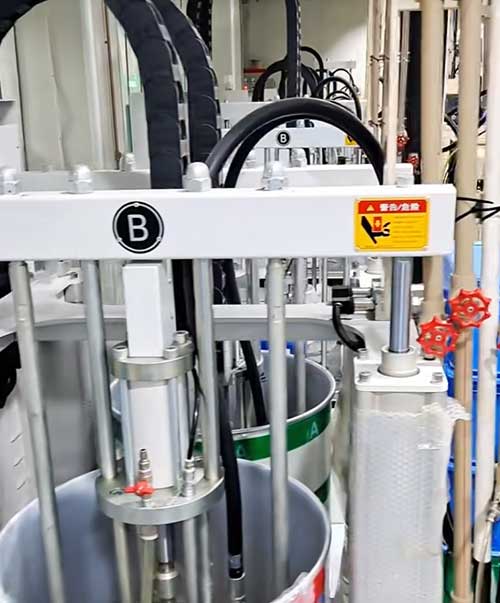
Separate One-Time Development From Repeat Production
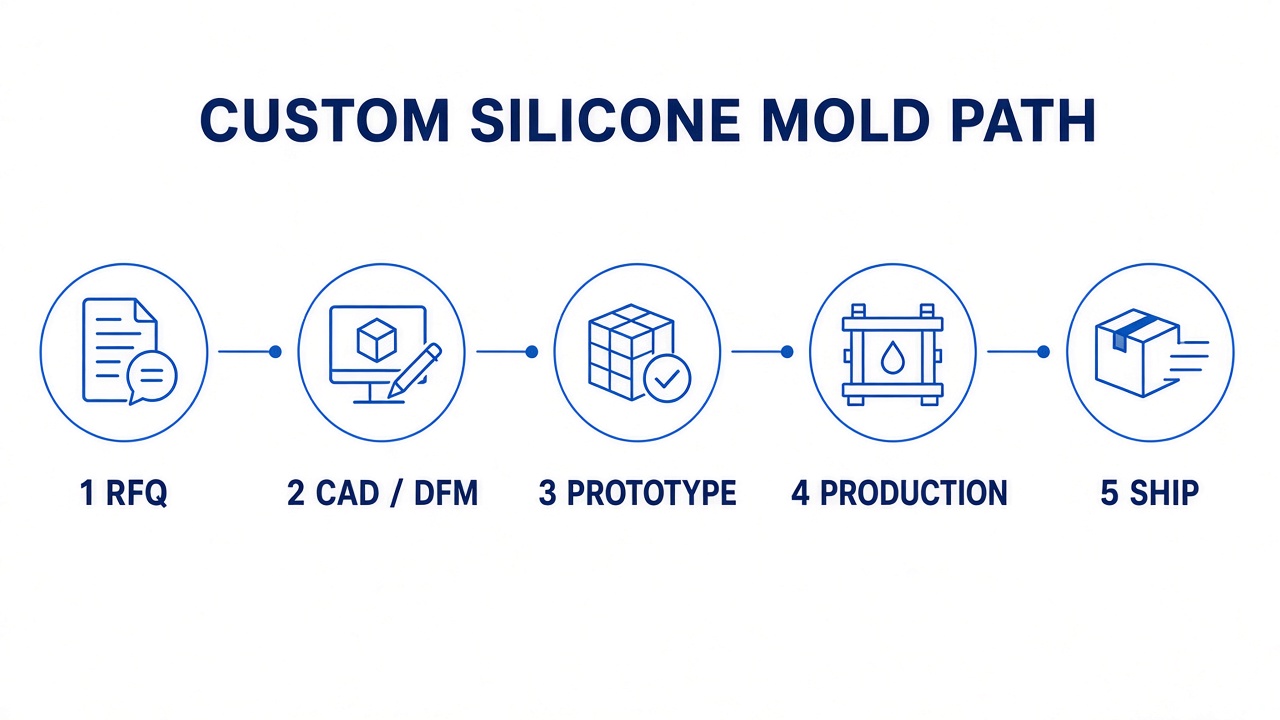
A useful quotation should distinguish costs that occur once from costs that recur.
One-time or development cost can include
- CAD or 3D development
- reverse engineering from a physical sample
- master pattern production
- prototype tooling
- CNC-machined production tooling
- test fixtures
- initial mold trials and agreed engineering changes.
Recurring cost can include
- silicone material
- molding or RTV mold-making labor
- trimming and finishing
- post-cure where required by the selected process/material
- inspection
- assembly or inserts
- packaging
- freight.
If these categories are combined into one line, it becomes difficult to compare the quotation with another supplier or understand the price of a reorder.
RTV Mold Cost Is Usually Driven by the Master and Mold Structure
For an RTV casting mold, the finished silicone mold is typically formed around a master pattern.
A common sequence is:
CAD / reference → master pattern → mold structure → RTV silicone mold → test casting
The quotation may therefore include more than the silicone itself.
3D development
If the customer already has a production-ready 3D file, this work may be limited. If the project begins with artwork, photos or a physical object, more modeling or reverse engineering can be required.
A simple geometric correction is not the same scope as sculpting a detailed character from reference images.
Master pattern
The master determines cavity detail and surface finish.
Master cost can be affected by:
- size
- print or machining method
- surface finishing
- manual repair
- fragile details
- dimensional accuracy required.
If the master surface has visible layer lines, scratches or defects, those may transfer into the silicone mold.
Mold structure
A one-piece open mold is different from a:
- slit mold
- two-part mold
- multi-part mold
- mold with removable core
- flexible silicone skin with rigid support shell.
More complex mold structure means more setup, parting work, registration features and finishing.
Silicone volume
Larger molds and thicker mold sections require more material. However, simply minimizing silicone thickness is not always good engineering. The mold still needs enough structure for handling and repeated casting.
Test casting
For resin, plaster, wax or other casting work, a functional test can be more valuable than visual inspection of an empty mold. Whether test casting is included should be clear in the quotation.
Compression-Molded Silicone Trays Have a Different Tooling Model
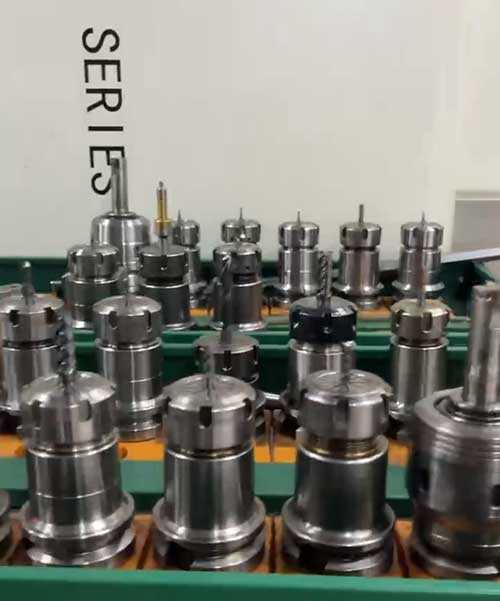
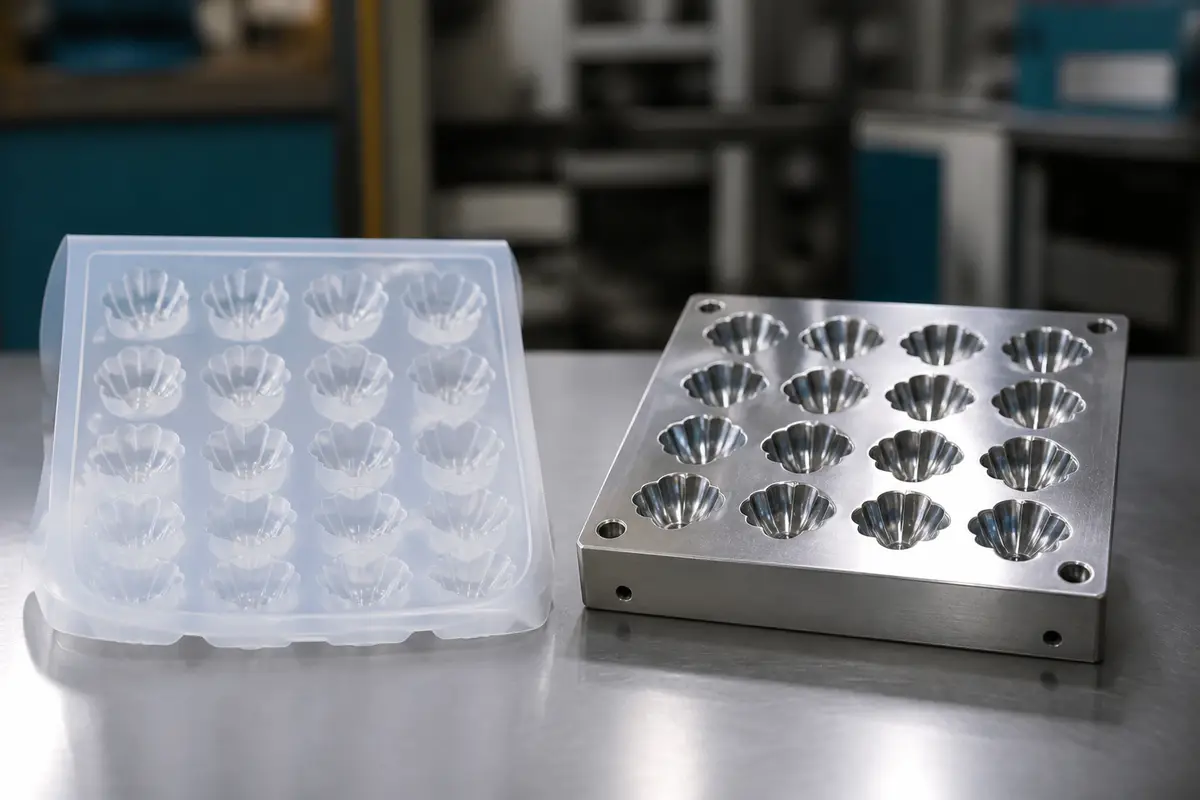
When the customer needs repeated production of matching silicone trays or molds, a production-tooling route may use HCR/HTV compression molding where the geometry, material and quantity fit that process.
The sequence is closer to:
CAD → DFM → CNC production tooling → trial → sample approval → repeat silicone molding
Here, the large one-time cost may be the production tool used to mold the silicone trays.
Tooling cost can be affected by:
- overall tool size
- number of cavities
- inserts
- parting line
- surface finish
- undercuts
- vents
- flash-control strategy
- machining complexity
- trial modifications.
A more expensive production tool is not automatically a worse commercial choice. If the program requires many repeat trays, better tooling can support more consistent production and lower recurring labor.
Conversely, it makes little sense to pay for a more elaborate production tool before a changing design is stable.
Cavity Count Changes Both Tooling and Unit Economics
More cavities can increase output per mold or tray, but the relationship is not linear.
Increasing cavity count can change:
- overall tray/tool size
- spacing and borders
- silicone weight
- loaded tray stiffness
- machining time
- press/tool requirements
- handling
- depositor compatibility
- production output per cycle.
For food trays, the “cheapest price per cavity” is not always the best target. A large tray may become difficult to handle, too flexible when loaded or incompatible with the customer's equipment.
For an RTV mold, combining many objects into one mold may reduce the number of separate mold bodies but can also make the mold larger, heavier and harder to demold.
The best cavity count is therefore an engineering and production decision, not only a pricing exercise.
Prototype Cost Should Be Compared With the Cost of a Tooling Mistake
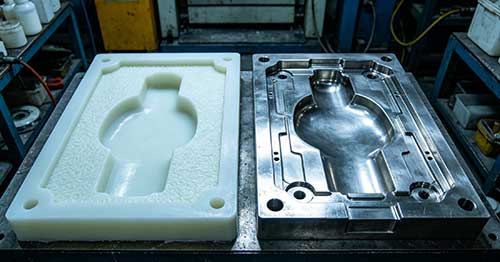
A prototype adds cost before production, but skipping validation can create a much larger problem.
The sample should be tied to a question such as:
- Does the casting release?
- Does the target piece weight match the real formulation?
- Is a lid or cover fit correct on the physical mating part?
- Does the tray remain stable while loaded?
- Is the logo/detail readable?
- Does the split line produce an acceptable casting?
- Does the part survive the required assembly or pull test?
If a production tool is cut before those questions are answered, a design change can require tool modification or replacement.
The cheapest prototype is not necessarily the one with the lowest sample invoice. It is the one that resolves the uncertainty that could make later tooling unusable.
CAD Fee and DFM Review Are Different Cost Items
A DFM review evaluates whether a design can be manufactured using the intended process.
CAD work changes or creates geometry.
Examples of CAD work include:
- rebuilding a part from a physical sample
- converting artwork into 3D relief
- changing wall thickness
- correcting a fragile feature
- creating a multi-cavity layout
- revising a logo
- developing an entirely new shape.
Simple CAD modification can be a small task. Detailed sculpture or reverse engineering can be much larger.
A quotation should therefore describe the scope rather than imply one fixed design fee for every project.
Unit Price Depends on More Than Silicone Weight
For repeat production, material weight matters—but it is not the only cost.
Recurring unit cost may also be affected by:
- molding process
- cycle and handling
- trimming
- post-cure if required
- color
- secondary printing or decoration
- insert loading
- assembly
- inspection
- packaging
- quantity.
For finished silicone OEM parts, tooling and unit economics can be very different from a customer-use casting mold.
When requesting a quote, specify both the first order quantity and expected repeat/annual volume. A supplier can then evaluate whether the proposed tooling/process is appropriate for the actual program.
Shipping Cannot Be Quoted Reliably From Product Weight Alone
Freight is based on the packed shipment, not only the net weight of one silicone mold.
For a useful shipping estimate, provide:
- destination country, city and postal code
- quantity
- whether the shipment is prototypes or production
- preferred Incoterm if known
- whether express courier, air freight or sea freight is acceptable.
The supplier still needs the final:
- packed weight
- carton dimensions
- number of cartons
- shipment terms.
A large lightweight silicone product can be charged by volumetric weight for express/air shipping. A dense tooling shipment behaves differently.
Do not compare one supplier's EXW quote with another supplier's DDP quote as though the totals represent the same scope.
How to Compare Two Custom Silicone Mold Quotations
Instead of asking which quote is cheaper, align the scope line by line.
| Quote item | What to confirm |
|---|---|
| Design/CAD | Is geometry complete or is modeling included? |
| DFM | What manufacturing risks will be reviewed? |
| Master pattern | Is a physical master required and who keeps it? |
| Prototype | What physical sample will you receive? |
| Test | Is functional/test casting included? |
| Production tooling | What process will use the tool? |
| Repeat molds/products | What is the unit price at the requested quantity? |
| Material | What silicone/material requirement is being quoted? |
| Documentation | Which reports/declarations are included? |
| Packaging | Standard bulk pack or custom pack? |
| Freight | EXW, FOB, DDP or another term? |
| Revision scope | What happens if the sample requires a design change? |
If one quotation includes a finished functional mold, test casting and freight while another includes only the tool, the totals cannot be compared directly.
Tooling Ownership Should Be Written, Not Assumed
If ownership matters, clarify it in the quotation or agreement.
Questions can include:
- who owns customer-paid production tooling
- where it is stored
- whether it can be transferred
- maintenance responsibility
- ownership of customer-supplied CAD
- ownership of new design work if separately paid
- how long inactive tooling is stored.
Do not assume the word “tooling fee” answers all of these questions.
For a specific project, written commercial terms are more reliable than generic website statements.
What to Send for a Meaningful Cost Estimate
A supplier can estimate more accurately when the RFQ includes:
Geometry
- 3D file, drawing, sample or reference image
- overall size
- cavity/part dimensions
- cavity count
- logo/detail.
Application
- casting or food material
- use temperature where relevant
- demolding/release condition
- target piece weight or volume if controlled.
Quantity
- prototype quantity
- first production order
- repeat or annual forecast.
Documentation and delivery
- target market
- required reports or declarations
- packaging
- ship-to location
- preferred Incoterm.
If the design is still incomplete, state that clearly. The quotation can then separate development cost from manufacturing cost instead of hiding assumptions inside one number.
Need a Project-Specific Quote?
This guide explains the cost structure. It does not replace a drawing-based quotation.
For a project review, use the Custom Silicone Mold Manufacturer page or send the design directly through Contact.
Confirmed Commercial Baseline
For WYD custom silicone mold projects:
- MOQ: 20 pcs
- CAD / 3D modeling fee: USD 50
Tooling, material, testing, production, packing and freight are quoted according to the actual project.
Send a project for review
Send the file or sample, the function, and the quantity.