
Silicone Mold Temperature Limits
Silicone mold temperature limits depend on compound, exposure time, load, cleaning and application. Learn how to specify baking, hot-fill, freezer and wash conditions.
On this page
- Continuous Temperature and Short-Term Peak Are Different Requirements
- Baking Molds: Temperature Is Only One Part of the Load
- Gummy and Confectionery Molds: Specify Deposit and Wash Conditions
- Chocolate: Do Not Blame Every Surface Problem on “Heat Resistance”
- Ice and Freezer Use: Cold Performance Is More Than “Will It Freeze?”
- Cleaning Can Be the Most Severe Thermal Exposure
There is no single temperature limit that applies to every silicone mold.
A useful temperature specification needs more than a minimum and maximum number. It should describe:
- the silicone compound being considered
- normal operating temperature
- short-term peak temperature
- how long the mold stays at that temperature
- whether the mold is loaded or mechanically stressed
- heating and cooling frequency
- cleaning or sanitation exposure
- what material contacts the mold
- what performance must remain acceptable afterward.
The same silicone family can behave differently in a thin unsupported tray, a thick casting mold and a reinforced production mold. The correct question is therefore not:
"How hot can silicone go?"
It is:
"What thermal conditions will this specific mold experience, and what must still work after that exposure?"
Continuous Temperature and Short-Term Peak Are Different Requirements
A supplier may quote a material datasheet with a broad thermal range, but that number does not automatically define how a finished mold should be used.
Separate at least four conditions.
Normal operating temperature
This is the condition the mold sees during most of its working time.
For a baking mold, that may be the oven cycle. For a gummy tray, it may be the temperature of the deposited product plus the cooling period.
Short-term peak
A brief contact with a higher temperature can be different from hours of continuous exposure.
If a peak matters, specify both:
- peak temperature
- peak duration.
Repeated cycling
Heating and cooling can be more demanding than one isolated exposure because the mold repeatedly expands, contracts and is handled between cycles.
Storage and cleaning
The mold may see a different temperature during washing, sanitation, drying or storage than during actual production.
These conditions belong in the specification rather than being treated as afterthoughts.
Baking Molds: Temperature Is Only One Part of the Load
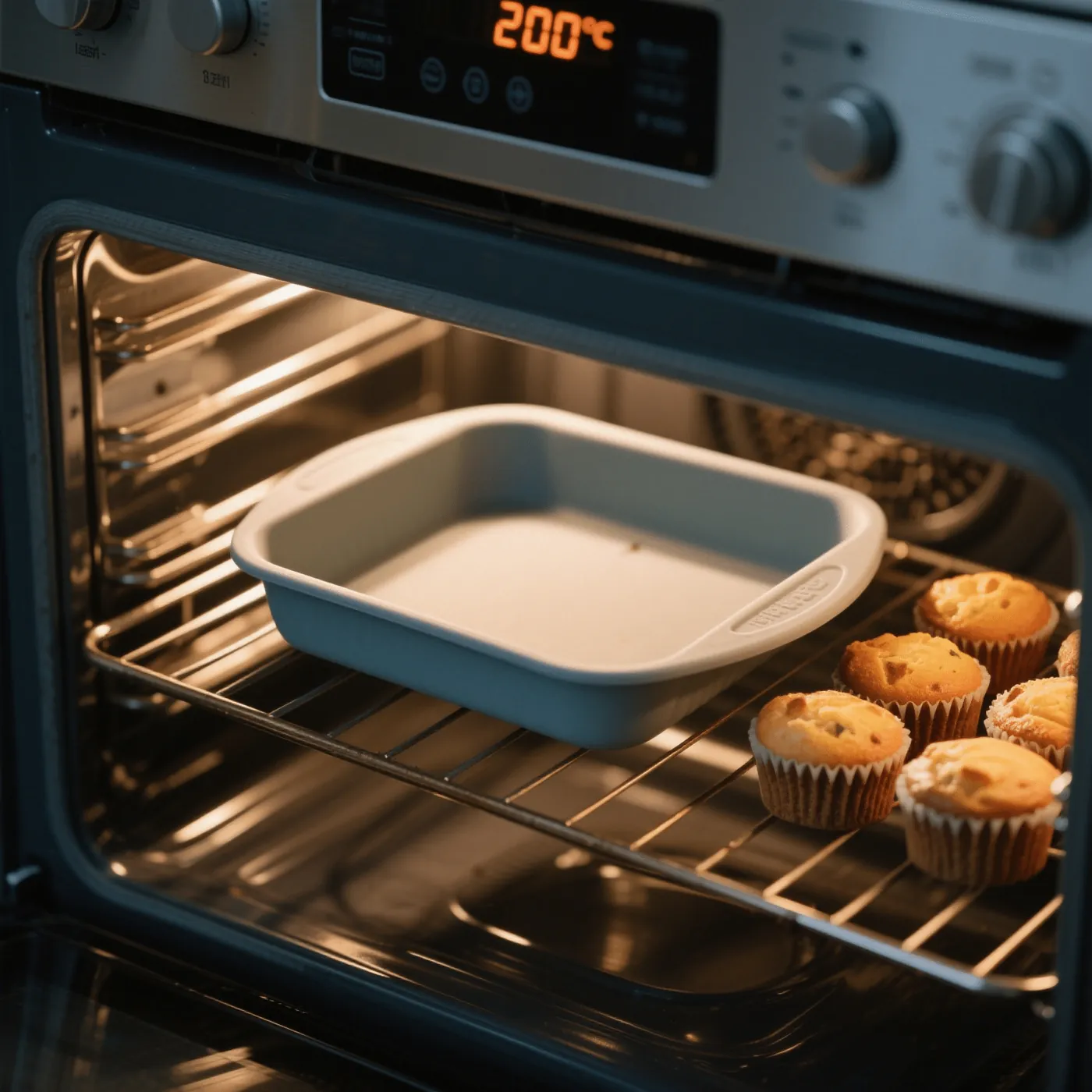
For a baking mold, the material is exposed to heat while also supporting food.
A useful review should include:
- oven setpoint and actual product condition
- time per cycle
- number of cycles in the customer's validation plan
- whether the mold sits on a tray/rack or is unsupported
- cavity depth
- weight of the food when loaded
- oil/fat contact
- cooling and demolding method
- cleaning condition.
Why does support matter?
A soft silicone tray can feel stable while empty and deform more when it is hot and carrying a heavy product. The engineering question is therefore not only whether the polymer tolerates heat. It is whether the loaded geometry remains usable.
If handles, rims or support ribs are part of the design, test them in the real handling sequence.
Commercial page: Custom Silicone Baking Molds
Gummy and Confectionery Molds: Specify Deposit and Wash Conditions
A gummy mold may not see an oven, but it can still have meaningful thermal requirements.
Provide:
- formulation family
- deposit temperature or operating condition
- time before demolding
- tray fill weight
- cooling method
- cleaning temperature
- detergent/sanitizer
- cycles or production frequency relevant to the customer's qualification.
A cavity that releases a cool laboratory sample is not necessarily proven for the customer's warm depositing and cleaning process.
Temperature can also interact with tray stiffness and handling. A large multi-cavity tray may need structural review under the actual loaded condition.
Commercial page: Custom Silicone Gummy Molds
Chocolate: Do Not Blame Every Surface Problem on “Heat Resistance”
Chocolate production creates a different set of variables.
The mold needs to work with the customer's:
- filling temperature
- tempering process
- cooling
- cavity surface
- release geometry
- cleaning practice.
If the finished chocolate is dull, difficult to release or shows poor detail, the root cause may involve mold surface, cleanliness, tempering or cooling-not simply the maximum temperature rating of the silicone.
The mold material still needs to suit the process, but the prototype should validate the actual chocolate result.
Commercial page: Custom Silicone Chocolate Molds
Ice and Freezer Use: Cold Performance Is More Than “Will It Freeze?”
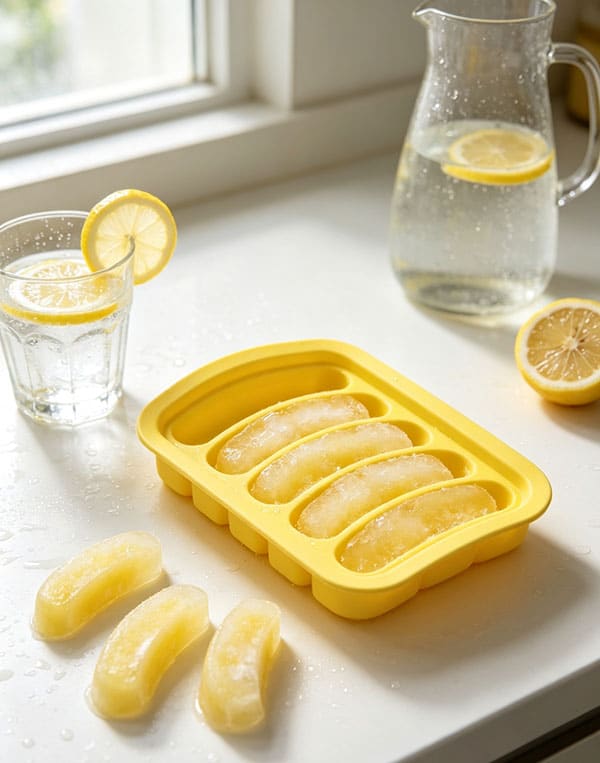
A mold used for ice or frozen food needs to remain practical after freezing.
Review:
- freezer temperature
- dwell time
- cavity geometry
- wall thickness
- frozen product shape
- loaded tray support
- how the user twists or peels the mold
- number of freeze/thaw cycles in the customer's validation plan
- cleaning after use.
At lower temperatures, user handling and local tear stress can become important. Deep undercuts, sharp logo features or thin sections can be harder to demold when the cavity is full of a rigid frozen product.
A real freeze-and-release test provides more useful information than flexing the empty mold at room temperature.
Commercial page: Custom Silicone Ice Molds
Cleaning Can Be the Most Severe Thermal Exposure
Some food molds spend less time at their process temperature than they do in repeated washing or sanitation.
Tell the supplier whether cleaning involves:
- hot water
- dishwasher
- steam
- detergent
- sanitizer
- manual scrubbing
- drying at elevated temperature.
Temperature should be reviewed together with chemistry. A material can tolerate heat and still respond differently to a cleaner, oil or process fluid.
If cleaning is critical to the product program, include it in the prototype or material-qualification plan rather than assuming that "food-grade silicone" answers the question.
Heat Resistance Is Not the Same as Food-Contact Compliance
These are separate decisions.
Thermal performance asks:
Will the selected material and mold geometry remain functional under the specified heat/cold exposure?
Food-contact compliance asks:
Is the selected material/documentation appropriate for the intended food contact, market, temperature and duration?
A high-temperature silicone is not automatically suitable for every food-contact use.
Likewise, a material with a food-contact document still needs to be evaluated for the temperature and mechanical conditions of the actual mold.
For food-contact projects, provide:
- destination market
- food type
- contact temperature
- contact duration
- repeated-use condition
- requested standard or customer specification.
Related page: Silicone Materials & Compliance
Geometry Can Change Thermal Performance
A material datasheet describes the material under defined test conditions. A finished mold adds geometry and mechanical load.
Thin walls
Thin sections can heat and cool quickly but may have less structural support.
Thick sections
Thick areas may change heating/cooling behavior and can create different local stiffness.
Large tray spans
A wide tray may sag when loaded, especially if the perimeter or cavity layout does not provide enough support.
Sharp details and undercuts
These can concentrate stress during hot or cold demolding.
Bonded or overmolded assemblies
Different materials can expand and contract differently. If the silicone is bonded or retained to a rigid substrate, thermal cycling may affect the interface.
This is why final product validation should include geometry and assembly-not only the silicone grade.
How to Specify Temperature Without Guessing
When you send an RFQ, use a condition table instead of the phrase "heat resistant."
| Condition | What to provide |
|---|---|
| Normal use | normal operating temperature |
| Peak | maximum short-term temperature |
| Peak duration | seconds / minutes / hours |
| Heating method | oven, deposited material, hot water, steam, other |
| Cold use | freezer or low-temperature condition |
| Loaded state | empty or filled; approximate load if relevant |
| Cycle | how the customer plans to qualify repeated heat/cold exposure |
| Cleaning | water temperature, detergent, sanitizer, dishwasher/steam |
| Contact | food, resin, chemical, oil, water or other material |
| Market | U.S., EU or other destination |
| Failure to avoid | sag, tear, loss of fit, discoloration, release problem, other |
If the real maximum is unknown, provide the equipment or process information that is known. Engineering can then identify what still needs to be measured.
Validate the Mold, Not Just the Material
A useful validation plan can include three levels.
1. Material evidence
Review the supplier datasheet and any required documentation for the exact selected compound.
2. Prototype under the actual process
Run the mold under representative:
- temperature
- load
- contact material
- cooling/freezing
- cleaning
- demolding.
3. Inspect the result that matters
Depending on the application, check:
- distortion
- tearing
- permanent set
- release
- logo/detail
- tray flatness
- fit
- surface condition
- discoloration if relevant
- loss of support or function.
The buyer should define the final pass/fail requirement for the finished product and its market.
When to Ask the Manufacturer for Help
Contact the mold manufacturer before material/tooling is frozen when:
- operating temperature is uncertain
- the process includes both heat and aggressive cleaning
- the mold is large or heavily loaded
- the product has deep undercuts or delicate release features
- the mold must work in both hot and frozen conditions
- the required food-contact or customer documentation is specific
- an existing mold is deforming, tearing or releasing poorly after thermal cycling.
Send the real process conditions rather than asking only for "the highest temperature silicone."
For a food-mold project, start with Custom Food Silicone Molds or Contact WYD.
Ready to order custom silicone molds?
Send your drawing, sample or project requirements for DFM and quotation.