
Tooling decision
Prototype Tooling vs Production Tooling
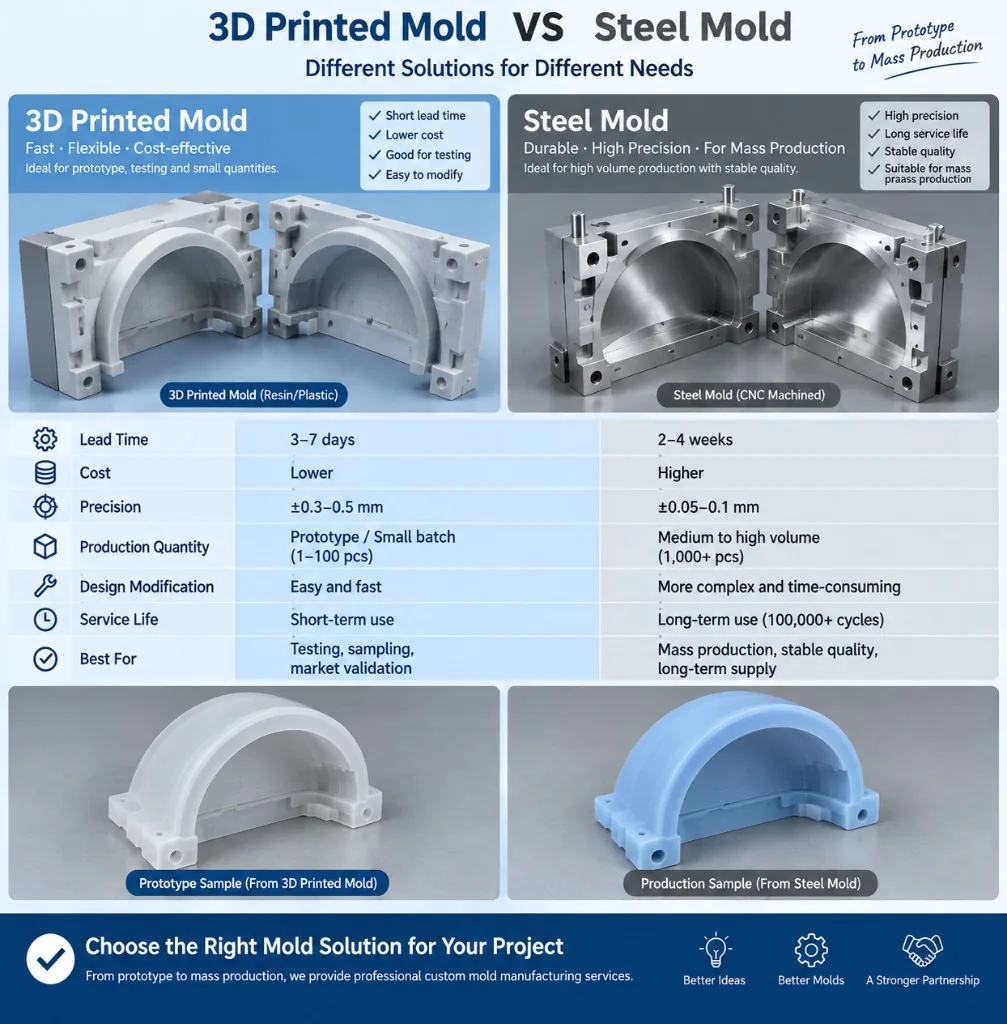
A lower-cost prototype mold can be the right first step while geometry, piece weight, demolding or product function is still being validated.
Production tooling makes more sense once the design is stable and repeat volume justifies the additional investment.
This is not simply a choice between “cheap” and “high quality.”
Path A — RTV Silicone Mold
RTV can remain the correct long-term production mold when:
Typical route: 3D/CAD → Resin Master Model → RTV Silicone Mold.
Do not assume that every RTV mold should eventually be replaced by steel tooling.
- the casting is complex
- strong undercuts require flexible demolding
- the customer casts resin, plaster, wax or similar materials
- production volume does not justify machined tooling
- a mother mold/support shell provides the required stability
Path B — Prototype Before HCR/HTV Production
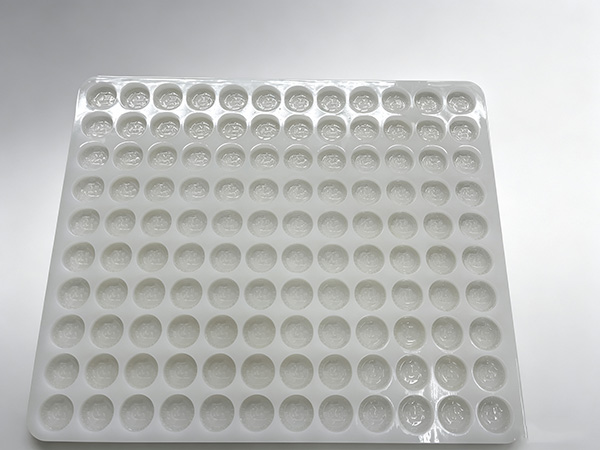
For some tray/product projects, an early sample may be used to validate cavity geometry, logo, piece weight, demolding, tray size and handling.
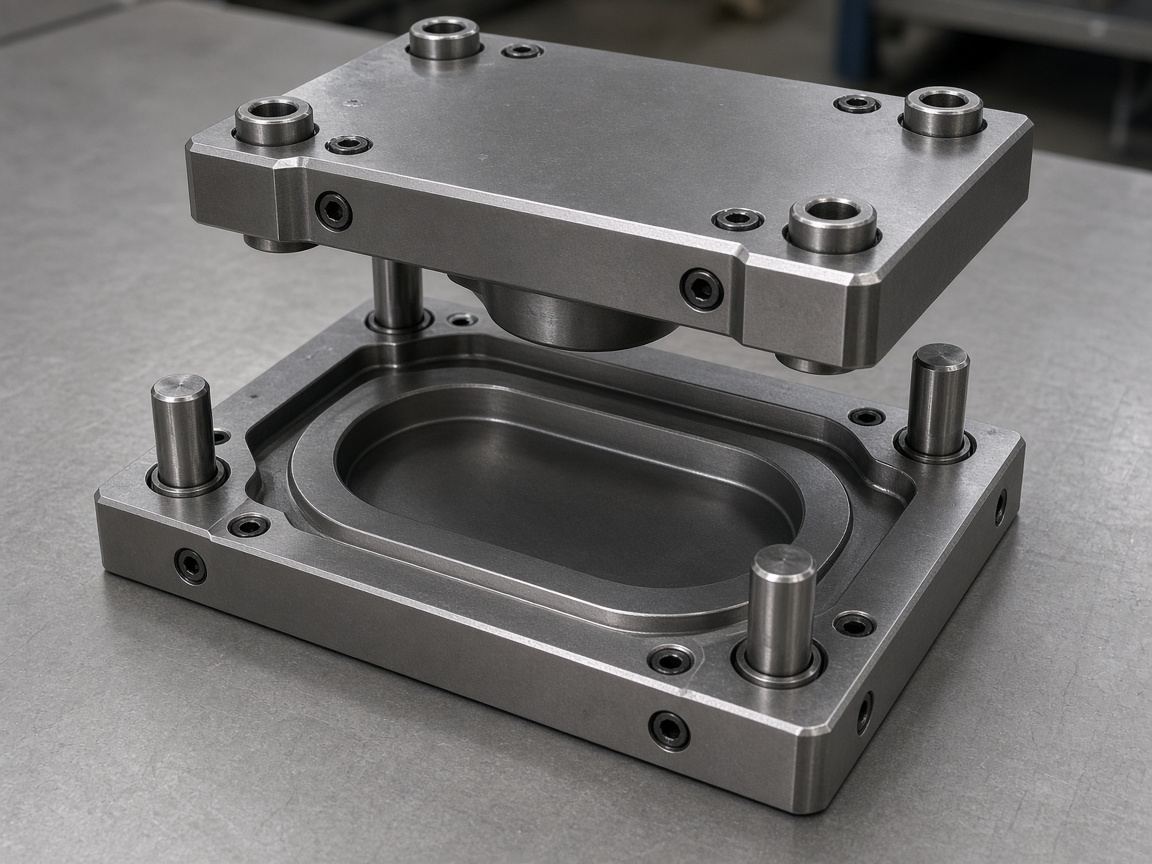
Once stable, production can move to: CAD → Steel Tooling → HCR/HTV Compression Molding.
This is useful when repeated identical silicone trays/products are required.
Path C — LSR Production Tooling
For projects that will be injection molded in LSR, the final tool must validate:
- gate
- venting
- flash
- fill
- cavity balance
- insert location
- automation
A prototype made by another process can prove geometry, but it does not prove the complete LSR production process.
When to Stay With the Prototype / RTV Route
Stay with it when:
- geometry may still change
- order quantity is small
- complex undercuts favor flexible casting
- repeatability is already acceptable
- production rate is sufficient
- tooling payback is not justified
When to Invest in Production Tooling
Consider production tooling when:
- design is frozen
- repeat demand is stable
- many identical silicone molds/parts are required
- cycle/output matters
- cavity layout is fixed
- line/machine compatibility is known
- tooling cost can be justified over the production volume
What Must Be Locked Before Steel Tooling?
Before cutting the production tool, confirm:
- final CAD revision
- cavity geometry
- target weight / volume
- cavity pitch
- tray envelope
- logo
- material
- Shore hardness
- machine/rack constraints
- critical tolerances
- acceptance test
Cost Comparison
Compare total program cost, not only one mold.
RTV / Prototype Route
CAD/model, resin master, RTV silicone, support shell if needed, labor and replacement molds.
Production Tooling Route
DFM, metal tooling, trial, silicone unit production, QC, maintenance and repeat units.
What to send
- current prototype
- expected repeat quantity
- what still might change
Keep the current mold route, or move to production tooling?
Send your current prototype, expected repeat quantity and what still might change. We can tell you whether to keep the current mold route or move to production tooling.