
Glossy vs Matte Silicone Mold Cavities: How Finish Transfers to the Product
Compare glossy and matte silicone mold cavity finishes for chocolate, gummy, resin and other casting work, including appearance, release and master-tool requirements.
On this page
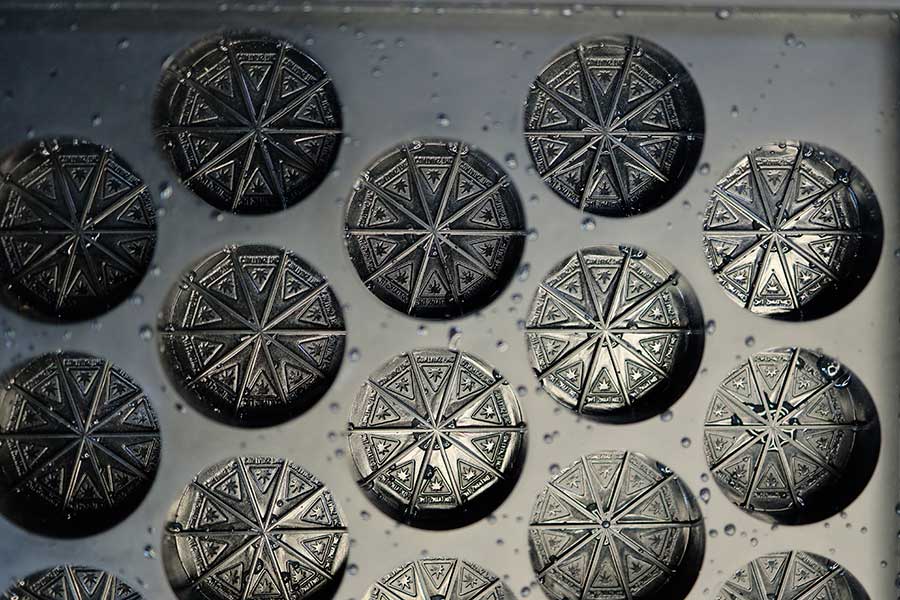
Silicone reproduces surface texture extremely well. A polished master tends to create a smoother cavity; a sanded, textured or chemically etched master creates a matte or patterned cavity. That surface then influences the appearance of the gummy, chocolate, resin, wax or other material formed against it.
Choosing glossy or matte is therefore not just a cosmetic checkbox. It affects the master-tool specification, defect visibility and, in some applications, release behavior.

The basic rule: the mold copies the master surface
If a master has machining marks, scratches or print-layer texture, the silicone will reproduce much of it. Polishing the finished silicone mold afterward is usually not the same as creating the correct surface on the master from the beginning.
For a production project, define the desired finish before the master or steel tool is completed.
Glossy silicone cavities
A glossy cavity is normally produced from a highly polished master or tooling surface.
It is useful when the finished product needs:
- a clean, smooth appearance;
- sharp light reflection;
- a premium confectionery surface;
- polished resin or wax appearance;
- easy visual inspection of fine detail.
The tradeoff is that glossy surfaces can reveal scratches, dents, dust and handling damage more clearly. Maintenance discipline matters.
Matte silicone cavities

Matte cavities are created by controlled texture on the master or tool. The resulting finish can:
- reduce harsh reflections;
- create a softer visual appearance;
- disguise small cosmetic variation;
- add grip or a tactile effect on non-food parts;
- match a brand’s packaging aesthetic.
But “matte” is not one finish. A fine satin texture and a coarse sandblasted texture behave differently. The buyer should approve a physical texture standard whenever surface appearance is critical.
Does glossy release better than matte?
Sometimes a smoother surface can reduce mechanical drag, but release is controlled by more than finish.
Important variables include:
- cavity geometry;
- draft;
- undercuts;
- silicone hardness;
- formula or casting chemistry;
- demolding temperature;
- release agents;
- contamination or residue.
A deep undercut will not become easy to demold simply because the cavity is glossy. Likewise, a properly designed matte cavity can release very well.
Gummies and candy
For gummies, cavity finish influences appearance but the formula is equally important. A polished cavity may support a smoother visual result, yet final gloss also depends on ingredients, oiling, moisture and handling.
A brand using a deep logo should test finish and geometry together. Very sharp polished detail can still distort if the gummy is too soft at release.
Chocolate
Chocolate is especially sensitive to surface condition. Rigid polished polycarbonate is often chosen when maximum gloss is the main goal. Silicone can work well for custom shapes, deep geometry and flexible release, but the desired chocolate finish should be approved with the actual recipe and tempering process.
See are silicone molds good for chocolate? for the material comparison.
Resin, plaster and decorative casting
For resin and wax, the mold surface can transfer very directly to the casting. A matte master produces a matte result; a polished master produces a smoother result, assuming the casting material and release process do not alter it.
Plaster and concrete-like materials are inherently less glossy, so ultra-polishing the mold may offer limited visual benefit compared with improving detail and release.
Steel-tool finish vs RTV-master finish
For a molded silicone product made in steel tooling, the steel cavity finish creates the surface on the silicone part.
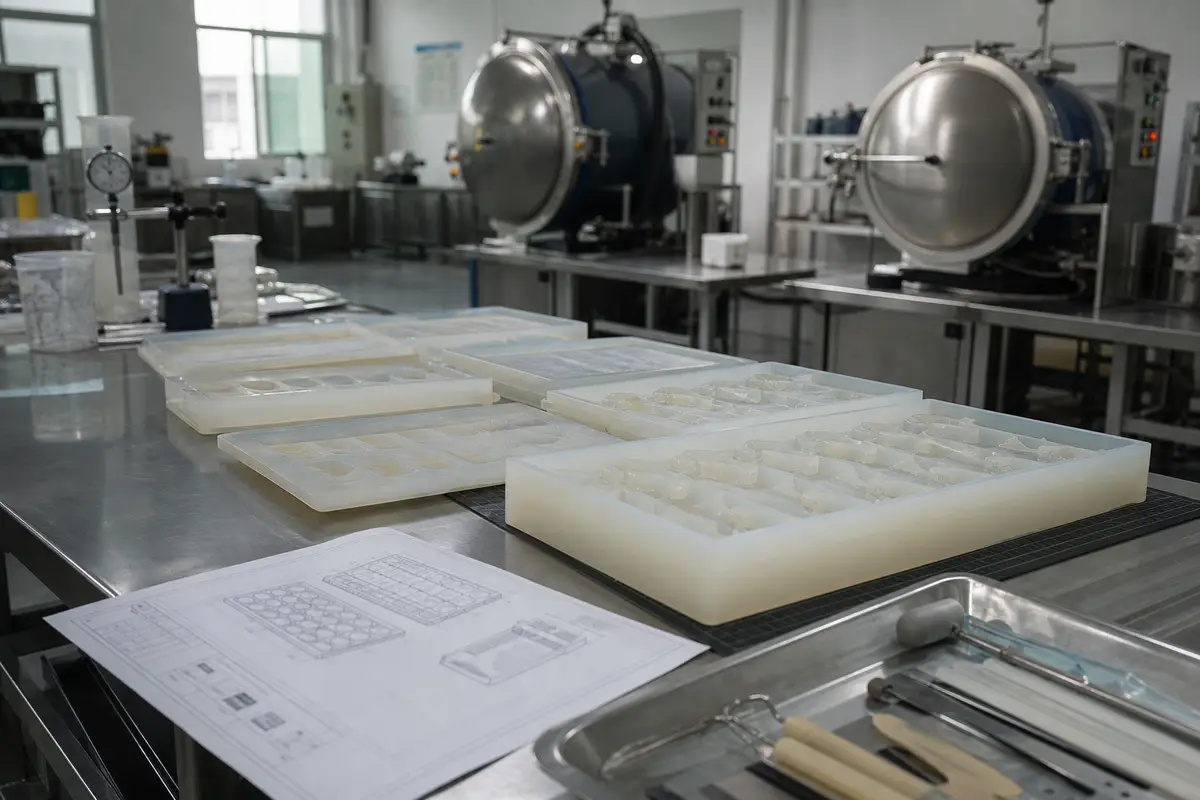
For an RTV casting mold, the physical master creates the surface inside the silicone cavity.
These are different workflows. The finish note on the drawing should identify which surface is being controlled.
How to specify surface finish in an RFQ
Avoid only writing “glossy” or “matte.” A better specification includes:
- reference photo;
- approved physical sample if available;
- target visual area;
- which surfaces may have normal tool marks;
- whether logo/text should match the surrounding finish;
- whether the finish is cosmetic or functional.
For critical industrial parts, use an agreed texture or roughness specification appropriate to the tooling process. For consumer projects, a signed physical sample is often more practical than an ambiguous adjective.
Protecting the finish in production
Even a correctly built mold can lose cosmetic quality if mishandled.
Protect cavity surfaces from:
- sharp tools;
- abrasive brushes;
- dirty stacking;
- aggressive scraping;
- unsupported folding;
- storage against rough objects.
Include a cleaning and storage method in the production SOP.
FAQ
Can a matte silicone mold make a glossy product?
Usually the surface texture transfers to the product to some degree, so a matte cavity generally does not create a mirror-like surface. Material chemistry can modify the appearance, but the cavity finish remains important.
Can you polish an existing silicone mold?
Minor cleaning or surface treatment is possible in limited cases, but a true finish change is usually better made at the master/tooling stage.
Which finish is easier to maintain?
It depends on the application. Glossy surfaces show scratches more easily; coarse textures can trap residue. Choose based on product appearance and cleaning process.
Should the logo be glossy or matte?
Either can work. Specify whether the logo should match or contrast with the surrounding area, then approve a physical sample.
Specify the finish before tooling
Send your reference image, product geometry and target surface through WYD Contact. We can identify whether the finish belongs on the master, RTV cavity or steel production tool and include it in the approval sample.
Ready to order custom silicone molds?
Send your drawing, sample or project requirements for DFM and quotation.