
Production tray vs poured glove
Silicone molds for plaster and concrete: production tray vs poured glove
WYD develops silicone casting molds for plaster, gypsum and concrete projects, including relief pieces, decorative forms and production layouts. Send the casting material, finished dimensions, reference shape and required number of molds so we can review a suitable structure.
A simple open shape, a full 3D form and a large filled tray create different support and demolding requirements. We review the master, release path, mold structure and handling conditions before confirming the manufacturing route.
WYD Silicone, Room 201, Building N, Licheng Technology Industrial Park Phase III, Xinhe Avenue, Shajing, Bao'an, Shenzhen. Established 2006.
Production tray vs poured glove vs WYD part
| Object | Suitable Application | What to send next |
|---|---|---|
| Reusable mother-supported production tray | Repeat plaster or concrete pours | Cavity count, mix, and how the filled mold is handled |
| One-off RTV master / box / glove | One poured mold around a master | Master or file, and that this is one pour-tool |
| Compression silicone part | A molded silicone part, not a pour skin | Name the part |
| Resin jewelry pour | Casting resin, not slurry | Custom silicone resin molds |
Typical shop split - not a cycle-life number. We do not invent how many slurry pours a tray will survive.
Hypothetical: garden-stone glove vs production skin
Hypothetical path - not a named customer file
Buyer wants a one-off turtle-stone glove poured around a master. That is one poured mold. If the same buyer needs reusable skins they fill with slurry on a bench, that is a production tray. Say which object you need. WYD quotes that RTV pour-tool or HTV tray on this site. Send CAD, master, or pattern. DFM review is free. send CAD here.
Related Casting Mold Resources
- Custom craft silicone molds
- Custom silicone resin molds
- Send a casting mold inquiry
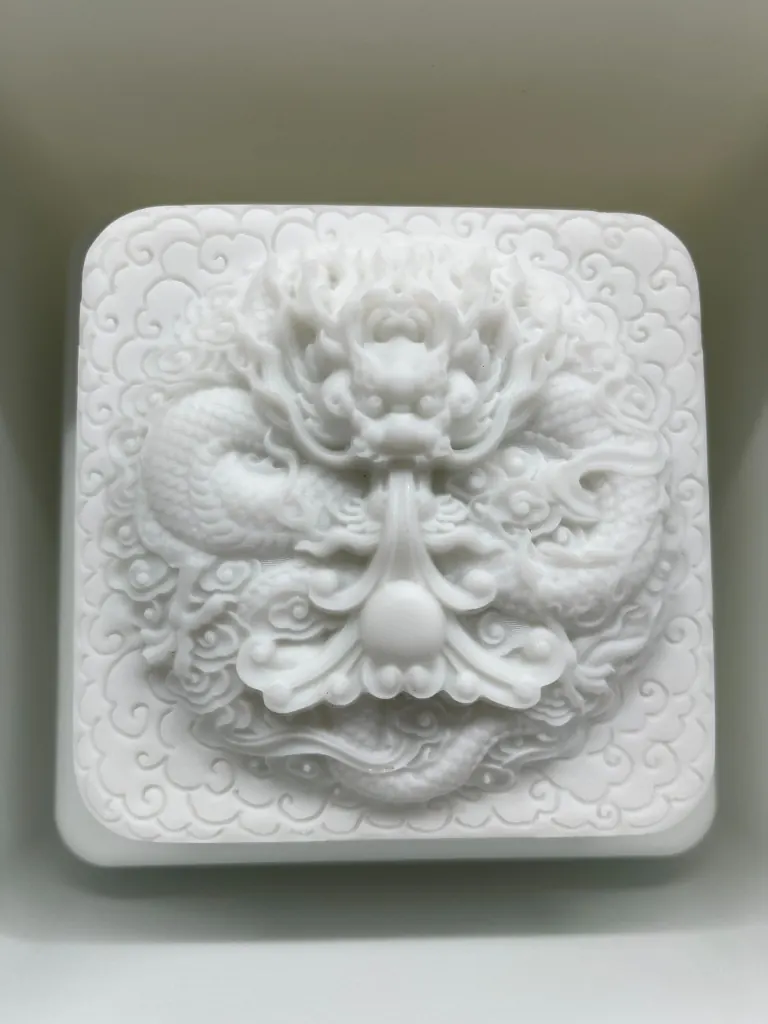
- Dragon, tiger, and phoenix relief wells, plus the dragon-cavity short, are on the relief-set case.
Plaster Trial in Concrete Mold Development
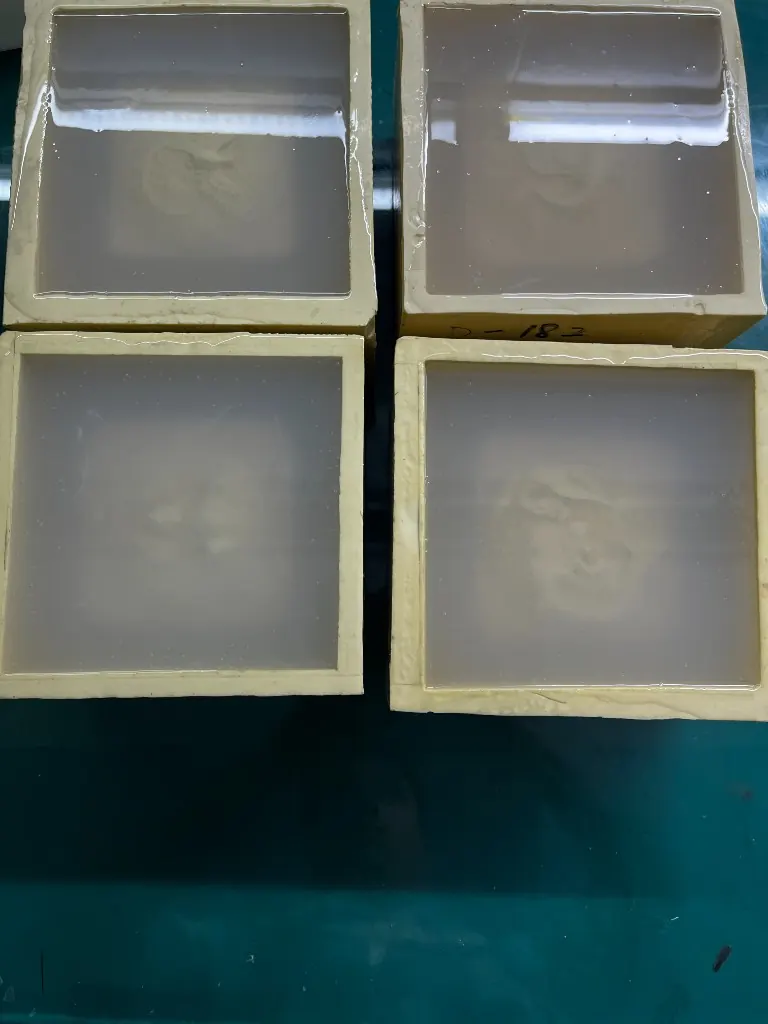
The concrete spacer mold development record describes plaster trials used to examine release before concrete casting. See the concrete spacer development example for the project layouts and sample references. A plaster release check is one development step; it does not establish long-term performance with the final concrete mix.
Plaster FAQ
- I need an RTV box or glove for one gypsum master.
- Yes. That poured mold is an RTV RFQ on this site. Send the master or file. A prototype quantity is separate from the number of production molds.
- I need reusable production skins for plaster or concrete.
- A mother-supported production tray for repeat slurry is quoted as production molds, not as a one-off glove. Applicable soft-mold production starts from 20 molds per approved design. Prototype quantity is confirmed separately.
- When would WYD quote a compression part on this page?
- When you want a compression-molded silicone part that later meets plaster or concrete, not a poured casting skin. Name the part.
- Is this a food tray?
- No. Food pours belong on the food mold pages. Slurry is abrasive and is not food-contact. We do not attach FDA or LFGB language to plaster or concrete jobs.
- MOQ and CAD?
- Initial manufacturability review is free. CAD creation, model changes, or extra engineering is quoted separately. Standard/simple 3D modeling can start from USD 50 per design. Complex work is quoted separately. Prototype preparation is typically 3-5 business days for suitable projects after CAD approval and confirmation of the development scope. Shipping is additional. Production quantity starts from 20 molds per approved design for applicable soft-mold projects. Prototype quantities are confirmed separately.
Send the casting and the mold count
Send the finished casting dimensions, plaster or concrete mix, shape file or master photos, and number of molds required. State the desired cavities per mold, filled-mold handling method and any support frame already used. If you need a prototype before repeat molds, identify that separately from the production quantity.