Plant clips · 15 Sep 2026

Dragon, tiger, phoenix — plaster and ointment-craft wells

These square silicone wells are built for gypsum and ointment-craft pieces. The same well class can pour large chocolate or freeze large ice if you name that pour on the RFQ. Food-contact compound is not the default.

A three-shape set only works if the three wells demold the same way. The tiger hair, the dragon scales, and the phoenix tail are different undercuts. We do not copy one cavity depth onto the other two because the names sit in a set.

These stills are the same family as the floor clips: boxed RTV wells and white plaster-style pulls. Primary use is gypsum / plaster and ointment crafts. Some buyers ask whether a large well can also pour chocolate or freeze a large ice block - that is a different compound and handling RFQ. Do not treat a craft cavity as a food tray until the pour and the paperwork are named.

Soft trays often start around MOQ 20 per design. Prototype timing is typically 3–7 business days after CAD lock. This session’s calendar and piece count are not published.

Cavity and casting stills

Wells and pulls from the same job family

Empty cavities plus plaster-style casts. Send the pour (plaster, ointment craft, large chocolate, or large ice) before we lock Shore or wall thickness.
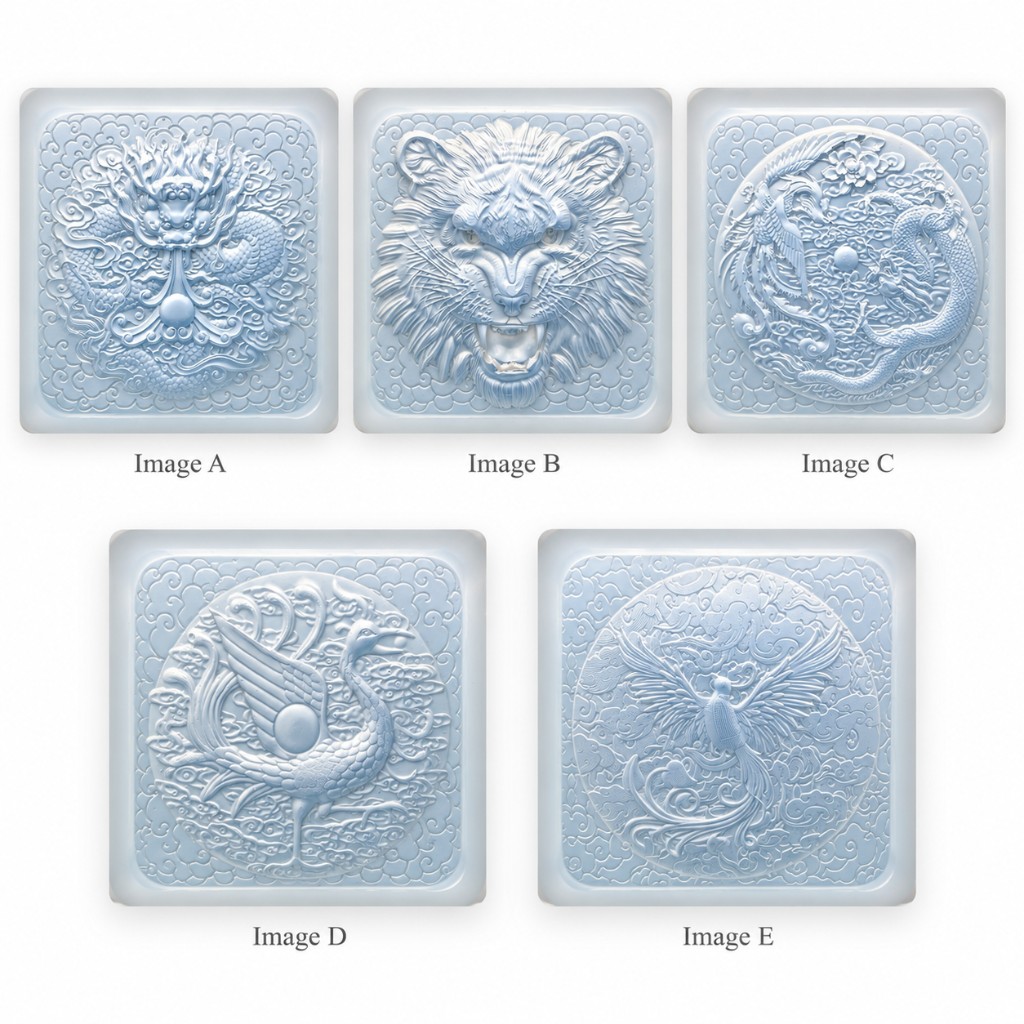
Five square gypsum reliefs: dragon, tiger, dragon and phoenix, crane, and phoenix
Five-face gypsum set. Dragon, tiger, dragon-and-phoenix, crane, and phoenix. Compare relief depth across the set before copying one cavity onto the others. Labels on the board are a layout key, not a cycle-life claim.
Dragon cavity
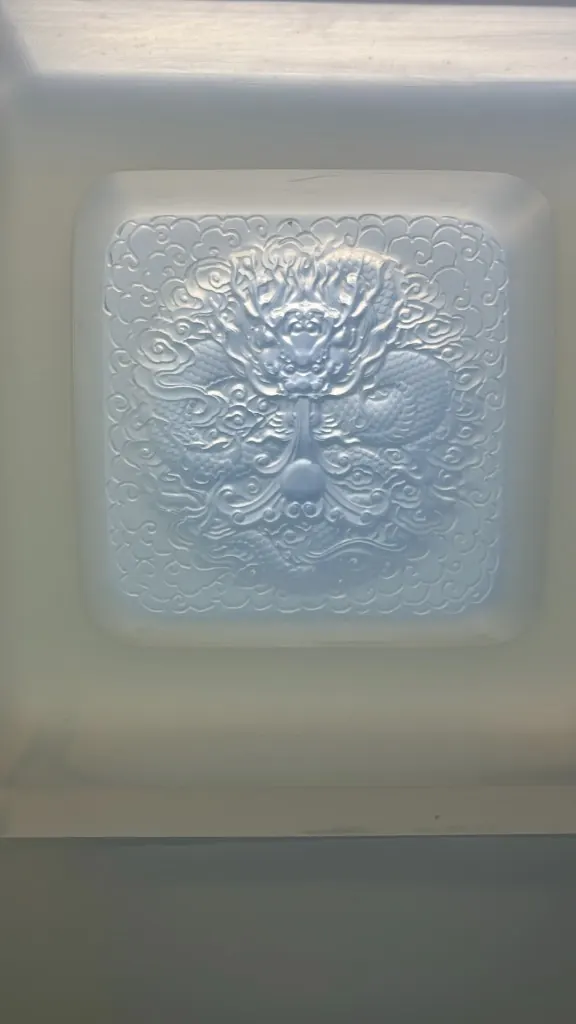
Dragon cavity. Coiled dragon and pearl in a square well. Backlight shows whether scales fill.
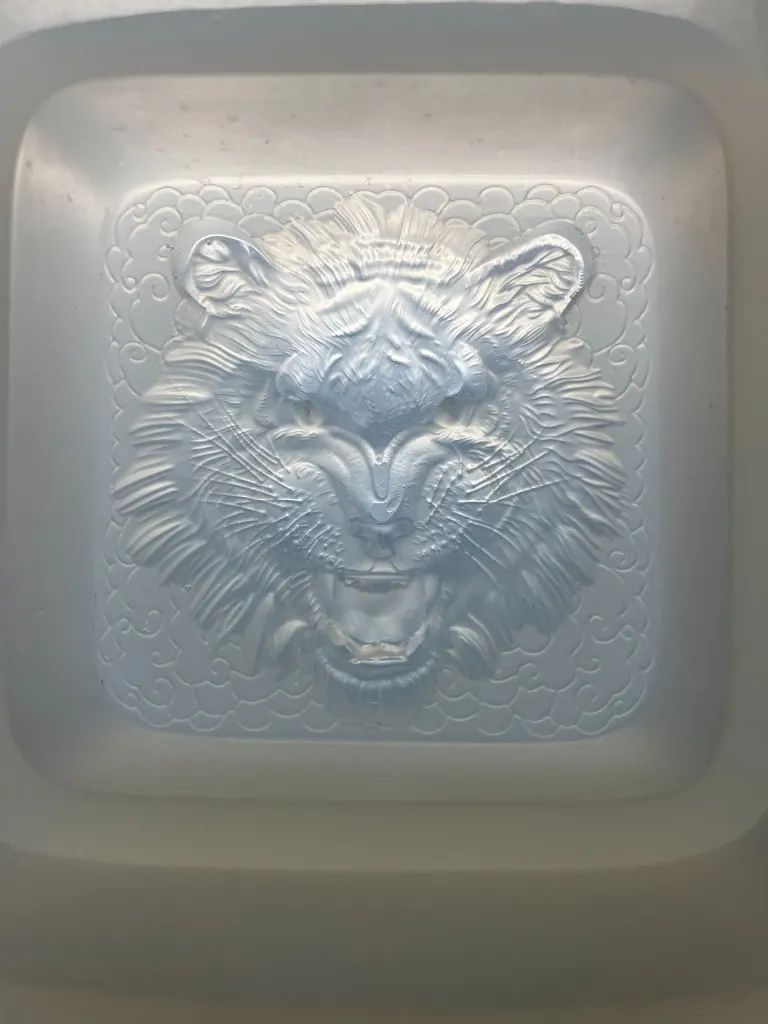
Tiger cavity
Tiger cavity. Tiger face. Hair and whisker lines fail first if the relief is too shallow.
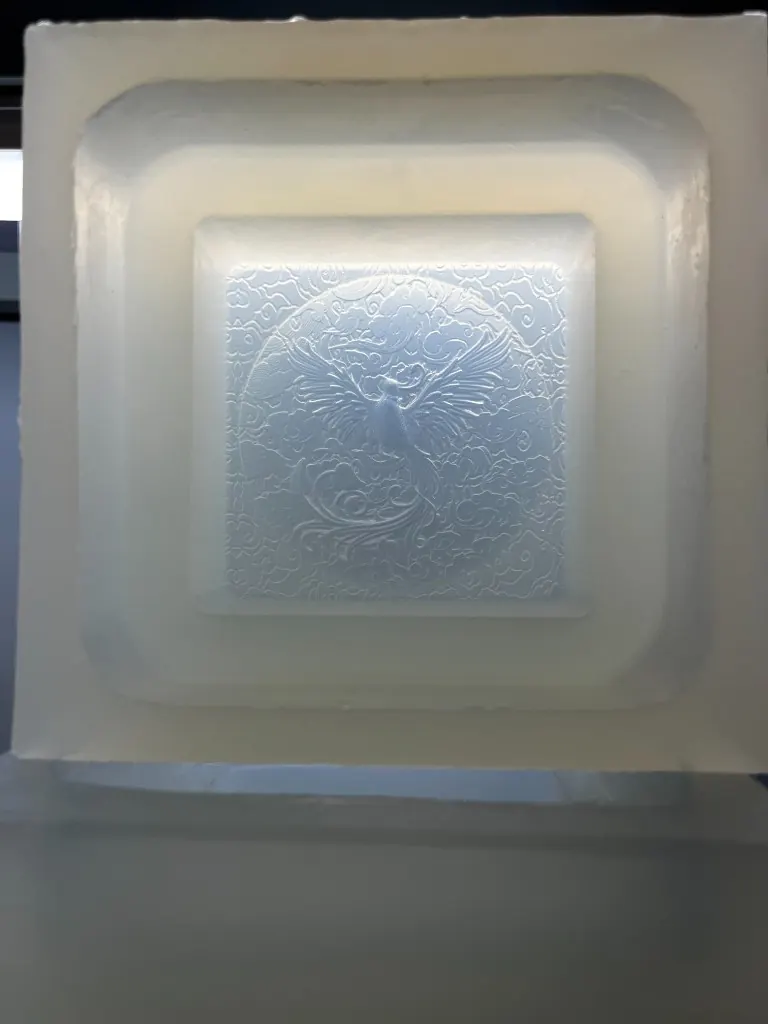
Phoenix cavity
Phoenix cavity. Phoenix in a cloud field. Tail lines are a release path.
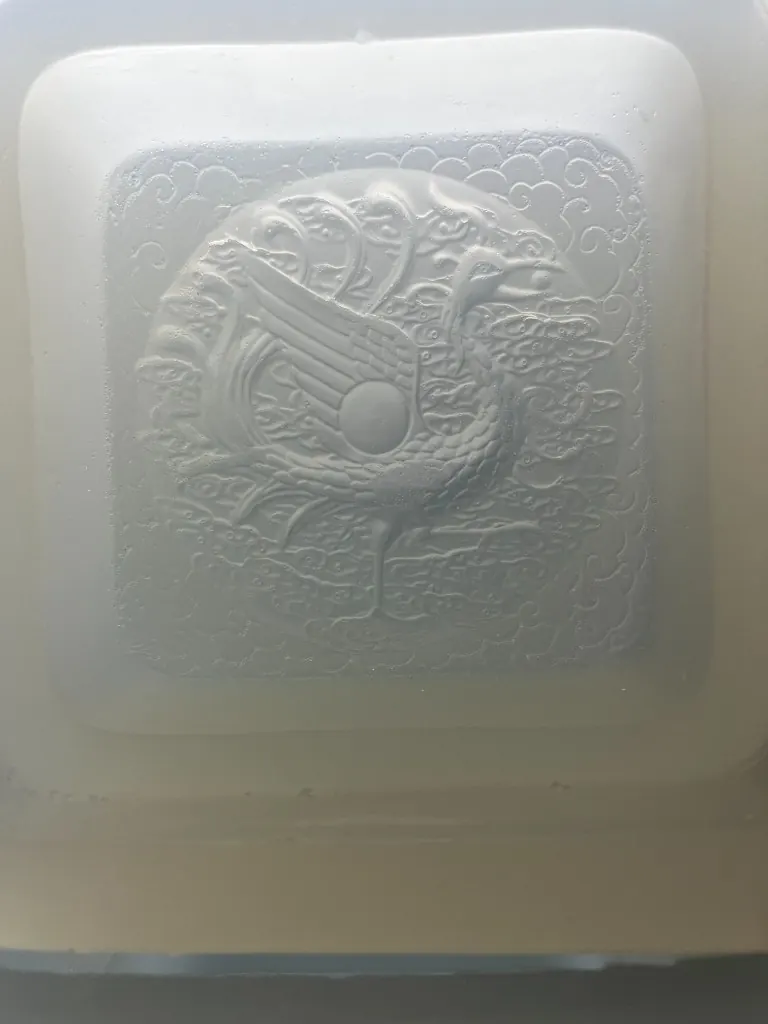
Crane cavity
Crane cavity. Standing crane well from the same relief family.
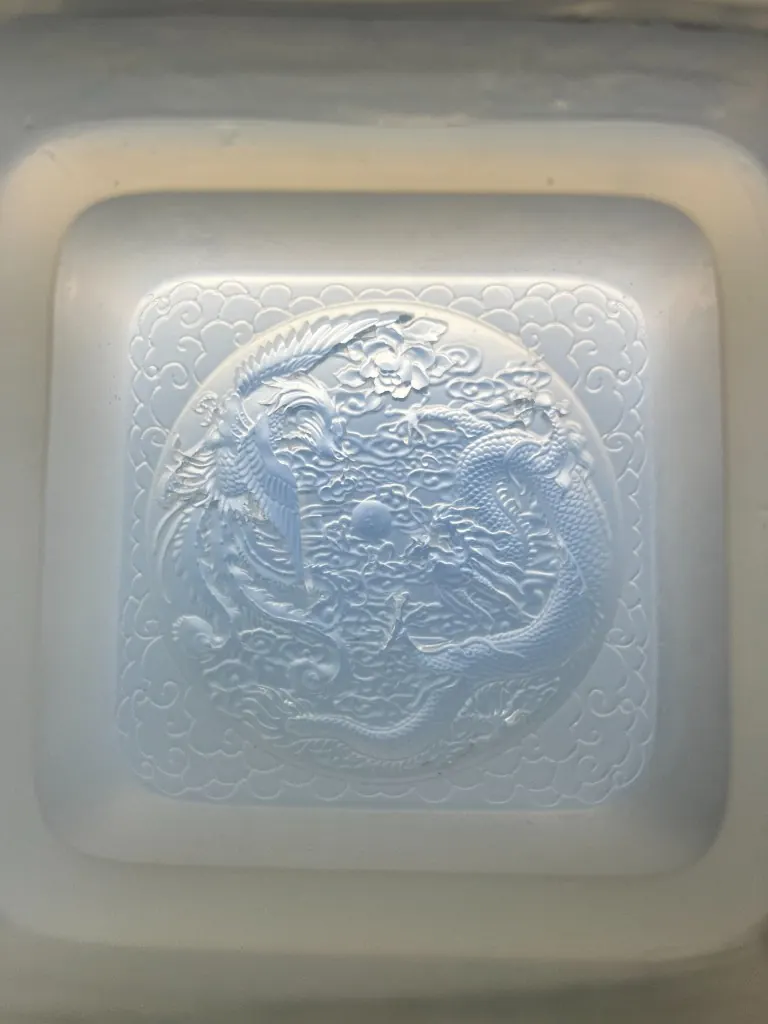
Dragon and phoenix together
Dragon and phoenix together. Two figures in one well. Depth cannot be copied from a single-face cavity.
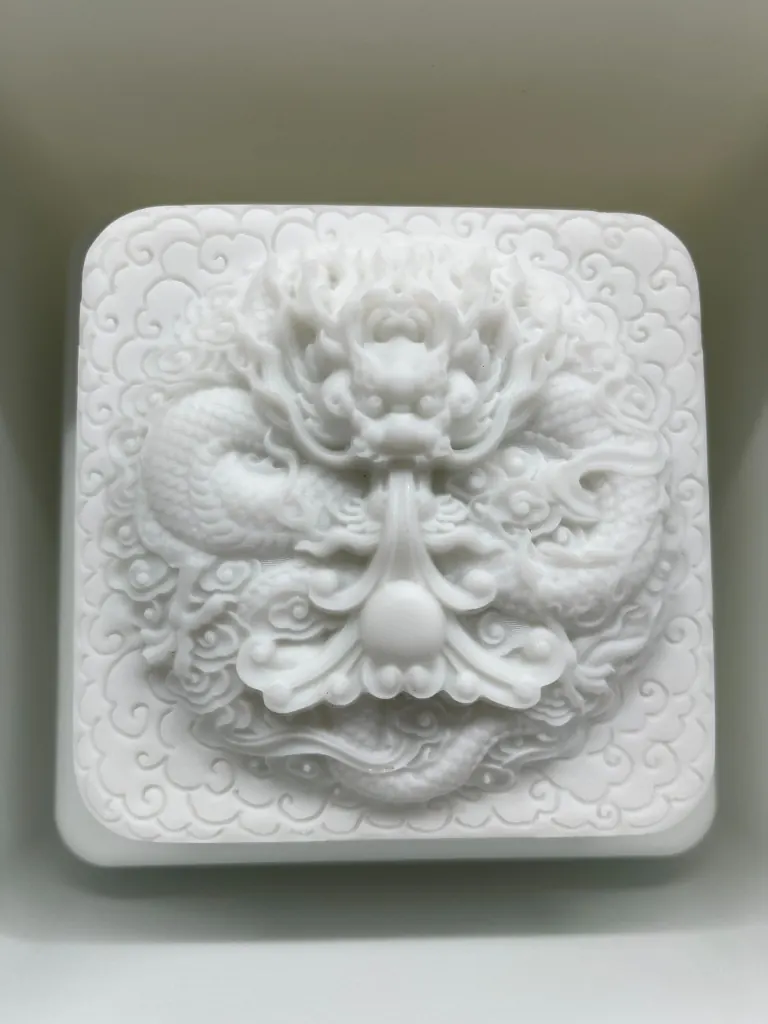
Dragon casting
Dragon casting. White plaster-style pull from the dragon well. Rigid pours snap at thin scales.
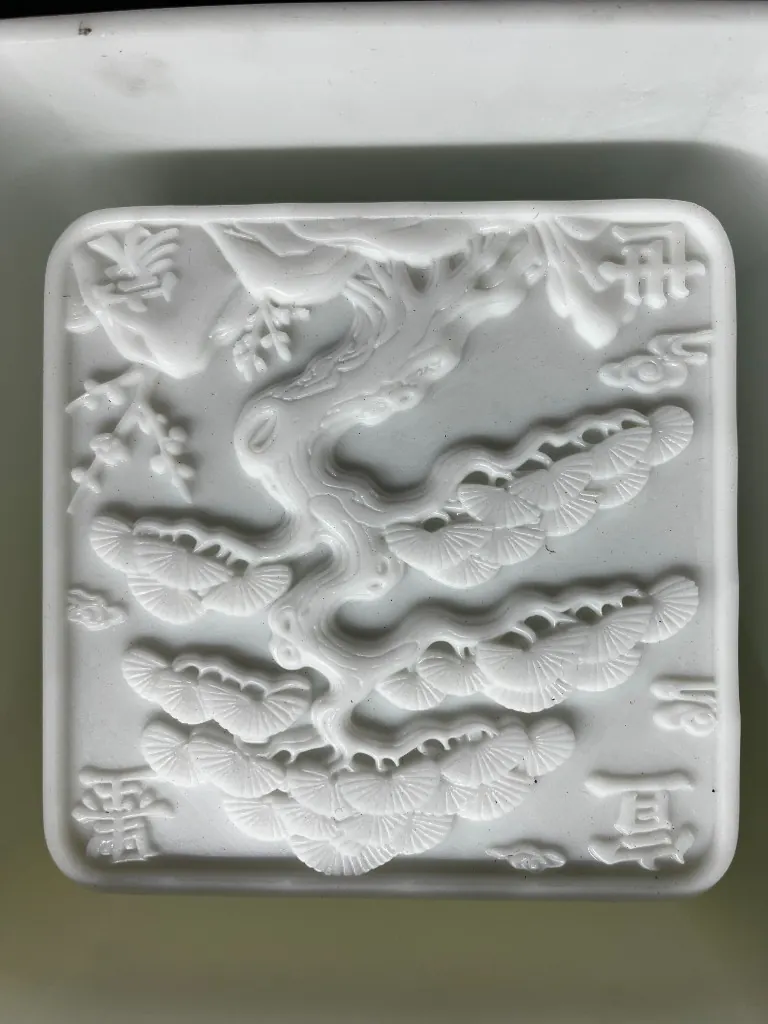
Pine casting
Pine casting. Pine and characters. Gypsum and ointment-craft pieces use this class of well.
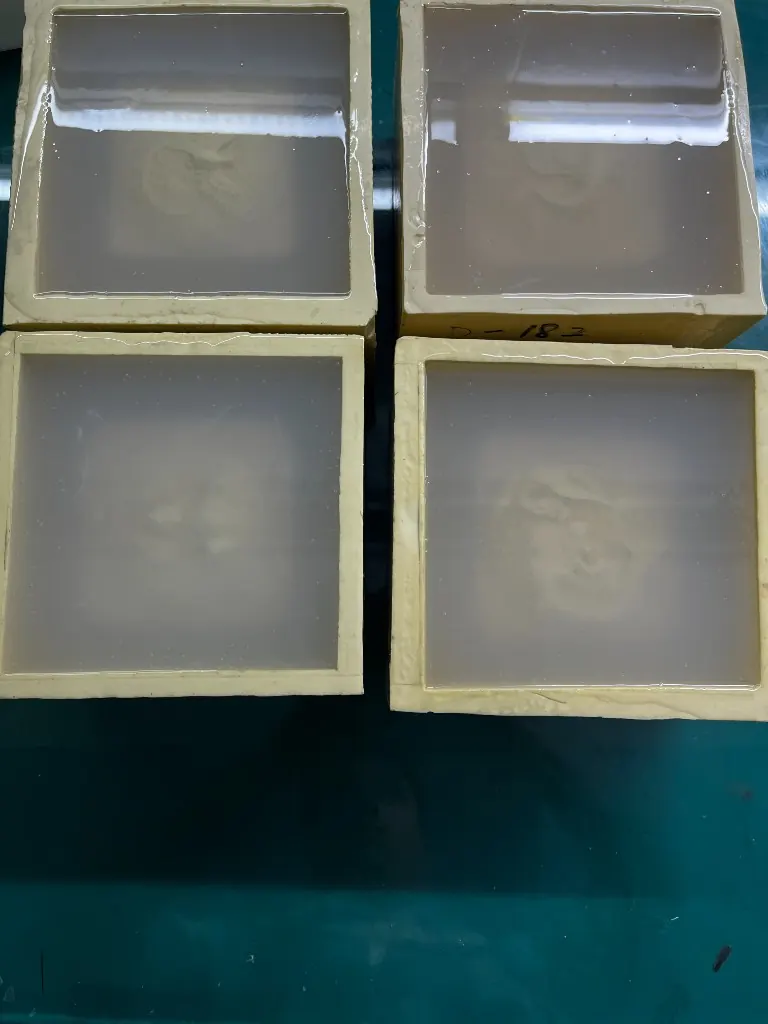
Four boxed wells
Four boxed wells. RTV boxes on the green floor. The pour (plaster, ointment, chocolate, ice) belongs on the RFQ.
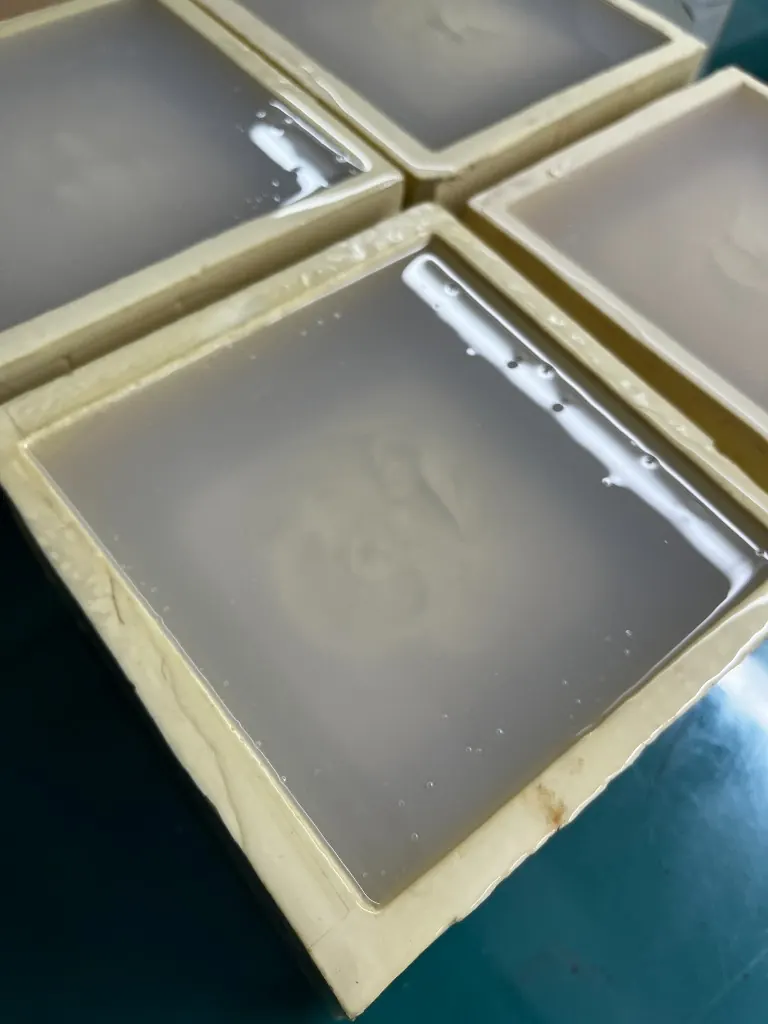
Open boxes after pour
Open boxes after pour. Wet face after a pour or wash. Not a cycle-life photo.
Dragon cavity, second light
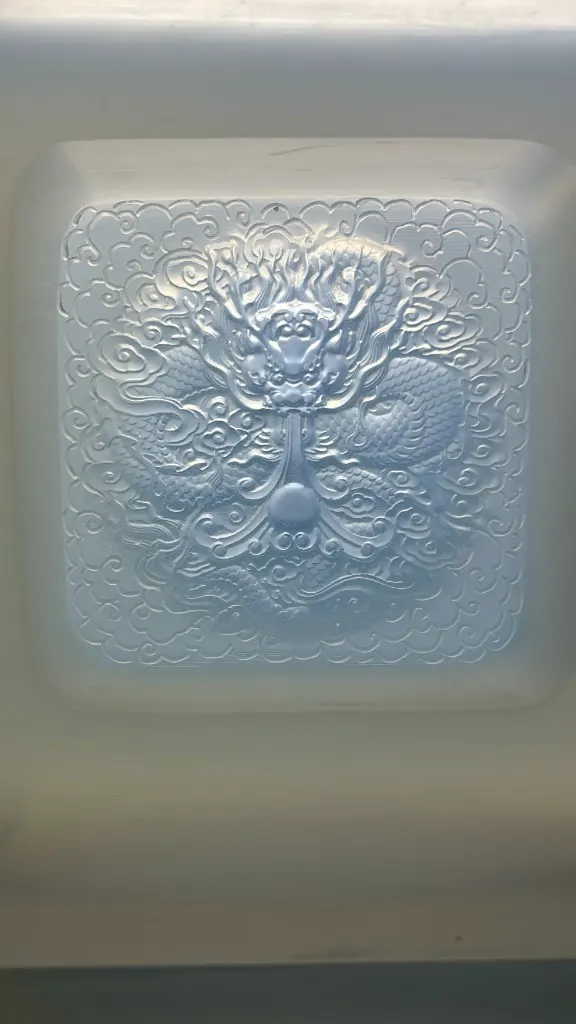
Dragon cavity, second light. Same dragon well, different light. Use millimetres, not a mood shot.

YouTube

Dragon well, in the hand

This short is the dragon cavity. Scales and the pearl are what you should look at. Caption text on the clip is not a quote and not a hardness or cycle-life claim.

Watch the dragon cavity short.

Floor video

Eleven clips from the same shoot

Phone 4K originals were transcoded for the site (H.264, muted, preload off). Play the tiger, dragon, and phoenix close-ups first; the later clips show the same blocks at the table.

Tiger cavity, handheld. Tiger face in a square well. Hair and whisker lines only read if the cavity is deep enough to demold without tearing.
Dragon cavity. Coiled dragon with a pearl. Backlight shows whether the scales fill or flatten.
Phoenix cavity. Phoenix and cloud field. Fine tail lines are a release path, not decoration added after pour.
Phoenix, second angle. Same phoenix well, tilted. If the wing tips trap air, the pour and vent plan have to change.
Dragon in the box. Relief sitting in a rigid-looking surround. Ask whether you are buying a flexible skin, a boxed RTV, or a compression tray.
Dragon, close. Close look at the coiled dragon. Logo-style depth belongs in millimetres on the RFQ, not as a mood.
Dragon against the light table. Held at the inspection table so the relief reads through the silicone.
Handling at the light table. How the block is picked up. Wall thickness shows in the hand, not in a catalog thumbnail.
Side of the block. Side wall and well together. A pretty face still fails if the wall folds when filled.
Second handling pass. Same table, same family. Floor video is for the object, not a cycle-life claim.
Inspection table. Bao'an inspection table used for these clips. Not a press cycle, not a customer name.

What to send for a similar set

  • Artwork or STEP/STL for each face (dragon, tiger, phoenix — do not assume they share depth).
  • Finished piece size and whether the well is a tray, a boxed RTV, or a compression block.
  • Pour: gypsum / plaster, ointment craft, large chocolate, large ice, or other. Temperature if it is hot or frozen.
  • How many pieces per cycle and first-order quantity.
  • Whether food-contact documents are required for a named market.

DFM still goes through CAD / DFM or contact with the file. Related: craft / relief molds, mantis-shrimp scan tray.

Send the three faces and the pour

Attach STEP/STL or a clear photo of each well, the piece size, and what you will cast. WYD will answer path (RTV box vs molded tray) from that pack — not from a set name alone.