
Silicone vs Polycarbonate Molds for Gummy & Candy Production
Compare silicone and polycarbonate gummy molds by demolding, surface finish, automation, geometry, tooling cost and production volume.
On this page
Silicone and polycarbonate molds can both produce attractive gummy or candy pieces, but they solve different production problems.
Flexible silicone is usually stronger when the product has complex geometry, undercuts, deep relief or a shape that benefits from flexing the cavity during release. Rigid polycarbonate is usually stronger when tray dimensional stability, glossy cavity finish and repeatable mechanical handling are the priority.
The best choice depends on the line—not on which material sounds more “professional.”
Silicone vs polycarbonate at a glance
| Decision factor | Silicone mold | Polycarbonate mold |
|---|---|---|
| Demolding | Flexible cavity can peel away from product | Product must release from rigid cavity |
| Complex undercuts | More forgiving | More restrictive |
| High-gloss cavity potential | Possible with correct master/finish | Often excellent with polished rigid tooling |
| Tray rigidity | Flexible; may need carrier support | Naturally rigid |
| Automation | Possible when tray and support are engineered | Often easier to locate/index mechanically |
| Early custom development | Usually lower barrier for new geometry | Higher commitment to rigid tool design |
| Deep 3D shapes | Often easier to release | Must be designed carefully for rigid demold |
| Damage mode | Tears, cuts, deformation | Cracks, scratches, rigid-tool wear |
Neither column is universally better.
The first question: how will the gummy be released?
Demolding is where the two systems differ most.
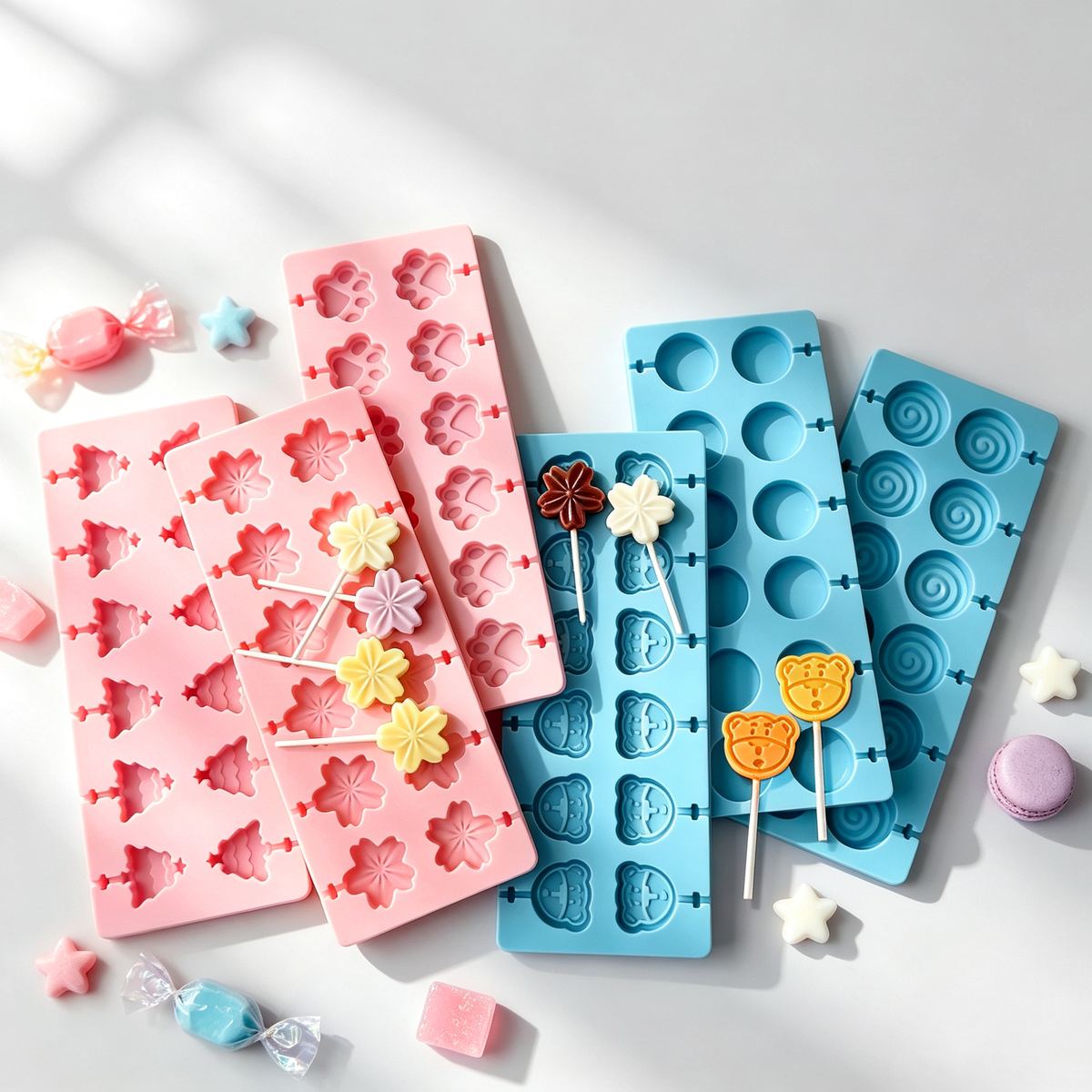
A silicone cavity can deform locally. The operator or machine can peel the mold away from the gummy instead of forcing the gummy straight out. This allows deeper details and selected undercuts that would lock into a rigid tool.
Polycarbonate does not provide that flexibility. The cavity needs sufficient draft and a release path. The gummy formula, tack level and demolding timing become especially important.
If your design contains a deep logo, narrow neck, recessed text or a 3D character, review the release direction before deciding on the material.
Surface finish: rigid does not automatically mean better, but it changes the route
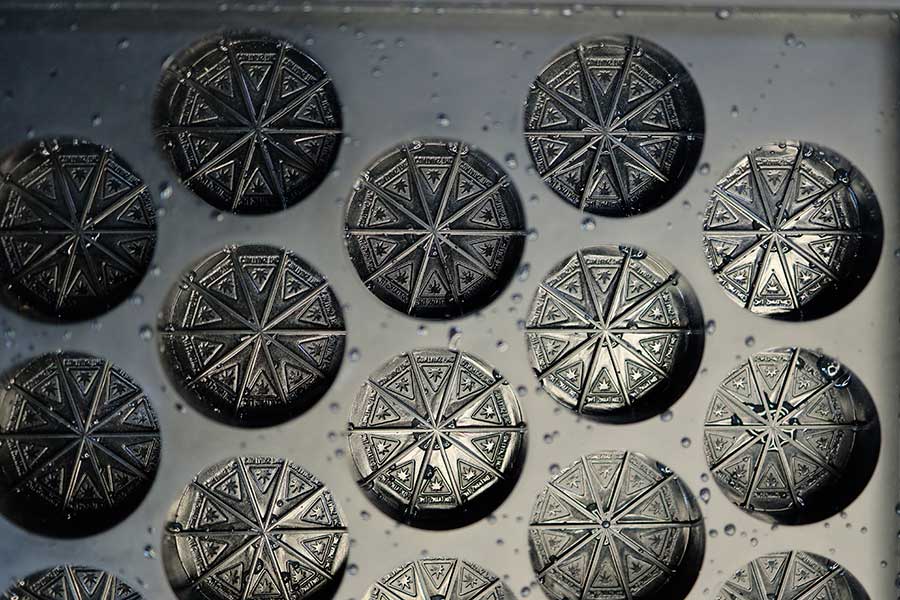
Polycarbonate is well known for producing a smooth, polished surface when the tool is made and maintained correctly. That can be important for premium confectionery presentation.
Silicone can also reproduce a polished master extremely well, but the final appearance depends on the master finish, silicone surface, gummy formulation and release process. A flexible cavity that is damaged, scratched or contaminated will transfer defects just as a scratched rigid mold will.
Do not specify “glossy” only in words. Approve a physical sample under the actual formula.
Automation and tray handling
Rigid polycarbonate has a natural advantage when the line relies on precise mechanical indexing. The tray does not change shape when gripped or conveyed.
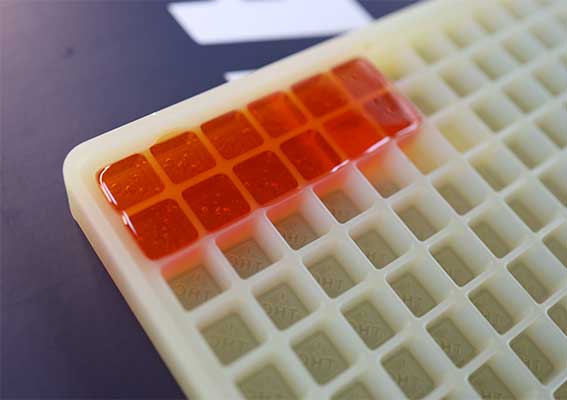
Silicone can still work on semi-automatic or automated equipment, but large flexible trays often need a rigid frame or carrier. The design team should confirm:
- tray outside dimensions;
- locating features;
- depositor pitch;
- cavity pitch;
- carrier or frame design;
- stacking method;
- cooling and transfer steps.
This is why copying a dense online tray layout is risky. The highest cavity count is not always the highest throughput.
Tooling cost and development risk
For a new brand or an unproven shape, silicone often provides a lower-risk development path because design changes can be tested before investing in a more rigid production tool.
That does not mean silicone is always the lowest total cost. At high production volume, handling time, automation compatibility and replacement frequency can outweigh initial tooling price.
A good sourcing comparison looks at:
tooling + cycle handling + labor + rejects + replacement + change cost, not tooling price alone.
Geometry: where silicone has the clearest advantage
Silicone is particularly useful for:
- deep 3D gummies;
- characters and organic shapes;
- recessed logos;
- mild undercuts;
- flexible novelty designs;
- short-run branded shapes;
- product-development programs where geometry may change.
Polycarbonate is strong for:
- geometries with clean release paths;
- shallow or controlled profiles;
- rigid line indexing;
- products where polished surface and repeatability dominate;
- mature designs already validated for rigid demolding.
Formula behavior can reverse the decision
A mold that works well with one gummy formula may be frustrating with another. Gelatin, pectin and other systems can differ in surface tack, set time and strength at demolding.
The production team should test the actual formula whenever possible. If the supplier only tests with a generic candy material, the result may not represent the buyer’s line.
Cavity geometry controls nominal volume, but final piece weight also depends on formula density and filling control. For regulated or functional gummies, this distinction is especially important.
Cleaning and maintenance
Silicone molds should be protected from cuts, sharp scrapers and storage practices that permanently deform the tray. Polycarbonate tools should be protected from scratching, impact and cleaners that attack the surface.
For both materials:
- define approved detergents;
- avoid abrasive cleaning unless specifically validated;
- inspect cavity surfaces regularly;
- replace damaged tooling before defects become a normal part of production.
The maintenance plan should be part of the tooling decision, especially for multi-shift use.
Which one should a growing gummy brand choose?
A practical route is:
New custom shape + uncertain geometry: start with silicone and validate the product.
Established design + high automation requirement: compare rigid polycarbonate and engineered silicone/carrier systems using real line data.
Complex 3D geometry that must flex during release: silicone is usually the more forgiving route.
Premium smooth surface with rigid handling: polycarbonate deserves serious consideration.
Very high-volume industrial line: evaluate the complete forming system rather than comparing only two tray materials.
Production decision checklist
Before requesting tooling, send:
- 3D file or reference artwork;
- target gummy weight;
- formula family;
- required surface finish;
- tray envelope;
- cavity count or hourly output target;
- depositor pitch if applicable;
- demolding method;
- cleaning process;
- documentation requirements;
- expected annual volume.
WYD can then review whether flexible silicone is the right manufacturing route or whether the geometry should be redesigned around a rigid system.
FAQ
Are silicone molds slower than polycarbonate molds?
Not inherently. Throughput depends on cavity count, filling, set time, handling and demolding. A rigid tool may index faster, while a flexible tool may release a complex shape more reliably.
Which material gives a glossier gummy?
Rigid polished tooling often has an advantage, but final gloss also depends on cavity finish and formula. Validate with the real product.
Can silicone molds run in automatic equipment?
Yes, when the tray, carrier and locating system are engineered for the equipment. A large unsupported flexible tray may not index reliably by itself.
Which is better for a custom logo?
Both can reproduce logos, but deep relief or features that mechanically lock into a rigid cavity are usually easier to demold from silicone.
Need a material-route recommendation?
Send your gummy geometry, production target and line information through WYD’s custom gummy mold page or contact us. We will review the release path and tray format before recommending silicone simply because it is our core material.
Ready to order custom silicone molds?
Send your drawing, sample or project requirements for DFM and quotation.