
Why Gummies Will Not Release Cleanly From Your Mold
Stuck gummies, torn limbs, dull faces: draft, undercut, Shore, and demold temperature. What to send before you recut a gummy tray.
On this page
A clean dump looks like the candy falls out. A bad tray tears ears, leaves a skin in the pocket, and dulls the face. Most of the time the recipe did not change. The cavity or the demold temperature did.
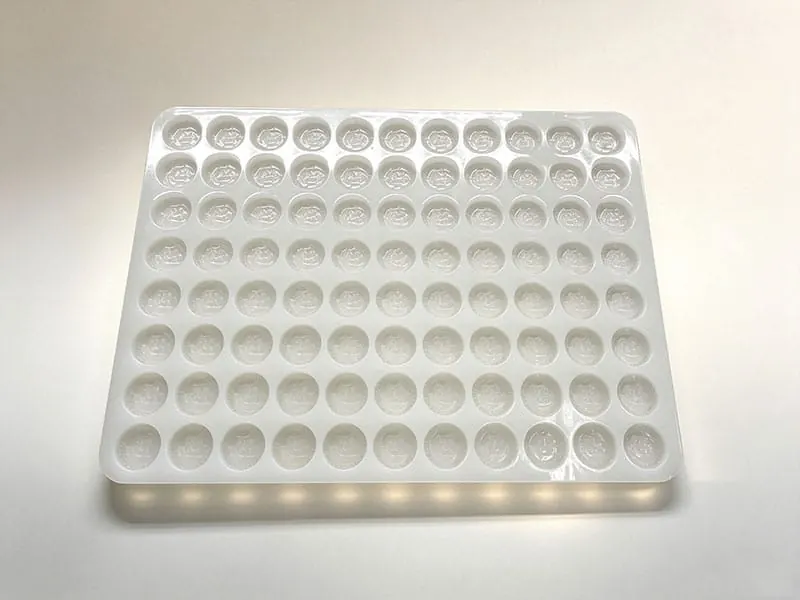
Tray DFM stays on custom silicone gummy molds.
Why gummies are hard on molds
The mix is sticky, often acidic, and poured warm. It has to leave a soft shape without tearing detail and without the cavity going tacky after acid and heat. That is a geometry and compound question, not a slogan about "thousands of cycles." Life is whatever your line, wash, and Shore actually survive. We do not print a fake cycle count.
What actually causes poor release
- Finish. A rough or under-cured face grips. Polish is a spec, not a default on every logo.
- Undercuts and thin limbs. Ears and points tear before the body lets go.
- No draft. Dead-vertical walls stick. A small taper helps.
- Shore. Softer flexes the candy out and sags the tray. Firmer holds pitch and fights release. Pick for the shape and the depositor, not a catalog number.
- Post-cure and grade. A tacky skin or a taste complaint often starts here. Named food-contact grade, not "food grade" as a color.
- Sugar film. If you do not wash, the next dump sticks worse. Surface also decides how fast that film builds.
Line setup
Chill, demold temperature, and how the sheet is flexed matter as much as CAD. Many lines cool to a set point, then roll the tray once. Pulling pieces with a tool is how you nick the cavity.
Designing a new shape for release
- No hairline limbs.
- Round internal corners.
- Draft where the art allows.
- Similar cavity depth so set and shrink match.
- Pitch that still lets the sheet flex without folding the neighbor.
How custom gummy molds are made
Repeat trays: HCR compression in steel. A new mascot can prototype in RTV before steel. RTV vs HTV.
What to send
- Shape, sketch, or a gummy you can legally copy.
- Cavity count, tray envelope, depositor pitch.
- Target grams.
- Hand dump or a demold station.
- Qty. Soft-tray MOQ is often 20.
Prototype after CAD lock: commonly 3-5 business days. /contact/
FAQ
Fix without a new shape? Sometimes draft or finish on the next tool. Sometimes the art has to change.
Does color change release? No. Cure and finish do.
Lead time? 3-5 business days after CAD lock for a prototype. Production days are quoted.
Ready to order custom silicone molds?
Send your drawing, sample or project requirements for DFM and quotation.